AI agents are becoming capable enough to handle many logistics tasks in live business environments. However, you can’t judge their reliability by a single model-accuracy figure. What matters is whether an agent can complete the entire task correctly, from identifying the right shipment or order to carrying out the required action and confirming that it has been completed.
For an agent to be dependable, it must retrieve information from the right source, apply the correct business rules, select an appropriate action, execute it successfully, and involve a human when a situation requires a decision beyond its authority. It must also maintain a clear record of everything it has done. A mistake at any stage can affect the final result, even when the language model produces an answer that appears accurate.
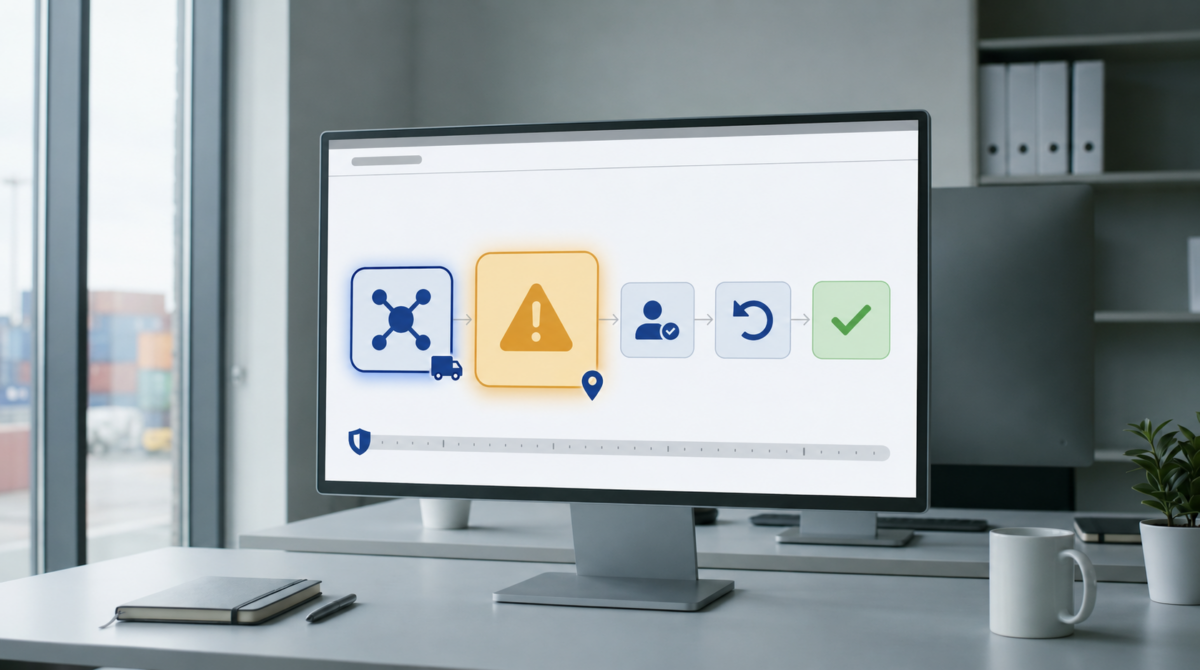
This becomes particularly important when agents work across connected logistics systems. For example, a shipment exception agent might contact a carrier, update the Transportation Management System (TMS), prepare a customer notification, and monitor the case until the issue is resolved. A freight quotation agent may read an enquiry, retrieve applicable rates, calculate charges, apply margin requirements, prepare a quotation, and send it after approval. A document-processing agent might match a bill of lading against a shipment, check the associated invoice, request missing details, and update the relevant job record.
For operations leaders, the real question is not simply how accurately an AI model responds. It is how consistently the complete workflow reaches the correct business outcome without causing costly mistakes, unnecessary manual work, or actions that go unnoticed. That is what makes an AI agent reliable enough for production use.
A language model is only one part of an operational AI agent. Behind every completed task, several components may be working together. These include document extraction, information retrieval, business rules, shipment identification, API connections, carrier platforms, and TMS or ERP systems, workflow tracking, approval mechanisms, retry controls, monitoring, and recovery procedures.
Even a capable model can produce an unreliable result when one of these components does not work as expected.
For instance, an agent might identify the correct action but apply it to the wrong shipment. It could select the right API while relying on outdated information. It might submit a booking request without checking whether the carrier accepted it. A temporary system timeout could trigger another attempt, resulting in duplicate bookings. Similarly, an agent might process a document correctly but overlook a revised version that has replaced the original.
Gartner’s 2026 reliability research highlights the difficulties businesses face when moving AI agents from demonstrations into production environments. Its recommendations focus on improving reliability across the complete system through controlled autonomy, clearly defined boundaries, monitoring, safeguards, and preparation for failures.
Current research: Gartner – From Demo to Production: Closing the AI Agent Reliability Gap; Gartner – AI Agent Success Requires Reliability Before Autonomy.
For logistics businesses, this means testing what actually happens in connected systems rather than relying on the agent’s final response. If an agent reports that a shipment record has been updated, the evaluator should check the actual TMS record. If it claims that a quotation has been sent, the approved pricing and outgoing communication must be verified. If it reports that a booking is complete, there should be confirmation from the carrier.
The system’s actual result, not its own description of that result, is the evidence of successful execution.
Many AI agent evaluations focus on the conversation between the user and the model. The agent explains its reasoning, selects what appears to be the right tool, and finishes by saying that the task is complete. However, a convincing conversation does not establish that the requested action actually happened.
Anthropic’s 2026 guidance on evaluating AI agents makes an important distinction between the quality of an interaction and the result achieved. Its flight-booking example illustrates the problem: an agent may confidently report that a reservation has been made, but the real test is whether the booking exists in the external system.
The same applies to logistics operations.
Evaluation reference: Anthropic – Demystifying evals for AI agents.
Consider a freight quotation agent. Producing a professional-looking quotation is only one part of the job. The agent must identify the correct customer and shipment, retrieve approved rates, calculate the applicable charges, follow pricing policies, obtain approval where necessary, and save and send the final quotation correctly.
Shipment exception management requires the same level of verification. An agent should not receive a successful evaluation simply because it identified a delay and explained what happened. It must identify the correct shipment, retrieve the relevant information, contact the appropriate party when required, update the exception record, involve the responsible person for important decisions, and confirm that the case has reached its intended outcome.
The difference is straightforward: a good response demonstrates communication quality, while a successful outcome demonstrates operational reliability.
Reliability becomes easier to evaluate when it is divided into separate areas. Each type of failure requires a different solution. If every problem is treated as a language-model issue, teams may spend time adjusting prompts when the actual cause is incorrect shipment identification, outdated information, insufficient permissions, or poor transaction handling.
| Reliability layer | What must be correct | Typical logistics failure | Primary control |
| Identity | Correct shipment, order, customer, carrier, invoice or document | Right action applied to the wrong job | Deterministic IDs, entity-resolution thresholds, human review for ambiguity |
| Source grounding | Correct and current evidence | Stale email overrides newer carrier data | Source hierarchy, freshness, provenance |
| Decision logic | Correct next step and policy application | Agent recommends a low-margin quote outside policy | Deterministic rules and evaluated decision logic |
| Tool/action | Correct API, field, recipient or system action | Correct decision but wrong TMS field updated | Scoped tools, schemas, permissions |
| Execution | Action actually completes | Booking request sent but carrier rejects it | Acknowledgment and end-state verification |
| Recovery | Failure is contained and handled safely | Retry creates a duplicate booking | Idempotency, retries, circuit breakers, rollback |
| Escalation | Agent knows when not to continue | Ambiguous customs or commercial decision proceeds automatically | Risk thresholds, confidence plus business impact, human hand-off |
These seven areas also explain why a single accuracy figure cannot provide a complete picture of an agent’s performance.
For example, a document agent might extract almost every field correctly but still struggle to match documents with the right shipments. Another agent might consistently recommend the correct action but fail when updating the TMS. Even when an action is completed successfully, the system can remain unsafe if it fails to refer a high-risk decision to an authorized employee.
Businesses need to assess all seven areas before deciding how much operational responsibility an agent can handle.
A logistics workflow rarely consists of one isolated action. Most tasks involve several connected steps, and every additional step creates another opportunity for an error.
Take a typical enquiry-to-quotation process. The agent must recognize the customer, understand the request, extract shipment information, identify missing details, retrieve applicable rates, standardize different charge structures, apply margin requirements, prepare the quotation, obtain approval where necessary, send the response, and update the relevant business system.
Each individual step might perform well, but the complete workflow can still fail if one important stage produces an incorrect result. The same issue appears in freight booking, customs preparation, shipment exception handling, supplier follow-ups, dispatch coordination, and invoice processing. A mistake early in the process can affect every action that follows.
This is one reason why narrowly defined workflows are generally easier to make reliable than broad, general-purpose agents. An agent working with a known set of documents, approved data sources, limited tools, and clearly written business rules has fewer situations to handle. Its behavior is also easier to test, monitor, and control. Rather than giving one agent unrestricted access to multiple departments and systems, businesses should begin with a specific operational responsibility and expand its role only when the results justify it.
There is no single reliability percentage that accurately describes every AI agent used in logistics. Performance changes according to the workflow, data quality, system architecture, available integrations, decision complexity, and level of authority granted to the agent.
For example, an agent that collects missing shipment milestones from a defined group of carriers has a relatively limited responsibility. Its inputs, expected responses, and completion requirements can be clearly established.
An agent expected to negotiate freight contracts independently with unfamiliar carriers faces a much more complicated task. It must understand commercial requirements, evaluate changing conditions, respect contractual limits, and make decisions with potentially significant financial consequences.
Current industry deployments also demonstrate why a selective approach to autonomy makes sense.
project44’s Ocean Exceptions Agent addresses a specific problem involving rolled containers at transshipment points. It helps detect exceptions, obtain carrier confirmation, and retrieve available rescheduling options. Final rebooking decisions remain with human analysts.
This approach allows the system to handle repetitive investigation without transferring complete decision-making authority to the agent.
Current example: project44 – Ocean Exceptions Agent.
DHL’s September 2026 Logistics Trend Radar also discusses the growing role of agentic AI in logistics planning, coordination, and operational execution. It highlights the importance of safeguards and human oversight as these systems become more closely connected to business operations.
Industry view: DHL Logistics Trend Radar 8.0.
The practical position is that AI agents can already support many production logistics activities when their responsibilities are clearly defined and their permissions match their demonstrated performance. However, this does not mean every agent is ready to manage every logistics decision independently. Production readiness must be established separately for each workflow and level of authority.
The level of reliability required should be based on the potential consequences of an action.
For example, an internal shipment status update does not carry the same risk as submitting a customs declaration, making a dangerous-goods decision, or processing a supplier payment. A mistake in an internal update can usually be corrected without much difficulty. An error in the other cases could lead to regulatory penalties, safety issues, or financial losses that are harder to resolve.
For this reason, AI agents should be tested against different risk levels rather than judged by a single reliability target. Actions involving significant financial, regulatory, or operational consequences need stricter checks. Even if errors are rare, high-risk actions should require human review whenever the potential consequences are serious.
It is also important not to confuse a model’s confidence with its actual reliability. An AI model may sound certain and still produce an incorrect result. Dependable performance comes from checking information against trusted data sources, applying fixed business rules, verifying changes in connected systems, enforcing access permissions, escalating uncertain cases, and having a clear process for correcting failures.
A quotation agent can work reliably when it has access to approved rate sources, clearly defined charge calculations, customer-specific pricing rules, and established approval limits.
However, checking whether the agent correctly identifies the origin, destination, shipment weight, or Incoterm is not enough. The real test is whether it can produce a commercially accurate and valid quotation.
This requires checking several details, including the source and validity of the selected rate, applicable surcharges, local charges, currency, equipment requirements, transit time assumptions, customer pricing agreements, minimum margin, approval requirements, and the final quotation sent to the customer.
For example, a quotation may contain all the correct shipment details but still be wrong because the agent used an expired freight rate. In that situation, the language may be perfectly written, but the result is still an operational failure.
The safer approach is to keep commercial rules separate from the AI agent. The agent can interpret customer inquiries, collect shipment details, and coordinate the quotation process. A pricing engine should handle rate validation, charge calculations, margin checks, and approval rules. This gives the business greater control over the final quotation.
Shipment exception handling depends on accurate information and a clear understanding of the current workflow status.
A possible delay may appear in a predictive analytics system, a carrier message, a port update, or a missing milestone. However, these sources do not necessarily provide the same level of confirmation.
An agent must distinguish between a predicted delay, a confirmed carrier event, and an assumption based on incomplete information. It should also retain the source of the information so that operations staff can understand why a particular action was taken.
Testing should cover the entire exception process. The agent must identify the correct shipment, establish whether the exception is genuine, retrieve the relevant shipment details, contact the appropriate party, associate the response with the correct case, and update the TMS or exception management record. It must also apply the correct customer-impact rules and leave the case open until the agreed resolution conditions have been satisfied.
An agent sending the right email does not mean the exception has been resolved. Likewise, closing a case without confirming the outcome can leave the operations team with an incorrect view of the shipment.
A reliable exception agent must complete the operational process, not just the communication associated with it.
Document-based workflows often reveal a common mistake in AI evaluation: measuring how accurately a system extracts information without checking whether it handles the entire workflow correctly.
For example, an AI agent may extract invoice details accurately but still make a serious mistake by linking the invoice to the wrong shipment, overlooking an outdated document revision, or failing to identify an important mismatch between the invoice and packing list.
A proper evaluation should use actual business documents with verified reference data. The test set should include difficult scans, revised documents, duplicates, missing information, conflicting details across documents, and customer-specific requirements. The system performance should be measured across more than extraction accuracy. Important measures include errors in critical fields, missed discrepancies, unnecessary flags, table extraction accuracy, document-matching accuracy, time spent on manual review, and whether the workflow reaches the correct completion status.
The review threshold also needs careful adjustment. If the system sends too many correctly processed documents to employees for manual checking, it may be reliable, but it will deliver limited operational value. On the other hand, allowing too many uncertain documents to pass without review increases the chance of important errors going unnoticed.
The threshold should be set using actual production results, particularly the number and severity of material errors. Model confidence scores can help identify documents that need attention, but they should never be the only basis for deciding whether human review is required.
Financial processes require additional safeguards because an incorrect action can directly affect payments, accounting records, and supplier relationships.
A freight audit or accounts payable agent may extract invoice details, identify the related shipment, compare charges against contracted rates, validate accessorial expenses, identify duplicate invoices, and prepare the transaction for posting in the ERP. Once the workflow has demonstrated consistent performance, standard invoices that satisfy defined conditions may be processed with a higher degree of autonomy.
However, the agent must operate within strict financial controls. These should cover invoice tolerances, supplier identity, duplicate detection, changes to bank details, approval limits, tax requirements, and confirmation that the ERP has accepted the transaction.
A particularly important control is the verification of the final posting status.
An API request being submitted does not prove that an invoice has been posted successfully. The agent should check the system response and resulting transaction record before reporting completion. This distinction prevents the finance team from relying on an action that was attempted but never completed.
Some AI agent failures are immediately visible. Others are harder to identify because the result appears reasonable even though the underlying action is wrong.
Incorrect shipment or customer identification is one of the most serious risks. An agent might make a perfectly valid update to the wrong shipment record. Such an error can remain unnoticed longer than an obviously incorrect response.
Outdated information creates another problem. A carrier may have already issued a revised milestone, but the agent continues using an older email or document. The information it relies on may once have been correct, yet it is no longer suitable for the decision being made.
Incomplete execution is equally important. An agent could update the TMS but fail to notify the customer. It might send a booking request without recording that it is waiting for the carrier’s response. In both cases, different systems show different stages of completion.
False completion is particularly concerning. This happens when the agent assumes that a task has finished and stops working even though the external system has not reached the required state.
Other risks include duplicate actions during retries, missed escalations, excessive human hand-offs, policy violations, unsupported information, privacy breaches, incorrect tool selection, integration failures, prompt injection through external documents or messages, and performance changes caused by new data formats or updated business rules.
These problems need to be treated as separate failure categories. Identifying the actual cause makes it easier to introduce the right correction.
Completing a logistics task correctly is not enough if the agent exposes confidential customer or commercial information in the process.
This becomes an important concern when enterprise agents retrieve information from multiple business applications. An agent may have access to customer records, freight rates, supplier contracts, invoices, operational reports, and internal communications.
Microsoft Research’s 2026 CI-Work benchmark identified significant contextual-integrity failures across frontier enterprise-agent models. Its findings demonstrate that an agent can perform useful tasks while still mishandling information that should remain restricted. The research reinforces the need for access controls based on business context rather than relying on model capability alone.
Research reference: Microsoft Research – CI-Work: Benchmarking Contextual Integrity in Enterprise LLM Agents.
In logistics environments, permissions should reflect the customer, business unit, geographical scope, employee role, and purpose of the workflow.
For example, an agent preparing a customer update should not expose another customer’s negotiated freight rates. A carrier-facing message should not contain internal margin calculations. Similarly, a document-processing agent should not retrieve confidential contracts belonging to an unrelated customer simply because the documents contain similar terms.
Access restrictions must be enforced at the system level. The agent should only retrieve and act on information that it is authorised to use.
Testing should begin with actual business workflows rather than a collection of general questions designed to demonstrate the model’s language capabilities.
The evaluation process needs to represent the conditions the agent will encounter during everyday operations.
This includes routine shipments, difficult but valid cases, unusual requests, missing information, conflicting sources, outdated records, duplicate messages, revised documents, failed integrations, restricted permissions, and situations where the agent should stop and request human assistance.
Each test case should have a clearly defined expected result. Where the workflow involves system actions, the evaluation should also specify which actions are permitted and what the final system state should look like.
The evaluator must check whether the agent selected the correct information source, followed the relevant business rules, used the appropriate tool, respected its permissions, and avoided actions outside its authority.
Microsoft’s current agent-evaluation guidance follows a similar approach. It recommends scenario-based evaluation, structured scoring criteria, test datasets, defined acceptance thresholds, and ongoing assessment of safety and quality throughout development.
Evaluation reference: Microsoft Foundry – Evaluate your AI agents.
Testing should not end when the development team completes its initial evaluation. The same standards need to be applied as the agent moves into live operations.
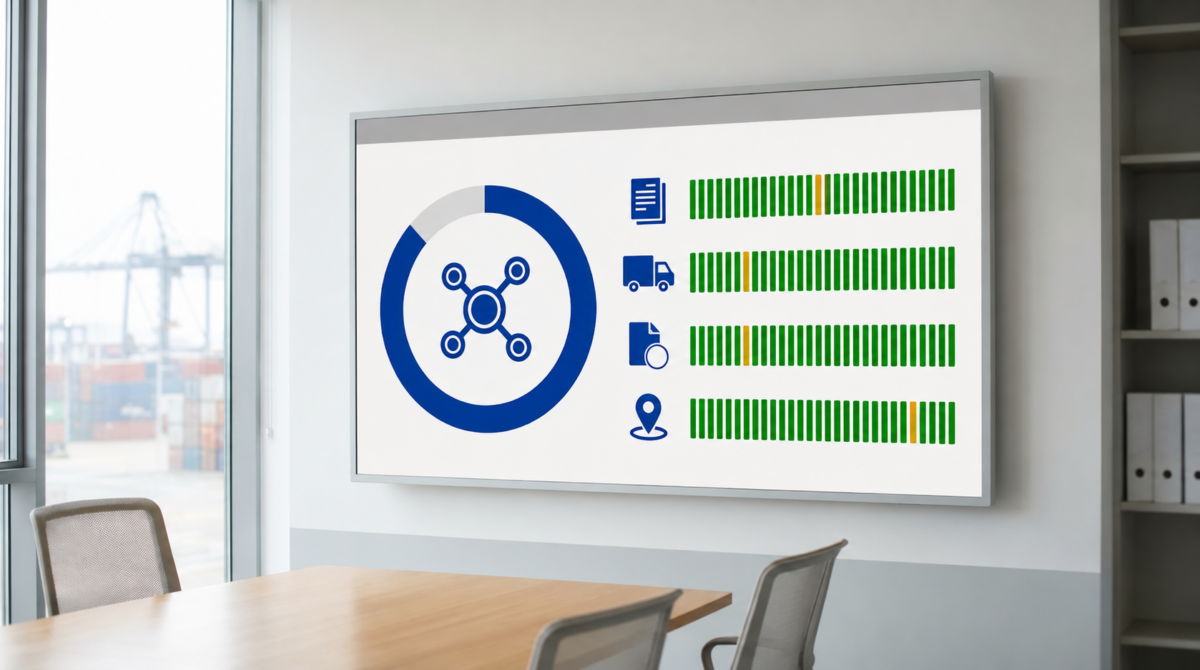
A useful evaluation framework should measure several aspects of performance independently. Combining everything into one score can hide problems that need immediate attention.
The first measurement should be task completion. Did the agent reach the intended business outcome?
The next is material error rate. Did it create a mistake that could affect operations, finances, customer commitments, or regulatory compliance?
Tool and action correctness should also be checked. Did the agent use the correct system, select the right record, and update the intended fields?
Escalation quality is another important measure. Did the agent recognise situations that required human involvement? Did it avoid sending routine cases back to employees when the available information was sufficient to proceed?
Execution reliability should cover whether system updates were accepted, messages were delivered, and external actions received the required confirmation. Duplicate-action rates and recovery performance should be measured whenever an integration or external system fails.
For document-processing agents, the scorecard should include missed discrepancies and unnecessary review flags. Customer-facing agents need additional checks for factual accuracy, approved language, and commitments made outside company policy.
Finally, the evaluation must consider the business results.
Relevant measurements include:
An agent may perform well in technical evaluations but still fail to deliver meaningful business value if employees spend too much time checking its work.
The goal is not simply to build an agent that makes fewer mistakes. It is to improve the operation without introducing additional risks or unnecessary work.
One of the safest ways to assess an agent in a live logistics environment is to run it in shadow mode before allowing it to change business records. In this arrangement, the agent receives the same operational information and events as the human team. It analyses each case, recommends an action, and records what it would have done. However, it does not make actual changes to the connected systems.
The operations team can then compare the agent’s recommendations with the decisions made by employees and the final results. This provides useful evidence from real business conditions without allowing an unproven agent to interfere with live operations.
Shadow mode is particularly valuable for shipment exception management, freight quotation, dispatch coordination, document verification, and planning recommendations.
It also exposes problems that may not appear in carefully prepared test datasets. These include inconsistent customer information, missing shipment references, unusual carrier responses, outdated records, and gaps between documented procedures and actual working practices.
Once the agent demonstrates consistent performance, the business can introduce prepared actions for human approval. Automatic execution can follow for clearly defined, low-risk cases after the necessary controls have been tested.
An overall performance figure can make an agent appear more reliable than it really is.
Imagine a shipment management agent handling 95% routine cases with very strong results. The remaining 5% might include customs holds, dangerous goods, unusual contractual conditions, or high-value shipment disruptions.
Even if the agent performs well across the majority of cases, its behaviour in those less common situations may create significant operational risks.
Businesses should therefore divide evaluation results by workflow type, case complexity, and risk level.
For example, standard FCL shipments, hazardous cargo, strategic customer shipments, newly onboarded carriers, bank-detail changes, poor-quality document scans, revised shipping documents, and API outages should not necessarily share the same reliability requirements.
This approach allows companies to automate the processes that have already demonstrated stable performance while keeping more complicated cases under human supervision.
It also avoids holding back an entire automation programme because a small number of exceptional cases still require manual decisions.
An agent should receive additional authority only when its performance provides enough evidence that it can handle the responsibility safely.
Gartner’s May 2026 governance framework describes different levels of agent authority, including observation, advice, action with approval, and autonomous action. The underlying principle is that greater autonomy introduces greater operational responsibility and therefore requires stronger governance.
Governance reference: Gartner – Applying Uniform Governance Across AI Agents Will Lead to Failure.
Logistics companies can apply the same progression when deciding how much control an agent should receive.
At the beginning, the agent can observe operational information and identify possible actions without changing business records. Once its recommendations have been tested, it can prepare updates, quotations, booking requests, and other actions for employee approval.
When the workflow consistently demonstrates correct identification, policy compliance, execution, and recovery, selected low-risk actions can move to automatic processing.
Higher-risk decisions can continue to require human involvement, even when the surrounding workflow is automated.
This approach avoids two common problems. The first is granting too much authority before the agent has demonstrated that it can handle the process. The second is keeping an already reliable, low-risk workflow entirely manual when the available evidence supports greater automation.
Reliability needs attention throughout the agent’s operational life, not just during the initial deployment.
Carrier APIs are updated, document formats change, customers introduce new requirements, new trade lanes are added, and internal business rules are revised. Model updates can also affect how an agent interprets information and selects actions.
A workflow that performed consistently during its initial months may therefore encounter problems as the operating environment changes.
Businesses should monitor production behaviour and establish clear fallback procedures.
For example, if material errors increase, tool calls start failing, escalation patterns change unexpectedly, or the agent begins producing unusual outputs, its permissions can be reduced automatically or by an authorised operator.
The system may move from autonomous execution back to approval-based processing or recommendation-only mode until the problem has been investigated.
Circuit breakers are particularly important for actions that can be repeated quickly. If an agent starts generating incorrect shipment updates or duplicate requests, the system should stop further execution before the problem spreads across multiple records.
Gartner’s October 2026 reliability guidance reinforces this operational requirement: reliable agents need practical mitigation and recovery mechanisms, not just measures intended to prevent failures.
When an employee corrects an agent’s decision, the correction should provide useful information for improving the workflow.
The system should capture what went wrong and why the employee changed the proposed action.
For example, the issue might involve an outdated source, missing shipment information, an incorrect business rule, a failed identity match, faulty model reasoning, a tool error, or a decision that requires professional judgement.
These situations should not all be treated as the same type of failure.
An incorrect document match may indicate that the identification process needs improvement. A pricing override may reveal a missing commercial rule. A customs decision may show that the workflow should remain under human control regardless of how well the agent performs other tasks.
By recording these differences, businesses can identify which problems can be corrected through better data, rules, or integrations and which decisions should remain with employees.
Over time, the resulting feedback helps define where additional automation is appropriate and where human judgement remains necessary.
A production-ready logistics agent cannot be judged by a fixed accuracy target such as 95%, 98%, or 99%. The required level of reliability depends on the type of task, the consequences of an error, and the controls in place to prevent failures.
A workflow may be ready for production when routine cases consistently produce the right business outcome, serious errors are uncommon and understood, high-risk situations are escalated to the appropriate person, and monitoring and recovery procedures are in place.
The acceptable level of risk also varies by operation. A status-update workflow may tolerate an occasional mistake if it can be corrected easily. Financial transactions, customs submissions, and safety-related decisions require much stricter controls. In these cases, deterministic checks and human approval should prevent high-impact errors rather than relying on an overall accuracy score.
The more important question is not how accurate an AI agent needs to be in percentage terms. It is which mistakes the business can tolerate, which failures must be prevented, and what safeguards ensure that unacceptable errors do not turn into real business actions.
Buyers should look beyond model performance and understand how the vendor tests the entire workflow. They should ask what defines a successfully completed task, how the final result is checked in the connected system, and how the agent is tested to avoid taking action on the wrong customer, shipment, or transaction. It is equally important to understand how conflicting information from different sources is resolved, which decisions are controlled by fixed business rules, and how the system prevents duplicate actions when a task is retried.
Other questions should cover what happens when a tool or system fails midway through a process, how accurately the agent identifies cases that need human intervention, and whether its operating mode can be restricted to approval-based actions when reliability concerns arise. Buyers should also ask how production errors are recorded, categorised, investigated, and added to future evaluation tests.
A vendor that can explain prompt design but cannot demonstrate how outcomes are verified, failed actions are reversed, duplicate operations are prevented, decisions are recorded, and production performance is evaluated has not yet demonstrated the level of reliability required for an operational AI agent.
Yes, AI agents can be reliable in well-defined logistics workflows when data sources, system permissions, business rules, and escalation procedures are clearly established. However, that reliability must be demonstrated through real freight operations and measured across the entire workflow. Strong model performance alone is not enough to establish that an agent can consistently deliver the right business outcome.
There is no single accuracy target that applies to every logistics workflow. The acceptable level depends on the task, the type of error, and the potential business impact. Actions involving financial commitments, shipment changes, or contractual obligations need stricter controls. These should be supported by fixed business rules, independent verification, and human approval where necessary, rather than judged by an overall accuracy percentage.
Getting the answer right does not guarantee that the task will be completed correctly. An agent may identify the correct next step but apply it to the wrong shipment, rely on outdated information, select the wrong tool, or encounter an integration problem. It may also fail to confirm whether the requested action was actually completed. These issues can leave the business process unfinished despite the agent’s correct initial response.
Testing should cover real or representative freight workflows, including routine transactions and less common situations. The evaluation set should include missing information, conflicting documents, outdated records, integration failures, and cases that require human intervention. It is important to assess both the agent’s decisions and the resulting changes in connected business systems. A correct response is not enough if the final operational state is wrong.
Yes. Pre-deployment testing cannot account for every change that occurs during daily operations. Data sources, system integrations, business rules, users, and underlying models can all change over time. Companies should monitor live performance, review production incidents, and run periodic evaluations against separate test cases. This helps identify problems before they affect a larger number of shipments or transactions.
Shadow mode allows an AI agent to monitor live logistics cases and recommend the actions it would normally take, without making changes to operational systems. The team can compare its decisions with those made by employees and identify mistakes before granting permission to execute actions. It provides a practical way to evaluate the agent under real operating conditions without exposing live workflows to unnecessary risk.
Hallucination testing should look for unsupported statements, invented values, incorrect references to source documents, and decisions based on information that was never provided or approved. For example, an agent should not invent a shipment status, assume a delivery date, or fill in a missing invoice value without reliable evidence. Testing should establish whether every important claim and action can be traced to an approved source. The next article in this series examines hallucination risks and the controls used to prevent them.
Companies should track how often the agent misses cases that require human attention, how frequently it escalates routine work unnecessarily, and how often reviewers change its recommendations. These results should also be examined by exception type and business impact. A reliable agent needs to recognise situations where human involvement is necessary without sending ordinary, low-risk tasks back to employees.
Not necessarily. Reliability and decision-making authority are two different things. An agent may perform routine tasks consistently and still require human approval for actions involving significant financial commitments, legal obligations, safety concerns, or contractual responsibilities. Approval requirements should reflect the potential consequences of an action, not simply how confident the model appears to be.
One of the biggest risks is an incorrect operational state that goes unnoticed. For example, an agent might update the wrong shipment, process an outdated document, create a duplicate booking, or mark a task as complete without confirming that the external system accepted the action. These mistakes can disrupt downstream operations even when the agent’s written response appears correct. For this reason, businesses need to verify actual system changes rather than rely on the agent’s confirmation.
Using separate agents for specific tasks can make a logistics system easier to control, as each agent can operate with limited responsibilities, tools, and permissions. However, dividing work between multiple agents also creates opportunities for coordination errors and communication failures. A multi-agent approach makes sense when separating responsibilities improves accuracy, control, and accountability. Adding more agents without a clear operational benefit only increases system complexity.
The first priority is to contain the error and restore the affected workflow to its correct operational state. The team should preserve the audit records, classify the incident, and determine whether the failure originated from incorrect data, entity identification, decision-making, business rules, tool usage, execution, or monitoring. Once the root cause is understood, the necessary changes should be made to prevent a recurrence. The agent’s level of autonomy should only be increased after the revised workflow has been properly tested. The next article in this series looks at how businesses can manage these failures and strengthen reliability in production.
AI agents can support logistics operations reliably when their workflows are properly designed, tested, and monitored. Reliability should be measured by how consistently an agent completes the intended business task, not by how convincing its responses sound. That requires accurate shipment identification, dependable data sources, sound decision-making, controlled tool access, verified actions, appropriate human escalation, duplicate prevention, recovery procedures, and regular performance reviews.
Successful logistics deployments should not depend on the assumption that one AI model will always make the right decision. Instead, they need a well-defined operating framework that combines AI capabilities with fixed business rules, controlled permissions, trusted data sources, human oversight, and mechanisms to detect and correct failures.
The real measure of success is whether the agent can handle everyday logistics tasks, manage exceptions, and deliver the expected results consistently. That is what turns an AI demonstration into a dependable production solution.
aTeam Soft Solutions develops custom agentic AI solutions and enterprise automation systems for logistics, freight forwarding, transportation, trading, distribution, and supply-chain businesses. Our work covers freight quotation automation, logistics document intelligence, shipment exception management, supplier ETD monitoring, customs preparation, dispatch coordination, fleet operations, accounts payable, demand planning, and integrations with TMS, ERP, WMS, CRM, email, WhatsApp, carrier platforms, APIs, and legacy applications.
We approach reliability as a complete workflow requirement rather than a model-accuracy target. Our development and evaluation process uses real operational scenarios, clearly defined material-error categories, tested approval and escalation thresholds, and verification of actions in connected business systems. Autonomy is expanded only when the workflow has demonstrated consistent performance and the necessary controls are in place. This allows businesses to automate repetitive logistics activities while retaining appropriate oversight of decisions that carry greater operational, financial, or regulatory consequences.