The strongest case for adopting agentic AI for Dubai’s healthcare sector is not about replacing doctors, nurses, or clinical decision-making. Instead, it is about reducing the administrative workload that consumes valuable time and slows hospital operations every day, allowing healthcare professionals to focus more on delivering quality patient care.
Healthcare providers deal with a wide range of repetitive administrative tasks every day. These include obtaining insurance pre-authorizations, preparing and submitting claims, managing denial appeals, sending appointment reminders, communicating with patients, and retrieving medical records. In addition, staff must monitor pharmacy inventory, track medication expiry dates, and prepare clinical summaries before consultations.
These are not future challenges. They are the everyday operational bottlenecks that hospitals and clinics deal with every single day.
A physician should not spend precious consultation time surfing through disjointed medical records. A claims coordinator ought not to spend hours hopping from one insurer portal to another. A nurse should not call the same patient three times to confirm an appointment. A pharmacy manager should not find out about near-expiry inventory until after a wastage is unavoidable
This is where agentic AI can bring real value to Dubai healthcare providers.
After Sheikh Hamdan’s agentic AI private-sector initiative, Dubai hospitals and clinics should know better than to treat AI as a marketing line. Healthcare AI needs to be practical, safe, governed, and linked to tangible operational enhancement. The misguided implementation of AI in healthcare isn’t just a waste of money. It can introduce patient safety, privacy, regulatory, and trust risks.
That’s why choosing the right starting point is critical.
At aTeam Soft Solutions, we consider that Dubai hospitals should start with non-clinical, high-ROI, low-clinical-risk workflows before progressing toward more sensitive clinical support. Pre-authorization for insurance is typically the best initial pilot because it’s high-volume, document-laden, financially significant, and still allows for human review before final submission.
This guide describes six healthcare use cases in which agentic AI can assist Dubai hospitals and clinics, how to design each workflow, what regulatory and privacy considerations apply, and outlines how to begin without endangering patient safety.
Many healthcare leaders initially think of AI as a tool for diagnosis.
That’s understandable. Clinical AI often attracts the most attention because it appears to be the most advanced application of AI. However, for most hospitals and clinics, AI-powered diagnostic support is neither the safest place to start nor the use case that delivers the fastest return on investment.
A better place to start is by automating operational workflows.
Hospitals lose valuable time and revenue to administrative inefficiencies long before AI enters the consultation room. Insurance approvals are delayed because documents are incomplete. Claims are rejected due to missing information or coding errors. Patients miss appointments because reminders are sent too late or lack personalization. Doctors spend valuable time searching for patient records instead of treating patients. Pharmacies overstock slow-moving medicines while soon-to-expire inventory goes unnoticed. Meanwhile, staff continues to prepare reports manually that could be generated automatically in minutes.
They are not the most exciting challenges, but they can be surprisingly expensive.
Agentic AI is valuable since these workflows contain multiple steps. A chatbot can respond to a query from a patient. An AI agent can look up the patient’s appointment, confirm insurance information, send reminders in the appropriate language, reschedule if the patient can’t make it, update the appointment system, and alert the care team if the case is an urgent matter.
A regular automation script can fill and submit a form when all the fields are predictable. An AI agent can scan clinical documents, insurer requirements, missing attachments, portal responses, and human comments, and then formulate the next action for staff review.
That’s where the real impact comes from.
When it comes to healthcare, the AI agent should never be positioned as a substitute for professional judgment. It needs to be presented as an administrative and clinical-support layer that provides doctors, nurses, pharmacists, and coordinators better information at the right time.
This distinction is crucial for DHA-supervised providers. Every AI system that impacts patient care, clinical documentation, diagnosis, treatment, or patient communication should be designed with governance, auditability, privacy, and human supervision.
For hospitals and clinics in Dubai, the safest path is clear.
Begin with insurance pre-authorization.
Then comes claim denial prevention.
After that comes patient communication.
The next workflow is medical record summarization.
The next comes pharmacy inventory and expiration management.
Once strong governance, reliable data integration, and organizational trust are in place, hospitals can confidently expand into more advanced clinical decision support.
Insurance pre-authorization is generally the best first agentic AI healthcare Dubai pilot, as it has high financial impact and a relatively low risk to clinical autonomy.
Every hospital revenue cycle team knows this challenge well. Claims coordinators spend hours reviewing doctor notes, lab reports, radiology findings, treatment plans, policy requirements, and insurer-specific forms before preparing a submission. They also have to work across multiple insurance portals, each with its own rules, required documents, terminology, form fields, file formats, and review processes.
For a large hospital group, this often means managing more than 25 insurer portals while handling over 3,000 claims and pre-authorization requests every week. Even a routine pre-authorization can take up to 48 hours when documentation is incomplete, staff is overloaded, or repeated follow-ups with the insurer are required.
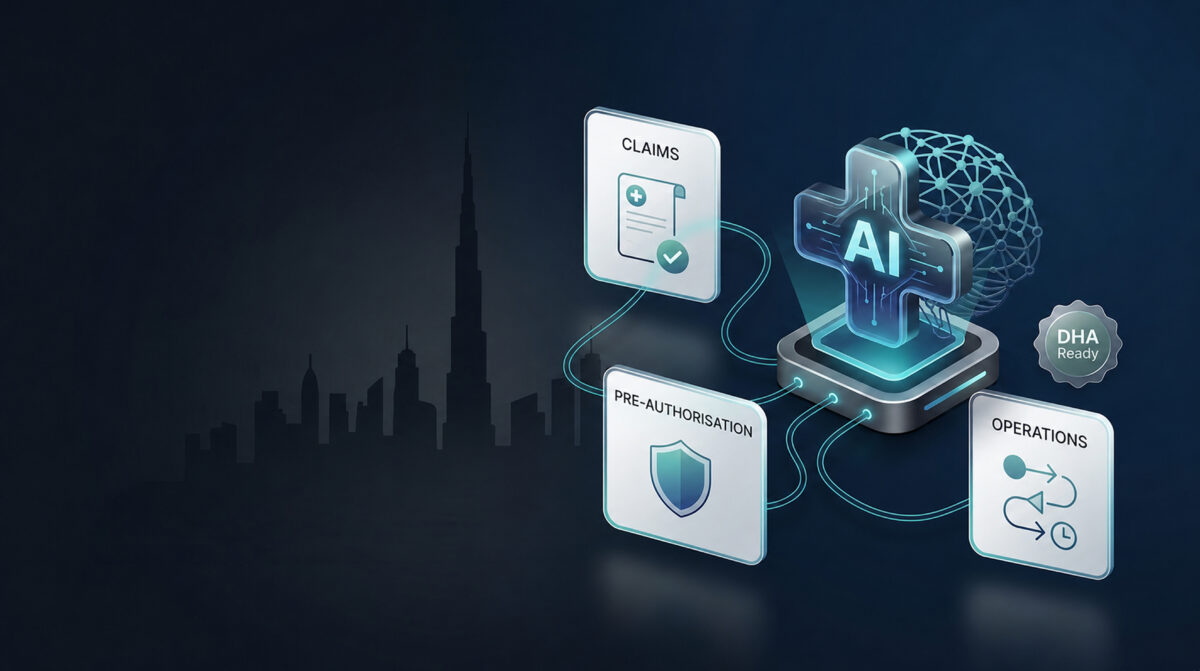
An AI pre-authorization agent streamlines this process by serving as a preparation and coordination layer. It reviews the clinical notes, identifies the requested procedure or service, checks the insurer’s documentation requirements, verifies that supporting lab results and imaging reports are attached, extracts the necessary information, prepares the submission package, and flags any missing documentation before the coordinator submits the request.
The AI agent can also simplify the complexity of working across multiple insurer portals. It prepares structured information for each insurer’s submission requirements, tracks the status of every request, detects queries or rejections, and alerts the coordinator whenever follow-up is needed. If an insurer asks for additional documentation, the agent can identify what’s missing and automatically route the request to the appropriate department for action.
The goal is not to have AI determine clinical necessity.
The goal is to ensure every submission is complete, consistent, and ready for human review.
When implemented properly, an AI pre-authorization agent can reduce the preparation time for standard cases from up to 48 hours to around 15 minutes. The value goes well beyond saving time. Faster approvals, fewer incomplete submissions, a lighter workload for coordinators, reduced revenue leakage, and a more efficient claims process all contribute to stronger financial and operational performance.
DHA compliance is relevant here as the AI interacts with clinical documentation. The system must maintain source records, prevent alteration of clinical notes without authorization, have audit trails, and allow staff to view what evidence was utilized. The AI should not make up clinical justification. It should gather and sort existing documentation.
A healthcare claims case is suitable for this use case because the process is document-heavy, specific to insurers, involves a large volume of claims, and is trackable. It is also one of the best ways for a hospital to demonstrate return on investment quickly without bringing AI into direct diagnosis or treatment decisions.
Claims denial prevention is another high-value use case for healthcare AI because every denied claim has a direct impact on hospital revenue and cash flow.
Hospitals frequently lose money not for lack of care provided, but because the documentation, coding, authorization, eligibility, or payer-specific proof was insufficient. A required lab report was missing, and a claim can be denied for that; a diagnosis code may not match the procedure performed; a clinical note was incomplete; a policy requirement rule was not followed; or a payer-specific attachment wasn’t included.
Traditional claims denial management is largely reactive.
The hospital submits the claim, but the payer denies it. The team then reviews the denial, searches for the missing documentation or supporting evidence, and prepares an appeal. By the time the claim is resubmitted, days or even weeks may have passed, delaying reimbursement and impacting cash flow.
An AI denial prevention agent moves this process upstream by identifying potential issues before a claim is submitted.
Before a claim is submitted, the AI agent reviews the entire claim package and identifies issues that could lead to a denial. It checks whether the diagnosis, procedure, clinical documentation, prior authorization, payer requirements, and supporting evidence are consistent and complete. If it detects potential gaps, it flags them for review before submission. The agent can also recommend what supporting documentation is missing, highlight clinical notes that may need clarification, and identify payer-specific requirements that still need to be addressed.
If a claim is denied, the AI agent can analyze the reason for the denial, retrieve the relevant clinical documentation, compare it with the payer’s policy requirements, prepare a draft appeal, attach the necessary supporting evidence, and route it to the revenue cycle team for review before submission.
The real value lies in increasing the first-submission approval rate.
If the first-submission approval rate rises from 85% to 95%, the revenue effect could be significant. In the briefed case scenario, the potential annual recovery is AED 8 million. The actual financial impact will vary depending on the hospital’s size, payer mix, specialty mix, and current denial rate. However, the business case is straightforward: every claim that avoids a denial reduces rework, speeds up reimbursement, and improves cash flow.
The AI agent should never generate clinical evidence or alter medical facts. Instead, it should identify gaps in the submission and help staff complete it using existing clinical documentation. If additional input or clarification is needed from the treating doctor, the agent should request it rather than creating or assuming information on its own.
Successfully implementing this use case requires close collaboration between the revenue cycle, medical coding, clinical documentation improvement (CDI), compliance, and IT teams.
The most effective approach is a human-in-the-loop workflow. The AI agent identifies potential risks, explains the reasons behind its recommendations, links to the supporting source documents, and suggests the necessary corrections. Every appeal is then reviewed and approved by the appropriate staff member before it is submitted.
For hospitals facing financial pressure, this use case can be one of the quickest ways to turn AI into measurable business value.
Scheduling patients seems straightforward from the outside, but inside the hospital it is full of minor coordination breakdowns.
Patients miss appointments. Doctors run behind schedule. Available slots go unused. Follow-up visits are missed. Patients forget preparation instructions, and language barriers create additional confusion. Meanwhile, waitlists are often managed manually, forcing call center teams to spend hours confirming appointments, handling changes, and rescheduling patients.
These challenges directly affect hospital revenue, patient experience, and continuity of care.
An AI patient scheduling and communication agent can manage appointment reminders, waitlist updates, rescheduling requests, preparation instructions, multilingual conversations, and no-show risk prediction. This helps hospitals coordinate appointments more efficiently while improving communication with patients.
The AI agent can send appointment reminders in English, Arabic, Hindi, and other languages based on the patient’s preference. It can confirm attendance through channels such as WhatsApp or SMS. If a patient cannot attend, the agent can suggest available time slots, reschedule the appointment, update the hospital scheduling system, and make the original slot available for another patient on the waitlist.
The AI agent can also predict the likelihood of a patient missing an appointment by analyzing factors such as previous attendance patterns, appointment type, time of day, travel distance, patient behavior, reminder responses, and specialty. High-risk appointments can then receive additional reminders, targeted communication, or follow-up from staff to reduce no-shows.
This is about more than convenience.
No-shows cost a lot. They produce unoccupied doctor time, postponed care, extended wait lists, and diminished patient satisfaction. An automated rescheduling system can recapture capacity that would otherwise be lost.
The workflow must always respect patient privacy and consent requirements. Communication should include only the necessary information, and sensitive appointment types require careful handling of language and disclosure. The AI agent should never share medical details through unsecured channels and must follow the hospital’s approved communication policies and security guidelines.
The AI agent should also understand when human intervention is required. If a patient reports worsening symptoms, medication side effects, emergency warning signs, or concerns that require clinical guidance, the agent should immediately escalate the case to the appropriate healthcare staff instead of continuing with a routine scheduling interaction.
For Dubai’s multilingual population, this use case is particularly valuable. A reminder sent in the wrong language or with unclear instructions can increase the risk of missed appointments. A well-designed AI agent can deliver consistent, personalized communication across languages while improving patient engagement without increasing call center workload.
This makes a strong second or third AI pilot after revenue-cycle automation because it improves both patient experience and hospital operational efficiency.
Doctors often spend valuable time before and during consultations searching for patient information because records are scattered across multiple systems.
A patient’s information may be spread across previous consultation notes, lab results, radiology reports, medication history, allergy records, discharge summaries, insurance documents, and referral letters. Some records may be available in the EMR, while others are stored as scanned documents, PDFs, or older legacy systems. Finding and reviewing all relevant information quickly can be challenging for clinical teams.
A doctor does not need to review a 50-page patient record before every consultation.
They require the appropriate summary.
An AI medical records retrieval and summarization agent can search EMR or HIS systems, gather relevant patient records, and create a concise summary of the patient’s history before consultation. It can highlight allergies, display current medications, identify potential contraindications, summarize recent lab trends, locate relevant imaging reports, and present the key information in a format that doctors can review within seconds.
This can save valuable clinical time and reduce the cognitive burden on doctors by presenting the right information in a clear, structured format before each consultation.
The AI agent should not replace the doctor’s clinical review. Its role is to act as a clinical briefing assistant that helps doctors prepare faster and make informed decisions. Physicians should always be able to access the source records and verify the information behind the summary. Every insight or statement generated by the AI should be traceable back to the underlying patient documentation.
HL7 FHIR integration is important because healthcare data is often stored across different systems and formats. FHIR provides a standard approach for exchanging healthcare information electronically, making it easier for different platforms to communicate. Hospitals using FHIR-compatible APIs or integration layers can help AI systems access structured patient data more securely and efficiently.
The design should be carefully planned to ensure accuracy, security, and compliance with healthcare requirements.
The AI agent must be designed with strict safeguards. It should avoid including irrelevant historical information, ensure critical allergies are never missed, prevent any possibility of mixing records between patients, and avoid generating clinical statements that are not supported by the source data. Patient identity matching must be highly accurate, access should be controlled through role-based permissions, and complete audit logs should record which healthcare professional accessed each summary and when. These controls are essential to maintain patient safety, privacy, and trust.
This use case requires careful attention to privacy because health data is highly sensitive. When designing the AI workflow, hospitals must consider UAE healthcare data laws and privacy requirements, including where patient data is stored, how it is processed, and who has permission to access it.
The most suitable deployment model is to run the AI system within the hospital’s controlled environment, connected to EMR/HIS platforms through approved interfaces. Strong access controls, secure data handling, and source-linked summaries are essential to ensure accuracy, compliance, and trust.
This is a high-value AI use case, but it is not typically the first pilot for a hospital. It is better suited for organizations that already have strong EMR integration, well-managed data, and established governance processes.
Hospital pharmacy operations are well suited for AI because inventory decisions have a direct impact on financial efficiency, medication safety, regulatory compliance, and patient care quality.
Hospital pharmacies need to manage many moving parts, including stock availability, expiry dates, batch numbers, formulary requirements, controlled medicines, cold-chain products, supplier delays, consumption patterns, and demand across different departments. When inventory tracking is handled manually, it can result in stock shortages, excess inventory, expired medicines, urgent purchases, and unnecessary wastage.
An AI pharmacy inventory and expiry management agent can continuously monitor stock levels, forecast demand, identify slow-moving medicines, detect short-expiry batches, recommend redistribution across departments or branches, alert procurement teams, and support FEFO (First Expiry, First Out) practices by ensuring medicines with the earliest expiry dates are used first.
For pharmaceutical and healthcare supply chains, accurate batch tracking and expiry management are essential. These processes are not optional operational tasks; they are critical components of safe medicine storage, handling, and patient care.
The AI agent can connect with pharmacy systems, inventory platforms, warehouse management tools, purchasing systems, and dispensing data to create a more complete view of medicine operations. It can identify unusual consumption patterns, alert teams about potential shortages, and generate procurement recommendations based on demand trends and usage patterns.
For example, if a medicine is approaching expiry within 60 days but another branch has higher demand for the same item, the AI agent can recommend a transfer to reduce wastage. If a critical medicine is being consumed faster than expected, the agent can alert the pharmacy manager before a stockout occurs. Similarly, if a supplier delay affects an essential high-demand medicine, the agent can highlight the risk and suggest procurement options for review.
This workflow can also integrate with warehouse management systems and IoT-based cold-chain monitoring solutions. Temperature-sensitive medicines require strict storage conditions, and any deviation can create safety risks. If sensor data detects a temperature issue, the AI agent can alert the relevant staff, assess the potential risk, and trigger the required inspection and response steps.
The brief references SFDA compliance for pharmaceutical tracking, which is particularly relevant for healthcare operations in Saudi Arabia. However, many GCC healthcare groups operate across multiple markets. A UAE-based hospital group with Saudi operations must design pharmacy AI workflows with country-specific regulatory requirements, data standards, and compliance obligations in mind.
The AI agent should not automatically substitute medicines or make clinical pharmacy decisions without review from a qualified pharmacist. Its purpose is to support inventory visibility, reduce medicine expiry losses, improve batch tracking, and help pharmacy teams make better procurement decisions.
This is a strong AI use case for multi-site hospital groups because the return on investment comes from reducing wastage, minimizing emergency purchases, improving medicine availability, and strengthening inventory control across facilities.
Clinical decision support is the most sensitive AI use case covered in this article because it directly impacts clinical workflows and patient care decisions.
It is also the use case that requires the most careful design, governance, and human oversight.
Agentic AI can support doctors by analyzing symptoms, lab results, patient history, medication records, allergies, and clinical guidelines. It can help identify potential diagnoses, highlight possible contraindications, detect drug interactions, suggest follow-up questions, and remind clinicians about relevant protocols or guidelines.
However, the AI should support clinical judgment rather than replace it.
This distinction must be consistently reinforced across every healthcare AI program to ensure that AI supports clinical expertise rather than replacing professional judgment.
An AI system can miss important context, generate incorrect assumptions, overemphasize certain symptoms, overlook rare risks, or provide recommendations based on incomplete data. It can also reflect biases present in its source information and may sound confident even when the underlying information is uncertain.
In a clinical environment, these risks are significant because even small errors or misunderstandings can affect patient safety and care outcomes.
A clinical decision support agent should be designed as an assistant that works alongside the clinician. It should provide source evidence, confidence indicators, relevant guidelines, missing information, and possible follow-up questions to support decision-making. It should not make final diagnoses, prescribe treatments, or override the judgment of qualified physicians.
For Dubai healthcare providers, DHA regulatory expectations and patient safety requirements must guide the implementation of clinical AI systems. AI used in clinical environments requires stronger validation, continuous performance monitoring, governance reviews, clinical oversight, and detailed documentation compared with administrative AI applications.
The system should also clearly define its intended use, including its capabilities, limitations, and the specific clinical workflows it is designed to support.
An AI tool that summarizes patient history carries a different level of risk compared with a system that recommends diagnoses. Similarly, a tool that flags potential allergy conflicts is not the same as one that suggests treatment options. As AI moves closer to making or influencing clinical decisions, the level of risk, validation requirements, and need for human oversight increase.
At aTeam Soft Solutions, we recommend that hospitals approach clinical decision support after building sufficient AI maturity through lower-risk workflows. Start with areas such as claims, pre-authorization, scheduling, record retrieval, and pharmacy operations. These initiatives help establish governance, monitoring capabilities, clinician confidence, and stronger data quality. Once these foundations are in place, hospitals can consider clinical support in carefully selected areas with appropriate supervision and oversight.
A safer first clinical support pilot may focus on non-diagnostic assistance, such as highlighting allergies, identifying potential contraindications, or detecting missing lab information before a consultation. Higher-risk applications, such as systems that suggest diagnoses or influence treatment decisions, should be introduced later and require more extensive validation, governance, and clinical oversight.
Clinical AI can be valuable when it is implemented responsibly, with strong governance, appropriate validation, and clear human oversight.
But in healthcare, value without safety is not success. Any AI system must be designed around patient safety, clinical oversight, regulatory compliance, and responsible use.
Dubai healthcare providers should view AI as a regulated healthcare technology initiative, not simply an IT project
DHA has published policies and standards that address the use of AI in healthcare, including areas such as telehealth and AI-enabled technologies. The practical message is clear: AI systems used in clinical or patient-facing environments must be properly governed, validated, monitored, and controlled to ensure safe and responsible adoption.
Not every AI use case carries the same level of regulatory risk.
An internal AI agent that helps finance teams identify missing insurance documents is generally lower risk than an AI system that recommends a diagnosis. A patient reminder agent is lower risk than a clinical decision support system, and a pharmacy inventory agent is lower risk than an autonomous medication recommendation system. As AI moves closer to influencing clinical decisions, the need for stronger validation, governance, and human oversight increases.
This means hospitals should classify AI use cases based on risk level before implementation.
Administrative workflows such as pre-authorization preparation, claims appeal drafting, appointment reminders, and inventory alerts may not require the same level of clinical validation as diagnostic support systems. However, they still require strong data privacy controls, role-based access, audit trails, and carefully designed workflows to ensure safe and responsible use.
Clinical workflows require stricter oversight because they directly impact patient care, clinical decisions, and safety. These systems need stronger validation, continuous monitoring, clear accountability, and appropriate human review.
Any AI system that influences diagnosis, treatment, medication, triage, or patient care decisions should undergo review by clinical governance, compliance, IT security, and leadership teams. These systems should have a clearly defined intended use, validation evidence, human oversight mechanisms, performance monitoring, audit logs, and documented incident response procedures.
The most important principle is accountability. AI systems should have clear ownership, transparent processes, and human responsibility at every stage of implementation and use.
The hospital remains responsible for the care it provides and the systems it deploys. An AI agent cannot become an unaccountable decision-maker within the healthcare environment.
This is why human oversight must be built into every healthcare AI deployment. AI should enhance healthcare workflows while ensuring that qualified professionals remain responsible for reviewing outputs and making final decisions.
Healthcare data is among the most sensitive information a business can handle.
Hospitals and clinics deploying AI agents must consider UAE PDPL, healthcare data regulations, DHA expectations, insurer-related contractual obligations, and internal data governance policies.
The key issue is data movement. Hospitals must understand where healthcare data travels, which systems access it, how it is processed, and what controls are in place to protect patient information throughout the workflow.
If an AI agent sends patient records, claims documents, medical notes, lab results, or identity documents to a cloud LLM API hosted outside the UAE, the hospital must carefully assess whether that data processing is legally permitted and ensure that appropriate privacy, security, and compliance safeguards are in place.
UAE health data regulations include strict requirements for the storage and processing of health information. Health data privacy should be treated as an architecture decision from the beginning, shaping how AI systems are designed, deployed, and integrated rather than being addressed only as a legal consideration.
For high-risk healthcare workflows, hospitals may require private deployment models, UAE-hosted infrastructure, data masking, role-based access controls, and comprehensive audit logging. The AI agent should process only the minimum data required to complete the task. Logs should avoid exposing unnecessary patient information, staff access should be restricted based on roles, and every AI-assisted action should be traceable for accountability and review.
For example, a pre-authorization AI agent may not need access to the patient’s complete medical record. It may require only the documentation needed for a specific insurer request and procedure. A scheduling agent may not need detailed clinical notes, while a pharmacy inventory agent may not require patient identity information unless it is linked to dispensing patterns.
Data minimization reduces risk by ensuring AI systems access and process only the information required for their intended purpose.
Hospitals should also maintain clear records of data flows across their AI ecosystem. They should know what information the AI processes, where data is stored, which systems are connected, which vendors have access, whether any data leaves the UAE, and how long audit logs and records are retained.
This is one of the main reasons healthcare AI should not be developed casually using disconnected SaaS tools.
A healthcare AI agent used in real-world operations must be designed with security as a core requirement from the beginning.
Healthcare AI implementation is more complex than general business automation because it involves sensitive data, critical workflows, and decisions that can directly impact patient care and safety.
The first challenge is understanding medical language.
Medical language requires high accuracy because even small differences in wording can change meaning. Abbreviations may have multiple interpretations, laboratory results need clinical context, and diagnosis and procedure codes must be handled carefully. Insurance documentation and clinical records may also use different terminology while describing the same patient event.
The second challenge is ensuring safe patient outcomes.
If an AI agent makes a mistake in a customer support workflow, the impact may be a minor inconvenience. However, errors in clinical AI systems can have more serious consequences for patient care. This is why clinical AI must always operate with human oversight and appropriate supervision.
The third challenge is integrating AI with existing HIS and EMR systems.
Many hospitals operate complex technology environments that were not originally designed to support AI agents. Patient and operational data may be distributed across EMRs, LISs, RISs, pharmacy systems, billing platforms, claims systems, insurer portals, scheduling tools, and document repositories. Integration can be challenging when APIs are limited, data formats are inconsistent, or important information still exists in scanned documents.
The fourth challenge is supporting multiple languages.
Dubai hospitals serve patients from diverse language backgrounds, including Arabic, English, Hindi, Urdu, Malayalam, and other languages. Patient communication AI must be designed to handle this multilingual environment while ensuring accurate responses and avoiding unsafe clinical advice.
The fifth challenge is maintaining clear responsibility and ownership.
Every AI-generated output must have clear ownership and human responsibility. If an AI agent drafts an insurance appeal, a revenue cycle team member should review and approve it. If it summarizes a patient record, a doctor must verify the information. If it identifies a pharmacy inventory issue, the pharmacist should make the final decision. If it suggests a clinical possibility, the physician remains responsible for the outcome.
These challenges do not mean healthcare AI cannot be implemented. They reinforce the need for a careful, controlled, and well-governed approach.
They make a structured and responsible implementation approach essential.
For most Dubai hospitals and clinics, insurance pre-authorization automation is one of the strongest starting points for an agentic AI pilot.
It offers a strong combination of ROI, high workflow volume, measurable outcomes, and manageable clinical risk compared with more sensitive healthcare AI applications.
It is a document-intensive workflow, making it well suited for AI automation. It directly impacts revenue, which makes ROI easier to measure. Since many hospitals still manage pre-authorization processes manually, the potential time savings are clear. With human review built into the workflow, the implementation risk can be controlled.
The pilot should not be expanded across all insurers and specialties from the beginning.
Start with the top five insurers and three high-volume procedure categories. Use real historical cases to understand the current workflow, measure preparation time, identify common missing-document patterns, and define improvement opportunities. Build an AI agent that prepares complete submission packets, highlights missing information, and routes cases to coordinators for review and approval.
The criteria for measuring success should be clearly established.
Preparation time for standard cases should be reduced from hours to minutes through AI-assisted automation.
Missing-document rates should be reduced by identifying incomplete submissions early and ensuring all required documents are available before processing.
The first-submission approval rate should improve by ensuring applications are complete, accurate, and supported with the required documentation before submission.
Coordinator workload should be reduced by minimizing manual tasks, automating routine processes, and enabling staff to spend more time on complex cases that require human attention.
Revenue cycle leaders should be able to measure the financial impact clearly, including improvements in processing speed, approval rates, and cash-flow performance.
Once the pilot demonstrates success, the hospital can expand the solution to additional insurers, more specialties, denial prevention, appeal drafting, and claims-tracking workflows.
This is a safer and more practical path than starting with AI systems that support diagnosis or direct clinical decision-making.
It creates measurable financial value while helping the hospital build stronger AI governance capabilities and operational maturity.
A hospital should begin with process discovery to understand current workflows, identify operational challenges, and determine where AI can create meaningful value.
During the first two weeks, the hospital should map key workflows across the revenue cycle, scheduling, records retrieval, pharmacy, and patient communication. The focus should be on identifying where staff spend the most time, where bottlenecks occur, where errors lead to revenue leakage, and where AI can provide support without introducing unsafe clinical autonomy.
In weeks three and four, the focus should shift to data access and readiness. Identify which systems contain clinical notes, claims records, insurer rules, appointment information, pharmacy inventory, lab results, and patient communication preferences. Review API availability, document formats, data privacy requirements, and role-based access controls to ensure secure and compliant AI integration.
In weeks five and six, the hospital should select the first AI pilot. For most hospitals, insurance pre-authorization is a strong starting point. Define the pilot scope, insurer coverage, procedure categories, success metrics, human review requirements, data flows, and compliance controls before development begins.
In weeks seven to ten, the hospital should run the proof of concept using real historical and live cases where appropriate. The AI should prepare submissions while requiring staff validation before approval. During the pilot, track accuracy, time savings, missing-document detection, workflow improvements, and feedback from coordinators.
In weeks eleven to thirteen, the hospital should move to a controlled deployment phase. The AI agent can prepare standard submission packets and generate status updates, while human teams continue to approve submissions and manage exceptions. Monitoring should track approval rates, denial risks, missing-document patterns, processing times, and staff corrections to ensure safe and effective operation.
After completing the first pilot, the hospital should document the measurable ROI and expand only when the workflow has demonstrated stability, reliability, and operational readiness.
A hospital should not scale AI across multiple departments until the first agent has demonstrated safety, value, reliability, and user trust.
| Use case | ROI potential | Clinical risk | Integration complexity | First-pilot suitability |
| Insurance pre-authorization | Very high | Low-medium | Medium | Excellent |
| Claims denial prevention | Very high | Medium | Medium-high | Strong after pre-auth |
| Patient scheduling | Medium-high | Low-medium | Medium | Strong |
| Medical records summarization | High | Medium-high | High | Later-stage pilot |
| Pharmacy inventory | Medium-high | Medium | Medium-high | Strong for multi-site hospitals |
| Clinical decision support | High | Very high | High | Not first pilot |
This framework demonstrates why insurance pre-authorization is often the best starting point for healthcare AI implementation.
It delivers measurable ROI while keeping AI away from final clinical decision-making responsibilities.
Clinical decision support can provide significant value in the future, but it should not be the first AI initiative for most hospitals due to the higher requirements for validation, governance, and clinical oversight.
aTeam Soft Solutions helps Dubai healthcare providers design and implement agentic AI systems that align with real hospital workflows, operational needs, and healthcare requirements.
We are an India-headquartered AI and software development company with a team of 120+ engineers, ISO 9001:2015 and ISO/IEC 27001:2022 certifications, a 4.9/5 Clutch rating from 90+ verified reviews, and more than 20 published case studies.
Our healthcare AI approach focuses on practical implementation and measurable outcomes rather than generic AI demonstrations.
For hospitals and clinics, the company helps analyze and optimize workflows across pre-authorization, claims processing, patient communication, EMR retrieval, pharmacy inventory, and operational reporting. We design AI agents with human oversight, audit trails, privacy controls, and secure integration with existing hospital systems.
The company does not recommend beginning with unsupervised AI systems that make clinical decisions. We focus on controlled, human-supervised implementations that improve healthcare operations while maintaining safety and accountability.
We recommend starting with high-volume administrative and revenue-cycle workflows where AI can deliver measurable ROI while keeping human oversight and decision-making in place.
That is the responsible approach for agentic AI adoption in Dubai’s healthcare sector.
The goal is not to make AI appear impressive. The focus should be on building practical AI solutions that address real challenges and deliver measurable improvements.
The goal is to help hospitals operate more efficiently, improve safety, and build stronger financial resilience through responsible AI adoption.
Agentic AI can help Dubai hospitals and clinics automate workflows such as insurance pre-authorization, claims documentation, denial prevention, patient scheduling, appointment reminders, medical record summarization, pharmacy inventory management, and selected clinical support activities. The safest starting point is typically administrative and revenue-cycle automation, where AI assists teams while human review and oversight remain in place.
Most Dubai hospitals should begin with insurance pre-authorization automation. It offers high workflow volume, strong ROI potential, clear documentation requirements, measurable time savings, and lower clinical risk compared with diagnosis or treatment support. It also enables human review before final submissions are sent.
AI agents can prepare insurance pre-authorization packets, verify insurer requirements, identify missing documents, monitor submission status, and generate portal-ready information. However, hospitals should maintain human approval before final submission, especially during the initial deployment phase, to ensure accuracy, accountability, and compliance.
Agentic AI can be used in healthcare when it is implemented with appropriate governance, clinical oversight, privacy safeguards, audit trails, and compliance controls. Administrative workflows generally carry lower risk than clinical decision-support applications. Any AI system that influences patient care, diagnosis, treatment, or clinical decisions requires stronger validation, monitoring, and physician oversight.
Healthcare AI agents may process sensitive information such as patient data, clinical notes, claims documents, lab results, and identity details. UAE health data requirements and PDPL considerations influence how this information is stored, processed, accessed, and transferred. Hospitals should apply data minimization, role-based access controls, audit logging, and private or approved infrastructure where appropriate.
Yes, AI agents can retrieve and summarize patient records for doctors when they are securely integrated with EMR or HIS systems. The summaries should include source references, highlight critical information such as allergies and contraindications, and remain available for physician review. AI should support clinical workflows without replacing a doctor’s judgment or responsibility.
AI can support diagnosis workflows by identifying possible conditions, highlighting missing information, analyzing lab trends, detecting potential contraindications, and providing relevant guideline references. However, it should not make final diagnoses or treatment decisions. Clinical decision-support systems must remain under licensed physician supervision with strong validation, governance, and continuous monitoring.
The right agentic AI healthcare Dubai strategy does not begin with replacing clinical expertise or human decision-making.
It begins by eliminating workflow obstacles and improving day-to-day operational efficiency.
Insurance pre-authorization, claims denial prevention, patient scheduling, medical record summarization, pharmacy inventory management, and supervised clinical support all offer meaningful benefits. However, each workflow involves different risk levels and requires different levels of control, validation, and human oversight.
Hospitals should start with AI initiatives that offer strong ROI while maintaining controlled clinical risk and appropriate human oversight.
For most Dubai hospitals, the best starting point is automating the insurance pre-authorization process.
Sheikh Hamdan’s agentic AI initiative has increased the urgency for AI adoption across Dubai’s private sector. Healthcare providers should move forward, but with careful planning and responsible execution. Healthcare AI requires more than rapid deployment; it depends on strong governance, data privacy, clinician trust, auditability, and patient safety.
aTeam Soft Solutions helps hospitals and clinics develop agentic AI systems that recognize the importance of safety, governance, and human oversight in healthcare environments.
Start with a single workflow and prove its value before expanding AI adoption across the organization.
Ensure humans remain in control through proper oversight, review, and decision-making authority.
Evaluate the results and measure the impact achieved.
Then expand the solution with confidence based on proven results and operational readiness.