Posted on: 24 Oct 2026
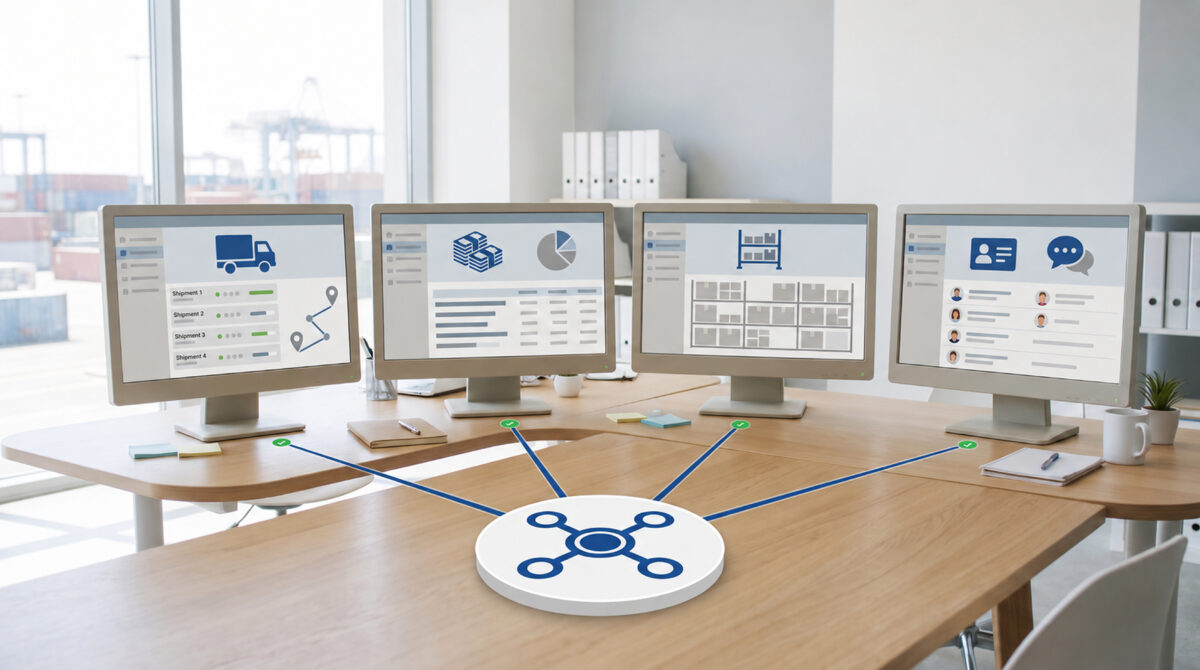
Yes. In most logistics operations, AI agents can connect with the systems a company already uses, including its TMS, ERP, WMS, CRM, carrier portals, document repositories, and email. These systems should remain the main source of operational and business records. An AI agent should work alongside them, not replace them. Its role is to gather […]

Posted on: 21 Oct 2026
A logistics company does not usually need to replace its transportation management system (TMS) to start using agentic AI. In many cases, it makes more sense to keep the existing TMS and connect AI agents to it. The TMS continues to manage core operations, while the agents work with shipment records, documents, emails, rates, tracking […]
Posted on: 17 Oct 2026
aTeam Soft Solutions has been recognized as an OpenAI Select Partner within the OpenAI Partner Network. The recognition marks a step forward in our work across enterprise AI implementation, agentic automation, and custom software engineering. For our clients, the priority is finding practical ways to use AI in everyday business operations. This could involve preparing […]

Posted on: 16 Oct 2026
aTeam Soft Solutions has joined the Claude Partner Network as a Claude Certified Services Partner, with 15 Claude Certified Architects on our team. This adds to our work in enterprise AI implementation, agentic automation, and custom software engineering. For a business choosing a Claude implementation partner, certification is a useful starting point. The more important […]

Posted on: 12 Oct 2026
A practical guide for 2026 to help freight forwarders, 3PLs, carriers, transportation teams, and supply-chain leaders choose the right AI solution for their business needs. A chatbot answers questions, while a copilot assists employees with their daily tasks. An AI agent goes a step further by handling a specific part of a workflow and progressing […]

Posted on: 12 Oct 2026
The most useful applications of agentic AI in logistics are not necessarily the ones that sound the most futuristic. They are often the everyday processes that take up a lot of staff time—checking documents, coordinating between systems, following up with carriers and customers, and handling exceptions. These workflows are a good fit when the next […]
Posted on: 08 Oct 2026
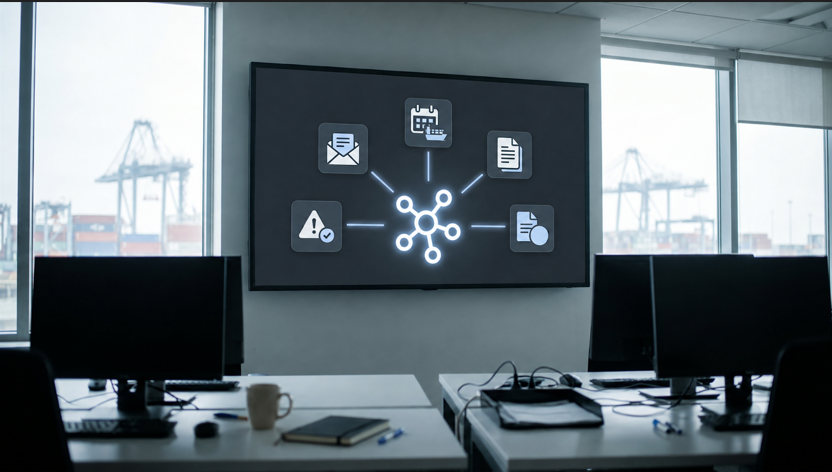
Freight forwarders are putting agentic AI to work in specific parts of their operations where coordination takes up a lot of time. Instead of giving one AI system control over the entire forwarding process, companies are using individual agents for tasks such as RFQ intake and quotation, shipment booking, data enrichment, document processing, carrier follow-ups, […]

Posted on: 06 Oct 2026
For logistics companies, the difference is easier to understand when you look at how the work actually gets done. Traditional automation and RPA follow a known sequence of steps. Agentic AI is more useful when the situation keeps changing, the next action is not always obvious, and several tools or systems may be needed before […]

Posted on: 02 Oct 2026
Traditional AI and agentic AI play different roles in solving logistics challenges. Traditional AI is generally designed to handle a specific task, such as forecasting an ETA, evaluating a carrier, classifying documents, predicting demand, optimizing a route, or spotting an unusual event. Agentic AI works at a broader workflow level. Rather than simply producing a […]

Posted on: 29 Sep 2026
Case Study: A Middle East freight aggregator and road-transport platform modernized a largely manual dispatch process covering customer inquiries, truck and driver assignment, shipment tracking, customer communication, and billing. Freight dispatch can look straightforward from the outside: receive a shipment request, find an available truck, assign the load to a driver, track the shipment, and […]


