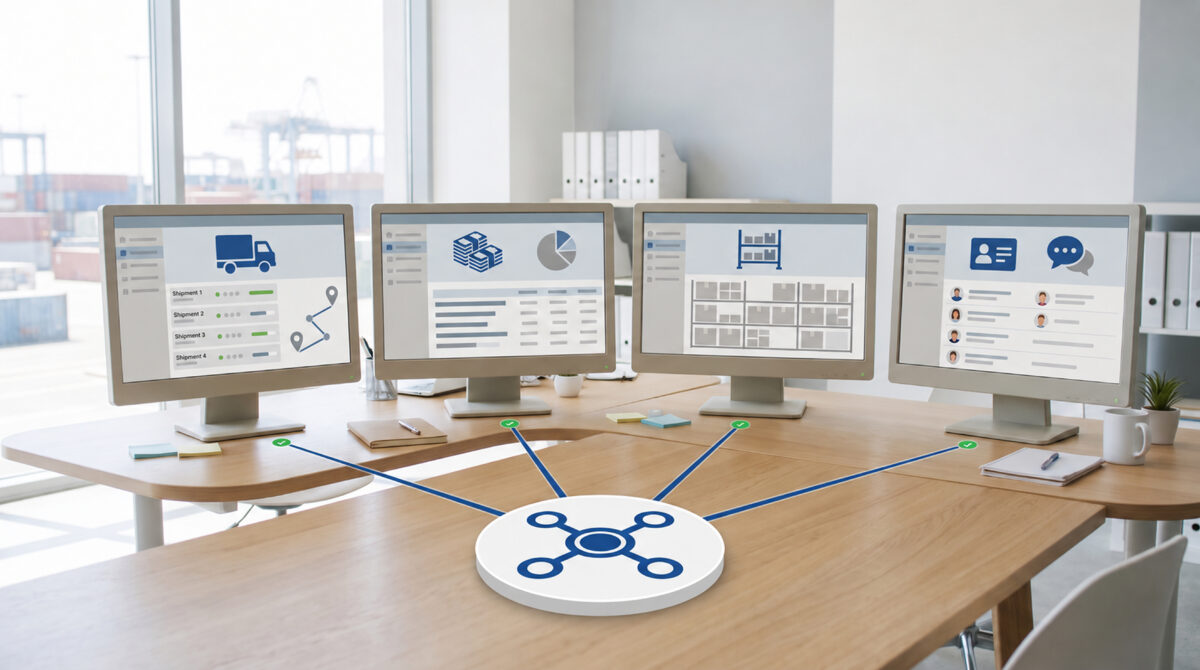
The agentic AI maturity model guides Dubai companies in answering a question that has taken on urgency following Sheikh Hamdan’s mandate for the private sector to adopt AI: Where are we now, and where do we have to be by 2028?
Many companies do not fail at AI because they are not ambitious.
They are unsuccessful because they don’t understand how mature they are today.
A company that still does invoices in Excel, supplier updates in WhatsApp, approvals in email, and reports via manual copy-paste cannot leap directly to an AI-first enterprise model. It initially needs data readiness, process clarity, a first pilot, human review, governance, and a working AI agent that demonstrates ROI.
Meanwhile, a company that already has employees using ChatGPT, Copilot, and other AI tools informally should not confuse that with enterprise agentic AI maturity. The use of AI on an individual basis is quite different from having an AI agent in production that is connected to company systems, monitored by dashboards, governed by policy, and measured by business outcomes.
That’s why the maturity model is important.
The Dubai agentic AI mandate provides a two-year adoption period. The official message is clear: Dubai is pushing private-sector companies to transition from awareness to operational adoption, supported by Dubai Chamber training, agentic AI incubators, and dedicated funds. However, each company will transition from a different starting point.
A 50-person trading company can still be at Level 1.
A mid-market property management firm might be at Level 2 because its workforce already leverages AI tools on a personal level.
A healthcare organization might be ready for Level 3, as it has already identified insurance pre-authorization as its initial AI agent pilot.
A big logistics enterprise might be moving toward Level 4, where multiple AI agents manage across finance, customs, fleet, warehouse, and supplier tracking.
The long-term goal is Level 5: an AI-first enterprise where agents perform most of the day-to-day operations and humans concentrate on strategy, exceptions, relationships, negotiation, and judgment.
At aTeam Soft Solutions, we employ this scale of the maturity model to guide the leadership teams to avoid two opposite mistakes: going too slowly because AI seems complicated or moving too rapidly without the operational foundation to support it.
This article describes the five levels of agentic AI maturity, what each level looks like, the typical technology stack, team structure, cost range, major challenges, transition timeline, and what your organization needs to do next.
The agentic AI maturity model provides Dubai enterprises with a practical roadmap rather than an abstract aspiration.
In the absence of a maturity model, leadership discussions tend to become too high-level.
The CEO inquires, “Are we doing AI?”
The CTO states, “We are looking into tools.”
The COO says, “Operations is still running manually.”
The CFO asks, “What is the ROI?”
The legal team inquires, “Where is the data going?”
The department heads say, “Our employees are already using ChatGPT.”
Everybody is partly correct, but no one is using the same language.
A maturity model addresses this by establishing common stages.
Level 1 means manual processes.
Level 2 means AI-assisted workers.
Level 3 means a single production AI agent with demonstrated ROI.
Level 4 is represented by multiple AI agents in departments with shared infrastructure and governance.
Level 5 is AI-first enterprise operations.
This language provides the board with a sense of where the company is positioned. It supports the AI Champion in knowing what to do next. It assists the CFO in understanding investment levels. It helps the CTO with the architecture planning. It allows department heads to demonstrate that AI adoption is not one leap. It is a phased progression.
That does not mean every company has to be Level 5 immediately under the Dubai mandate.
That’s not realistic.
The realistic goal for many Dubai companies is to shift from Level 1 or Level 2 to Level 3 within the first year and then gear up for Level 4 at the end of the two years.
Level 3 marks a significant transition.
Before Level 3, AI is mostly about consciousness, personal efficiency, or experimentation. With Level 3, AI becomes part of the operating model. A single process is automated by a production AI agent. Human supervision is active. ROI is calculated. Employees start to trust the system. Leadership is visible in the business case.
Once Level 3 works, the company can move on to Level 4.
That’s why the first production AI agent is so significant.
It is not merely a project.
It serves as the bridge to maturity.
Level 1 is where a lot of businesses start.
At this level, work is performed by humans using basic digital tools. Employees utilize email, Excel, WhatsApp, phone calls, shared folders, and possibly an ERP or CRM system for entering data. The company might be “digital” in the way that it runs on software, but the company itself still relies heavily on people reading, copying, checking, chasing, and manually updating information.
This is typical in Dubai trading, logistics, real estate, healthcare administration, professional services, retail distribution, and medium-sized family businesses.
A Level 1 company might have an ERP; however, staff still export data to Excel because the ERP does not match the actual workflow. It might have a CRM system, but customer interaction still takes place via WhatsApp. It might have a finance system; however, invoices are still downloaded from email, checked manually, and entered line by line. It might have a warehouse system, but expiry tracking is still done by supervisors through spreadsheets. It might have a property management system; however, tenant NOC requests are still managed via email threads.
The normal technology stack is Microsoft Office, email, WhatsApp, basic ERP, basic accounting software, shared drives, and manual sign-offs. There might be software in each department, but none of the systems are well integrated.
The primary challenge at Level 1 is not a lack of AI.
It is an absence of visibility of the process.
Before an organization can bring automation to its workforce, it needs to understand how work really gets done. Many leaders think the process is simple until they sit down with employees and observe the real workflow. A supplier invoice can be handled via email, WhatsApp, purchase order records, goods receipt notes, vendor master data, approval messages, and entry into ERP. A customs document can circulate among logistics, suppliers, freight forwarders, Dubai Customs workflow, finance, and customer service. A tenant renewal might include leasing, finance, legal, maintenance history, payment behavior, and owner approval.
At Level 1, the first step is not to buy an AI tool.
The first step is to find manual pain points.
A business should identify the processes in which its employees spend more than two hours per day performing repetitive work. These might be invoice processing, document verification, customer queries, supplier follow-up, claims preparation, NOC creation, maintenance ticket routing, shipment tracking, customs paperwork, HR onboarding, or compliance reporting.
The second step is to go to Dubai Chamber training or equivalent awareness sessions, not as an alternative to implementation but rather to provide leadership with a common understanding of agentic AI.
The third step is to evaluate data preparedness. Where does the data reside? Does it reside in ERP, email, WhatsApp, paper, portals, PDFs, or Excel? Are APIs accessible? Have the documents been scanned? Is Arabic-English processing required? Are there duplicate or inconsistent records?
A Level 1 company can normally shift to Level 2 in one to three months.
The price is modest at this stage. The primary investment is management time, process discovery, staff interviews, and maybe a readiness assessment. A simple discovery engagement might cost several thousand dollars, whereas a more thorough process and data audit could cost between $5,000 and $15,000 based on complexity.
A realistic Level 1 example would be a 50-person trading company where four finance employees manually process supplier invoices, two logistics employees maintain customs documents in Excel, and the operations manager manages supplier communications via WhatsApp. This company does not require a broad AI vision. It needs insight into manual work, a clean set of candidate processes, and one chosen pilot path.
Level 2 starts when individual employees start using AI tools to improve their own productivity.
At this stage, employees might use ChatGPT, Microsoft Copilot, Claude, Gemini, or other tools to draft emails, summarize meeting notes, compose supplier messages, generate marketing ideas, translate content, clean up reports, or make sense of lengthy documents.
This could be helpful.
A sales manager can perhaps write more effective follow-up emails. A purchasing executive might quickly summarize supplier messages. An HR manager might write up job descriptions. A marketing person can generate social postings. A finance analyst might tell AI to explain a report. The project manager can summarize the meeting minutes.
However, Level 2 is not just enterprise agentic AI.
It is productivity at the individual level.
The company does not have a production AI agent that is connected to its systems. There is no centralized supervision. There is no record of the audit. There is no common governance for AI. There’s no model for ROI. There is no explicit data policy. The AI tools may be purchased by individuals or departments, but they do not form part of the company’s operational infrastructure.
The largest threat at Level 2 is Shadow AI.
Shadow AI occurs when employees engage with personal AI accounts or unofficial AI tools to analyze sensitive company data, doing so without oversight from IT, legal, compliance, or management. An employee might also upload customer invoices into a personal AI tool to extract totals. An HR manager can copy-paste CVs and salary details into ChatGPT. A claims coordinator might use a third-party tool to summarize patient documents. A purchasing manager might upload supplier agreements into an AI summarizer for free.
The work can be speedier, but the company loses momentum.
There was no indication of what data was shared, where it had gone, if it was retained, if it crossed borders, if it contained personal data, or whether the result was reliable.
That is why Level 2 has to be formalized quickly.
The first maturity action is to establish an AI usage policy. The policy should specify which tools are allowed, what data can be used, what data is not allowed to be uploaded, when personal data needs to be masked, who has the authority to approve new tools, and what employees should do if they need AI assistance with a workflow.
The second action is to determine which personal AI use cases should be transformed into enterprise AI agents. If three employees are using AI to summarize supplier emails, that might highlight a supplier communication agent opportunity. If finance personnel are applying AI to read invoices, that could be an AP automation agent opportunity. If HR personnel are applying AI to filter CVs, that might require some careful governance and possibly a formal recruitment support agent.
The third step is to choose the first pilot process.
A Level 2 organization is sufficiently aware to move toward actual execution. The risk is that leadership remains comfortable at the “AI tools” stage and never develops production capability.
The standard technology stack on Level 2 consists of ChatGPT Plus subscriptions, Microsoft Copilot, browser AI tools, AI writing tools, AI meeting tools, and some individual productivity applications.
The formation of the team is informal. There might not be an AI Champion yet. IT may not have a complete idea of what tools employees use. There may be no compliance involvement.
The expense is typically low on paper, but the associated risk can be high. Some AI subscriptions for individuals may be priced at just a hundred or a thousand dollars per month. Actually, the real risks are data leaks, outputs that are inconsistent, and uncontrolled AI usage.
A Level 2 company can transition to Level 3 in two to four months if it chooses a single process, designates an AI Champion, establishes basic governance, and collaborates with an implementation partner.
For example, a Level 2 trading company now has three employees who are using ChatGPT to draft emails to suppliers and to summarize meeting notes. That’s useful, but there is no company-wide AI system that exists. The next step is to evolve repeated personal use of AI into a managed enterprise agent.
Level 3 will be the greatest maturity level for Dubai companies in the next 12 months.
This is the moment where AI shifts from personal productivity to operational transformation.
At Level 3, a single business process is automated by a production AI agent. Human supervision is active. ROI is calculated. The business can demonstrate before-and-after results. Staff are utilizing the system. The AI agent has access to real data and real workflows.
This is the level that many companies should initially aim for after Sheikh Hamdan’s directive.
The Level 3 AI agent isn’t required to run the whole company. It just needs to convert one entire process that matters.
For a trading company, it might be supplier invoice processing.
For a property management company, it might be NOC generation or tenant query management.
For a hospital, it might be getting the insurance pre-authorization ready.
For a logistics company, it could be processing customs documents or shipping documents.
For an HR team, this could be collecting onboarding documents.
For the finance team, it could be a purchase order reconciliation.
The standard technology stack consists of a single deployed AI agent implemented on LangGraph or a similar orchestration framework, LLM APIs or private models, a human review dashboard, monitoring tools, audit logs, API connectors, and a managed deployment environment.
The team generally consists of an internal AI Champion and an external implementation partner. The AI Champion is responsible for the business process and manages the internal stakeholders. The external partner creates the AI workflow, integrations, review dashboard, testing process, monitoring, and maintenance model.
The cost of Level 3 is typically $40,000 to $120,000 for a production single-agent deployment and an additional $2,000 to $5,000 per month for operations and maintenance. A small proof of concept could begin at $15,000 to $40,000, but the entire Level 3 milestone needs production deployment, not just a demo.
The outcome can be significant.
A single well-chosen AI agent can save from $100,000 to $500,000 annually, based on the volume of the process, employee cost, cost of errors, leakage of revenues, and speed improvement.
For example, an invoice processing agent can reduce manual data entry, identify discrepancies, prevent duplicate invoices, and accelerate the closing of financial statements. A tenant communication agent could resolve basic inquiries, minimize support burden, and help with renewals. A claims preparation agent can minimize missing-document delays and enhance revenue-cycle results.
Trust is the key issue at Level 3.
Employees need to observe that the AI agent supports them instead of replacing them. Managers must be aware that audit trails are in place. Finance needs to see ROI. IT needs to know that security and integration are managed. Compliance needs to see that data privacy and human review are built in.
That’s why Level 3 should start with a phased deployment.
In Phase 1, the AI watches and extracts while humans validate. In Phase 2, the AI recommends the actions, and the humans approve. In Phase 3, the AI takes action only in low-risk, high-confidence instances. In Phase 4, the AI runs under much greater autonomy and with a complete audit trail.
The company should not rush into Level 3.
When the first agent fails, the organization becomes doubtful. If the first agent is successful, it serves as the internal proof case for every future AI investment.
In order to move from Level 3 to Level 4, the company needs to demonstrate ROI, capture lessons learned, establish governance, identify the next three processes, and start developing a shared infrastructure.
The transition from steady Level 3 to Level 4 typically takes around three to six months.
For the trading company example, Level 3 means the company now has an AI agent that is automatically processing invoices. It reads supplier invoices, matches them to purchase orders and goods receipts, highlights exceptions, and prepares ERP entries for finance review. Four team members no longer have to conduct manual data entry for the majority of their day. They concentrate on exceptions, supplier disputes, planning payments, and month-end control.
That is when AI maturity goes real.
Level 4 starts when the company has three to five AI agents running in various departments.
This might be the target for serious early adopters by the second year of the agentic AI adoption window in Dubai.
AI is not just an isolated pilot at Level 4. It turns into a layer of operational coordination.
A trading company could have separate AI agents for processing supplier invoices, customs documentation, tracking ETDs from suppliers, comparing freight quotes, and monitoring warehouse expiry. A property management company might have agents for tenant queries, NOC generation, lease renewals, rent reminders, and routing of maintenance tickets. A healthcare organization might have agents for pre-authorization, claims denial prevention, appointment communication, pharmacy inventory, and summarization of medical records.
The important thing is that these agents do not work as disjoint tools.
They have shared infrastructure.
They have a central monitoring dashboard.
They adhere to common governance rules.
They use shared data sources where it makes sense.
They produce unified audit trails.
They employ uniform human review models.
They report value in a manner that management can compare across departments.
The standard technology stack includes several AI agents on a shared orchestration, centralized monitoring, a shared vector database or retrieval layer, unified audit logs, role-based access control, workflow dashboards, model routing, cost monitoring, and a governance layer.
At Level 4, the team composition shifts.
In general, the company requires a small internal AI team of two to three people. These roles might include an AI Product Owner, Data Engineer, and AI Operations or Governance Lead. The external implementation partner continues to play a significant role in developing new agents, system integration, workflow optimization, and the maintenance of specialised functions.
The total expense to attain Level 4 is generally $150,000 to $400,000 in build investment, based on the number of agents and complexity, and an additional $8,000 to $15,000 monthly in running and maintenance expenses.
The effect is most obvious at the company level.
At Level 3, a single department evolves.
At Level 4, several departments are changing.
Finance closes quicker. Better visibility for operations. Customer service workload decreases. Procurement notifies suppliers earlier. Logistics identifies document problems before clearance. Management gets cleaner reports. The Employees are spending less time copying information and more time making decisions.
The difficulty at Level 4 is coordination.
When each department develops its own AI agent independently, the company can produce fragmentation. Finance has a vendor. Operations has another. Customer service operates on a platform. HR uses Copilot. Logistics uses a custom agent. Nobody has a unified view of data, risk, cost, audit logs, or performance.
That is why Level 4 requires governance.
The company ought to create an AI governance body or AI steering group. It does not need to be bureaucratic; however, it must be real. It would be the business owners, technology, compliance, risk, legal, finance, and operations. The group will need to approve new agents, monitor existing agents, review incidents, manage data policies, and determine when autonomy can be raised.
The company also has to develop its own AI competency.
At Level 1 and Level 2, the company may rely heavily on external providers. At Level 3, it still does that. But at Level 4, the company requires internal people who know how AI agents function, how data moves, how dashboards are interpreted, how incidents are managed, and how new use cases are assessed.
The shift to Level 5 might take 12 to 24 months after Level 4 is stable. Not every company wants Level 5 immediately. But Level 4 makes the base.
For example, in the trading company, Level 4 means the company now has agents for invoices, customs documents, supplier tracking, and freight optimization. Such agents feed each other with useful data. The supplier ETD agent refreshes the estimated arrival dates. The customs agent makes up clearance packs in advance. The invoice agent reconciles the supplier’s documents with the purchase orders. The freight agent is able to compare carrier cost and reliability. Management could view supply chain risk now, instead of when it becomes a customer complaint.
This is where agentic AI is an operating advantage, rather than just a productivity tool.
Level 5 is the future vision.
At this stage, AI agents manage most of the routine operations. Humans aim for strategy, exception handling, relationships, negotiation, creative work, governance, and final judgment.
This isn’t a company without employees.
It is a company where people aren’t stuck inside repetitive operational cycles.
A Level 5 enterprise does not make its staff manually read thousands of invoices, chase each supplier update, prepare each routine report, respond to each repetitive customer query, or identify every standard document line by line. These flows are handled by AI agents. Humans handle the exceptions, relationships, commercial decisions, regulatory accountability, and strategic direction.
The typical technology stack consists of an enterprise AI platform that supports 10 or more agents, centralized orchestration, strong governance, automated compliance monitoring, advanced model routing, internal and external agent communication, business-wide audit trails, AI operations dashboards, and eventually inter-agent communication via protocols like A2A.
At Level 5, AI is embedded in all departments.
Finance employs AI agents to handle invoices, reconciliation, cash-flow prediction, compliance checks, and reporting.
Operations utilizes agents for supply chain visibility, exception detection, vendor follow-up, workflow coordination, and performance reporting.
Customer service leverages agents for routine resolutions, sentiment detection, escalation, and proactive notification.
HR utilizes agents for onboarding, policy support, document gathering, training support, and internal service desk procedures.
Legal and compliance employ agents for obligation monitoring, gathering regulatory evidence, surveillance policies, and preparing for audits.
Leadership utilizes AI-based decision systems that extract trusted operational data, rather than random summaries.
The team structure at Level 5 is well established.
The company typically has a full-time internal AI team of around five to ten people. These roles might include AI Product Owners, Data Engineers, AI Engineers, AI Operations Specialists, Governance Leads, QA Specialists, and Change Management owners. Strategic partners continue to support specialised development, new agent builds, industry-specific processes, Arabic NLP, computer vision, legacy integration, and optimization.
The cost is high.
A Level 5 enterprise could have $500,000 or more in total build investment and $20,000 to $50,000 per month in operating, maintenance, monitoring, model usage, and improvement expenses. Larger enterprises may spend more.
But the effect is bigger too.
For certain workflows, a mature AI-first enterprise may reduce routine operational costs by 40% to 60%. It can make decisions more quickly, shorten cycle times, increase accuracy, reduce rework, enhance customer response, relieve pressure on administrative headcount, and generate a speed advantage that rivals struggle to match.
The challenge at Level 5 is not just technology.
This is a question of organizational design.
Roles have shifted. Staff require different skills. Managers must know how to manage AI-enabled workflows. Finance has to calculate AI ROI as part of routine operations. Legal and compliance require ongoing visibility. IT requires AI operations capability. HR wants to facilitate workforce transition. And the board needs AI governance reporting.
A Level 5 company will also have to avoid blind reliance on AI.
Humans are still accountable.
AI agents can do the everyday tasks; however, they should not be unseen systems that make uncontrolled decisions. Governance, auditability, human supervision, incident response, and model monitoring are still needed.
This is the line of the “best economy in the world in capturing Agentic AI technologies” direction, which is seen in Dubai’s aspirations. The official UAE federal initiative for agentic AI in government sectors also indicates that autonomous systems will further determine the way organizations engage with public services, regulators, and government-related workflows.
For example, in a trading firm, Level 5 means the business is AI-first. People oversee suppliers, negotiate freight contracts, develop customer relationships, review exceptions, and make strategic decisions. AI is responsible for the operational backbone: invoices, customs preparation, ETD tracking, freight comparison, warehouse risk alerts, customer communications reporting, and routine compliance monitoring.
That is the destination for the long term.
A summary of the five levels is in the table below.
| Level | Operational state | Typical technology | Team structure | Typical cost | Time to the next level |
| Level 1: Manual Operations | Human-led work through email, Excel, WhatsApp, and ERP entry | Office tools, email, basic ERP, WhatsApp | No AI owner yet | $0-$15K for readiness work | 1-3 months |
| Level 2: AI-Assisted | Employees use AI tools individually | ChatGPT, Copilot, personal AI tools | Informal users, no enterprise owner | Low subscription cost, high shadow-AI risk | 2-4 months |
| Level 3: Single AI Agent | One process automated with ROI proven | One production AI agent, dashboard, monitoring | AI Champion + implementation partner | $40K-$120K build + $2K-$5K/month | 3-6 months |
| Level 4: Multi-Agent Operations | 3-5 agents across departments | Shared orchestration, monitoring, vector DB, audit layer | Internal AI team + external partner | $150K-$400K cumulative + $8K-$15K/month | 12-24 months |
| Level 5: AI-First Enterprise | AI handles most routine operations | 10+ agents, governance platform, compliance monitoring, inter-agent communication | 5-10 person AI team + strategic partners | $500K+ cumulative + $20K-$50K/month | Continuous maturity |
This table may serve as a reference for board-level maturity.
It gives leadership the understanding that AI adoption is not a one-line item in the budget. It is a journey from visibility into manual processes to enterprise AI capability.
Utilize this simple maturity ladder in the article layout or as an infographic.
| Maturity level | What it feels like inside the company |
| Level 1: Manual Operations | “Our teams are busy, but most work still depends on people copying, checking, chasing, and updating.” |
| Level 2: AI-Assisted | “Some staff use AI tools, but there is no controlled enterprise system.” |
| Level 3: Single AI Agent | “One real workflow is now automated, measured, and governed.” |
| Level 4: Multi-Agent Operations | “Multiple departments now run AI-assisted workflows on shared infrastructure.” |
| Level 5: AI-First Enterprise | “AI handles the routine backbone of the business while humans manage strategy and exceptions.” |
The maturity ladder also supports staff in realizing that AI adoption is not replacing everyone all at once. It is about shifting repetitive work into systems over time, as people transition to higher-value work.
Take this quiz to find out your current level.
Rate each question on a scale of 0 to 2.
0 means no.
1 means partly.
2 means yes.
| Question | Score |
| Do you have a documented list of manual, repetitive processes across departments? | 0-2 |
| Do you know where the data for your top workflows lives? | 0-2 |
| Do employees currently use AI tools for work under an approved policy? | 0-2 |
| Have you appointed an internal AI Champion or business owner? | 0-2 |
| Have you selected your first AI agent pilot process? | 0-2 |
| Do you have one AI agent running in production with human review? | 0-2 |
| Can you measure ROI from at least one AI agent? | 0-2 |
| Do you have multiple AI agents across departments? | 0-2 |
| Do you have AI governance, audit trails, and monitoring dashboards? | 0-2 |
| Is AI embedded into normal operations across most departments? | 0-2 |
Interpretation:
| Score | Likely maturity level |
| 0-3 | Level 1: Manual Operations |
| 4-7 | Level 2: AI-Assisted |
| 8-12 | Level 3: Single AI Agent readiness or early deployment |
| 13-17 | Level 4: Multi-Agent Operations |
| 18-20 | Level 5: AI-First Enterprise |
This quiz does not replace a full evaluation of readiness, but it does provide leadership with a quick snapshot.
If your score is under 8, your immediate aim is not enterprise AI transformation. Your target is process discovery, policy, data readiness, and first pilot selection.
If your score is 8 to 12, your objective is to deploy a single production AI agent and demonstrate ROI.
And if your score is higher than 13, then your aim is for governance, shared infrastructure, and multi-agent scaling.
The shifts between maturity levels should be executed with caution.
Upgrading from Level 1 to Level 2, in most cases, is less expensive than the subsequent levels. The main tasks are awareness, AI policy, process discovery, and initial training. The timeframe is typically one to three months. This stage may consist of Dubai Chamber training, internal workshops, and a simple data-readiness assessment.
Moving up from Level 2 to Level 3 is when this initial big investment occurs. The company has to select a single process, get an approved budget, choose an implementation provider, develop the AI agent, test it with real data, and then deploy it with human review. A POC can cost from $15,000 to $40,000. A full production implementation generally costs between $40,000 and $120,000. The schedule is usually two to four months for the first production agent, based on the quality of data and the number of integrations.
Scaling up from Level 3 to Level 4 requires scaling across departments. This might require shared infrastructure, monitoring, governance, additional integrations, and perhaps even an internal AI team. The total development cost may increase to $150,000 to $400,000, with operating and maintenance costs of $8,000 to $15,000 per month. Typically, the timeframe for the first wave of additional agents is three to six months after the first agent has stabilized and longer for broader maturity.
Shifting from Level 4 to Level 5 represents a shift in strategy. This can take up to 12 to 24 months or longer. The company should have 10+ agents, solid governance, AI operations capabilities, internal roles for AI, a mature data architecture, and reporting at the board level. The total costs are above $500,000, with $20,000 to $50,000 per month for operational and maintenance costs in complex enterprises.
These figures are not to be interpreted as fixed packages.
They are setting ranges.
A small business can achieve Level 3 with less investment if the first process is simple. A regulated healthcare or financial company might invest more as privacy, audit, and compliance needs are more rigorous.
The key thing is that maturity has cost steps.
Trying to get to Level 5 without spending on Level 3 foundations is what causes companies to waste money.
aTeam Soft Solutions indicates that a lot of Dubai-based companies consider Level 3 the first major milestone.
Level 1 companies should not begin by purchasing multiple AI tools.
They should begin by mapping manual workflows.
Shadow AI should not be allowed to flourish in Level 2 companies quietly.
They need to standardize the use of AI and turn what would be repeated individual uses of AI into controlled enterprise pilots.
Level 3 companies should not try to build five agents immediately.
They should demonstrate ROI, capture lessons learned, and develop a repeatable approach to implementation.
Level 4 firms should be concerned with governance, shared infrastructure, monitoring, cost optimization, and internal competency.
Level 5 companies should be focused on strategic advantage, workflows across agents, AI operating models, and continuous innovation.
aTeam Soft Solutions assists companies in progressing through these levels with execution discipline.
We are an India-based AI and software development company with a team of 120+ engineers, holding ISO 9001:2015 and ISO/IEC 27001:2022 certifications, a 4.9/5 Clutch rating with 90+ verified reviews, and 20+ published case studies.
Our job is to help companies transition from maturity models to working systems.
That covers process discovery, first-agent selection, AI architecture, data integration, human-in-the-loop dashboards, governance, monitoring, optimization, and scaling.
For Dubai-driven companies, the practical route is obvious.
Evaluate your current level.
Pick the next level.
Do not overlook the steps of maturity.
Properly deploy one agent.
After that scale.
A Dubai trading company can start from Level 1. Invoices are processed in Finance manually. Customs documents are tracked in logistics via Excel. Supplier updates reside in WhatsApp. The first maturity step is to map these workflows and select invoice processing as the Level 3 pilot. Once the invoice agent proves ROI, the company incorporates customs document support, supplier ETD monitoring, and freight comparison. That shifts it toward Level 4.
A property management company can start at Level 2. Employees are already using AI to draft replies to tenants, but no system has been approved. The company formalizes an AI policy, then develops a tenant inquiry or NOC generation agent. When that works, it brings in lease renewal, rent reminders, maintenance routing, and owner reporting agents. The maturity transition is from conversational AI writing to regulated AI operations.
A healthcare partner can start at Level 2 or early Level 3. Staff individually utilize AI tools, but patient data breaches would be catastrophic with uncontrolled use. The company began with insurance pre-authorization, as it is high ROI and human-reviewed. Once governance is established, it will expand to claims denial prevention, scheduling, pharmacy inventory, and medical record summarization. The path to maturity is cautious as healthcare workflows demand greater privacy and clinical supervision.
These examples indicate that the model is applicable in all industries; however, the route varies within each sector.
The maturity level is not dependent on how many AI tools you use.
It is about how profoundly, securely, and measurably AI is integrated into the operations.
An agentic AI maturity model is a representation that illustrates how a company evolves from manual operations to AI-first operations. It enables organizations to assess whether they are still doing everything manually, applying AI for personal productivity, running a single production AI agent, managing multiple AI agents, or being an AI-first organization.
Your level is determined by how AI is used in day-to-day operations. If most of the work is still manual, you are at Level 1. You are at Level 2 if employees are utilizing ChatGPT or Copilot on an individual level. You have Level 3 if one production AI agent is live and measurable. If multiple departments are operating AI agents on a shared infrastructure, then you have Level 4. If AI is responsible for the majority of routine operations across the business, you reach Level 5.
A company can transition from manual operations to its first production AI agent in about three to six months if it chooses one obvious process, has usable data, appoints an AI Champion, approves a budget, and works with an implementation partner. Companies with inconsistent data or legacy systems may need more time.
The realistic initial objective is Level 3: having at least one production AI agent running within the company with human supervision and quantifiable ROI. More sophisticated organizations should be at Level 4 by the end of the two-year timeframe, with multiple AI agents operating in various departments and under shared governance.
Level 1 to Level 2 might require only training, policy, and readiness work. Level 3 normally costs between $40,000 and $120,000 for a single production AI agent and an additional $2,000 to $5,000 per month. Level 4 could require a total of $150,000 to $400,000 in build investment and $8,000 to $15,000 a month. Level 5 could be more than $500,000 in total build investment and from $20,000 to $50,000 a month, depending on the size and complexity of the company.
Yes. A small business can achieve Level 3 if it selects a single practical workflow, such as customer queries, invoice processing, appointment scheduling, document collection, or quote preparation. It does not require a large internal AI team. It requires a single internal AI Champion and an experienced execution partner.
No. Level 5 is a long-term aspiration. It is common for most companies to target Level 3 first and then move on to Level 4. Attempting to be AI-first without having a production AI agent is risky and costly. Maturity should be developed step by step.
The agentic AI maturity model provides Dubai-based companies with a clear path forward to respond to Sheikh Hamdan’s two-year strategy without fear or confusion.
Level 1 is for manual operations.
Level 2 employees are AI-assisted.
Level 3 is a single production AI agent with real ROI.
Level 4 is multi-agent operations in multiple departments.
Level 5 is the AI-first organization.
The objective is not to leap from Level 1 to Level 5 in one day.
The objective is to progress one level at a time with discipline.
Dubai’s two-year agenda is intended to transition private-sector firms from manual and AI-assisted operations to production agentic AI adoption. The companies that begin now will be able to achieve Level 3 in the first year and Level 4 by the deadline. Those who hold out may still be experimenting with individual AI tools while competitors deploy multiple AI agents in finance, operations, customer service, logistics, healthcare, real estate, and compliance.
The technology is available now.
The methodology is well established.
The government’s support is underway.
The only thing that changes is when your company begins.
aTeam Soft Solutions facilitates Dubai-based companies to evaluate their current state of maturity, select the appropriate first AI agent, deploy it securely, demonstrate ROI, and grow toward multi-agent operations.
Begin by determining your level.
Then select the next step.