Clutch #1 AI agents & automation for logistics · Dubai, UAE

Enterprise AI agents for logistics operations.

We build AI agents that prepare your quotes, watch your shipments, read your documents and chase the paperwork — for freight forwarders, 3PLs and transport operators in Dubai and across the GCC. Your team stays in control. The agent does the repeat work.

Book a call See the 90-day path
20+ enterprise clientsin the GCC
A loaded container vessel approaching a terminal at dusk
Certified by Anthropic OpenAI
Clutch
Clutch / 90 reviews
Clutch — Top Web Developers 2025Clutch — Top App Developers 2026Clutch — B2B IT Services 2026OpenAI Select Partner

Trusted by enterprise teams at

Vodafone
CP Axtra
Aster DM Healthcare
The New American
greytHR
Design in DC
OpenAI Select Partner
OpenAI Partner Network

aTeam is an OpenAI Select Partner.

We work with OpenAI to help logistics companies build, deploy and scale agentic AI responsibly and effectively — agents that quote, monitor shipments and process documents inside the systems you already run.

  • Frontier models, production agentsAgents built on OpenAI models and evaluated against your real shipments before they are allowed to act.
  • Deployed responsiblyYour logins and permissions, human approval where it matters, and a full audit trail from day one.
  • Scaled on outcomesMeasured in quote turnaround, exceptions caught early and hours released, not in demos.
About the OpenAI Partner Network
Plain English

What is an AI agent in logistics, and how is it different from the automation you already have?

An AI agent in logistics is software assigned an objective, not a fixed script. It interprets the enquiry, email, document or system update, determines what the shipment requires, queries only the systems it is authorised to access, executes the approved next step, and escalates to a named owner whenever a decision falls outside its defined authority.

How an agent handles what rules and RPA cannot.

Your TMS records what happened. Rules and RPA repeat fixed steps and break when anything changes. An AI agent handles the messy middle: the email with the rate request buried in it, the carrier notice in a different format, the document that is missing one field, the shipment that just slipped three days.

01 Read

Whatever arrives, in whatever shape

Emails, PDFs, packing lists, bills of lading, carrier portal updates, WhatsApp messages and spreadsheets — not just clean API data.

Email
PDF
Portal
TMS
EDI
Spreadsheet
02 Decide

Inside limits you set

You decide what the agent can do on its own, what needs approval, and what it must never touch. That is written down before anything goes live.

Policy-governed decisioning On your terms
RulesApplied
ConfidenceChecked
PolicyEnforced
Approval thresholdHuman
03 Act

In your systems, under your logins

It updates the TMS or ERP, drafts the customer reply, prepares the document and logs every step so anyone can check what happened and why.

update TMS
draft quote
request document
alert operations
prepare customer update

The useful question is not "where can we add AI?" It is "which piece of daily logistics work can we safely hand to an agent first?"

Your TMS and ERP are fine. The manual work between them is what costs you money.

Most logistics companies already have a TMS, an ERP and portal logins. The cost is not the software. It is the hours your team spends moving information from one place to another, and the business you lose while that happens.

01

The quote goes out too late

An RFQ can take two to four hours to price by hand, while the customer is asking three other forwarders the same question. Most shippers book the first accurate quote they get. Speed is the deal, not just the rate.

RFQ-7731
RFQ-7732
RFQ-7733
Queue · unpriced
02

Nobody sees the problem until it is expensive

A vessel slips. A container is held. Free time runs out on a Friday afternoon. The information existed — it just sat in an inbox or a portal until someone happened to look.

03

The same numbers get typed three times

The same weights, dates and container numbers are re-keyed from email into the TMS, into the customs entry, and into the invoice. Every retype is a chance to get it wrong.

24,180 KG → 24,180 KG → 24,108 KG
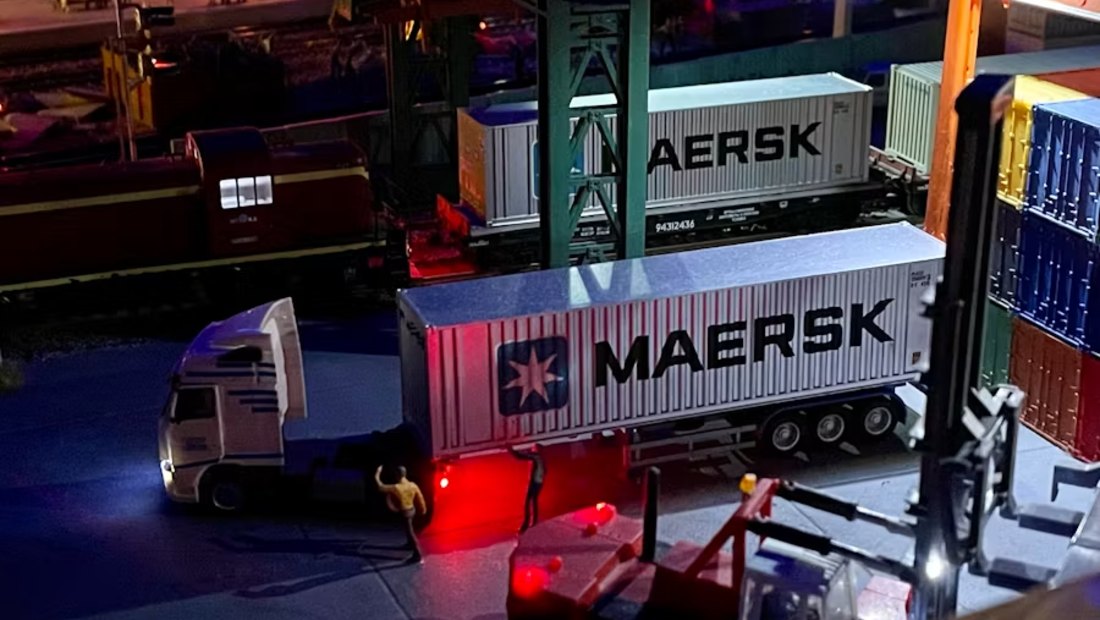
Containers transferring between rail and road at an intermodal terminal at night
04

"Where is my shipment?" eats the day

Customer service spends its morning answering questions the systems could already answer, and its afternoon chasing suppliers, carriers and brokers for updates.

Motorway and rail corridor crossing, seen from above
05

The paperwork gets paid late

PODs sit unscanned, invoices go out with the wrong charges attached, and collections chase a customer who never received the document in the first place.

Warehouse operative moving a pallet truck down a racking aisle
06

Your best people do clerical work

Experienced operators — the ones who know the trade lane, the customer and the customs officer — spend half their week copying data instead of using that knowledge.

Know the difference

TMS, RPA, a copilot and an AI agent are not the same thing.

AI agent

What it does

Works toward a goal across steps and systems

In a logistics day

Reads the enquiry, checks rates, prepares the quote, sends it for approval — or watches every shipment and escalates the ones at risk

Where it stops

Only where you set the limit. Everything else is logged and reviewable.

TMS / ERP

What it does

Records and manages the shipment

In a logistics day

Holds the job file, the rates, the invoice and the milestones

Where it stops

It stores information. It does not go and get it.

RPA / rules

What it does

Repeats fixed steps

In a logistics day

Copies a field from a portal into the TMS on a schedule

Where it stops

Breaks the moment the layout, format or wording changes.

AI copilot

What it does

Helps a person work faster

In a logistics day

Drafts the customer email your operator then sends

Where it stops

Your operator is still the bottleneck for every case.

What we build

The AI agents we build for logistics companies.

You do not need all of these. You need the one that is costing you the most right now. Each of these runs as its own agent, with its own limits, and can be started on its own.

Agent registry10
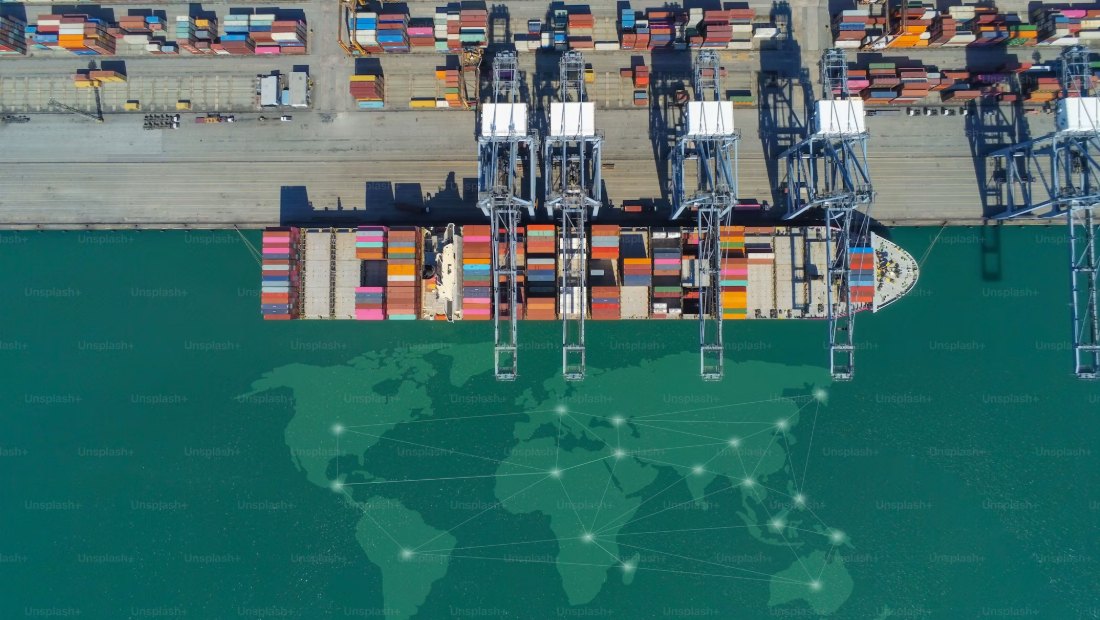
Container vessel under way, seen from directly above
Agent 01

Freight quotation agent

Reads the enquiry — email, form or attachment — works out what the shipment actually is, checks your approved rates and surcharges, applies your margin rules and prepares the quote. If something is missing, it asks the customer. If approval is needed, it routes to the right person. Your salesperson still decides what goes out.

Sea, air, road
Contract & spot rates
Margin rules
Approval routing
Where it works first

Where we would deploy the first agent, by operating model.

Agentic AI is best assessed against the operating day rather than the technology stack. The workflows below are those we would prioritise for assessment in each type of logistics business.

Shorter quote cycles, less manual chasing

Quotation preparation, rate lookups, booking confirmation, shipment exception monitoring, document collection, customer status reporting and invoice preparation.

Scope a quoting agent
Two container vessels at sea Freight forwarders & NVOCC
Agent active Jebel Ali
The impact

What changes in the operation once an agent is live.

Illustrative examples of the workflow patterns we build, and the before-and-after shape our clients measure. Client names are held under NDA; we will walk you through the architecture and give references on a call.

Freight quoting · Dubai

From rate sheets to ready quotes

  • The quote is prepared and waiting on one click
  • Minutes, not hours
Aerial view of a container terminal with quay cranes
Shipment exceptions · Jebel Ali

From silent slips to early warnings

  • Raised while there is still time to act
  • Before the charge, not after
Two container vessels at sea
Supplier data · Jebel Ali

From scattered inboxes to clean ERP records

  • Email, WhatsApp & portals
  • Structured records land in the ERP on their own
Warehouse operative scanning stock in a racking aisle
Reach stacker lifting a shipping container in a container yard at sunset
DXB-4821 · ROLLED MSCU •••••• · CUSTOMS HOLD RFQ-7734 · QUOTE READY
How it works

A 90-day path from "we should look at AI" to an agent doing real work.

Four phases, with fixed scope on each one. You can stop after any phase — the code, documentation and findings are yours either way.

Week 1–2

We find the workflow that costs you the most

We sit with your operations, pricing and finance people and follow the work: how an enquiry becomes a quote, how a shipment becomes an exception, how a delivery becomes an invoice. We score each workflow on volume, human time, data availability and risk. You get a clear opportunity map — whether or not you build it with us.

Week 3–8

We put one agent into real production

One workflow, on real shipments, with human review and fallback from the first day. Not a demo on sample data. Your team uses it, tells us where it is wrong, and we tighten it against the cases that actually occur in your trade lanes.

Week 9–12

We widen the scope and prove the number

We extend the agent to the full workflow, harden the TMS, ERP and carrier connections, run it against a test set of real historical cases, and train your team to operate it. Then we show management the before-and-after in their own numbers, not ours.

Ongoing

We run it, or we hand it over

You choose. We operate the agent under an SLA, or we transfer everything — code, prompts, evaluation sets, runbooks — to your internal team with training. Both are first-class options, and the contract is written so neither one penalises you.

Start with weeks 1–2

A fixed-scope assessment of your workflows. You keep the opportunity map whether or not you build with us.

Start the assessment
Your stack stays

The agent fits your systems. Your systems do not have to fit the agent.

Most logistics AI projects fail where the demo meets the real technology estate — a fifteen-year-old TMS, a carrier with no API, and a customer who sends everything by email. We expect that, and we plan for it.

Warehouse operative scanning stock in a racking aisle
Transport & warehouse systems

Your TMS stays the system of record

The agent reads and writes through your existing interfaces and permissions. Nothing is migrated or mirrored to make the AI work.

CargoWiseMagayaCustom TMSWMS
Stacked shipping containers forming a grid of records
Finance & ERP

Invoices and jobs stay where finance expects them

Job costing, invoicing and payables update against your existing objects and validation rules, so reporting stays trustworthy.

SAPOracleDynamicsOdooTally
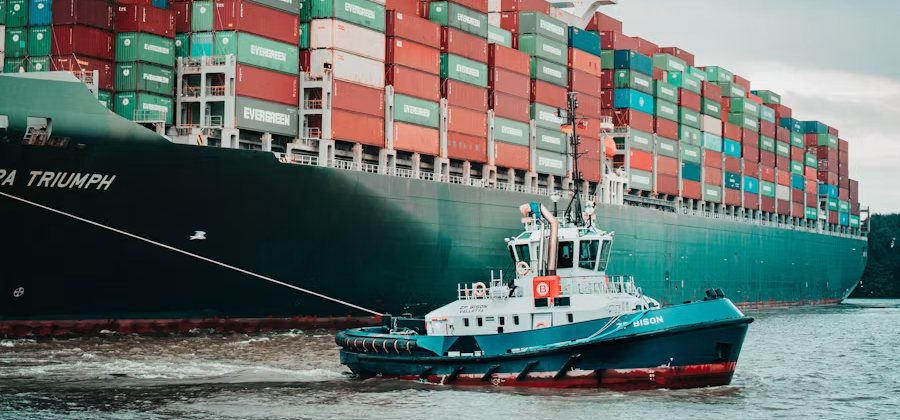
Tug guiding a loaded container vessel into port
Carriers & trade platforms

Where the shipment data actually lives

Carrier and liner portals, sailing schedules, terminal and customs status, plus the emails and EDI files that still carry most of the real information.

Carrier portalsDubai TradeEDISailing schedules
Container ship at a quay with a truck collecting alongside
Channels

It works where the requests arrive

Shared mailboxes, WhatsApp Business, your customer portal and phone — under your tenant, your retention rules and your escalation policy.

Outlook / M365GmailWhatsAppPortal & chat
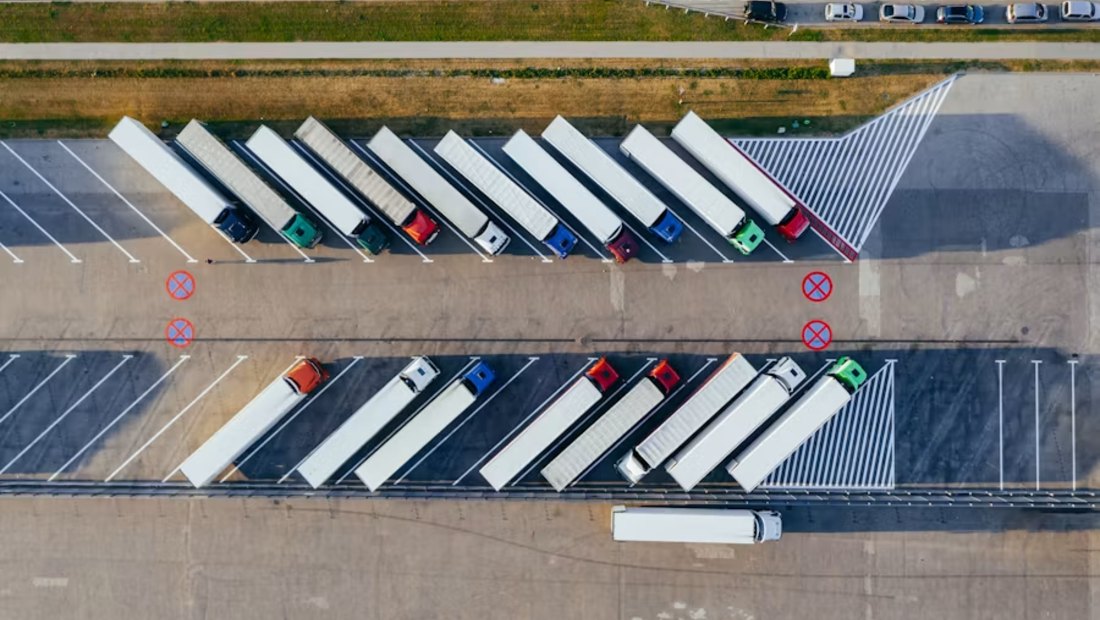
Trucks waiting in a logistics yard
Documents & knowledge

Grounded in your approved information

Rate sheets, SOPs, customer-specific instructions and past job files — with permissions respected, so the agent can only use what the requester is allowed to see.

SharePointDriveDMSRate books
Articulated truck on an open highway
When there is no API

We bridge it, carefully

Plenty of carriers and portals still have no usable API. Where the workflow and the platform's terms allow it, controlled browser automation can bridge the gap — with the limits documented, not hidden.

Controlled automationDocumented limits
Autonomy with limits

How we stop an AI agent from becoming a new operational risk.

Software that can send a quote, release a container instruction or issue an invoice is a different risk from software that writes text. A production agent needs boundaries at several levels — here are the seven we build in every time.

01

Identity before intelligence

The agent works through defined logins, roles and permissions. It never gets broader access simply because the model could use it.

02

Least access it needs

A quoting agent does not need payroll. A track-and-trace agent does not need to issue credit notes. Every tool the agent can reach has to justify itself.

03

Human approval where it matters

We write down, before build, which actions run automatically, which need sign-off, and which the agent must never take. Money and commitments sit on the human side of that line by default.

04

Everything logged

What it read, what it decided, which tool it called, who approved, what it sent. Auditability is designed in, not reconstructed after an incident.

05

Tested before trusted

We evaluate against real historical shipments, known edge cases and deliberate failures before increasing what the agent may do on its own. Accuracy is measured by workflow outcome, not by whether the output reads well.

06

Protected against agent-specific attacks

A malicious instruction can arrive inside a customer email or a PDF attachment. The architecture accounts for prompt injection, hostile documents, wrong tool use, credential leakage and runaway loops.

07

Controlled change

Models, prompts, tools and workflow logic are versioned. A model upgrade must not quietly change how your quoting or customs workflow behaves.

↑

Start narrow, widen on evidence

Most agents should begin by recommending, move to acting with approval, and only take independent action once measured performance supports it.

✓

Certified practices behind it

We work to ISO 9001:2015 and ISO/IEC 27001:2022, with the access, change and incident processes that come with them.

Dubai skyline with the Burj Khalifa above a multi-level highway interchange
Dubai · AE-DU Trade node
UAE reality

Where your data sits, and the UAE rules that touch a logistics agent.

There is no single rule saying every UAE AI system must be hosted the same way. The right design depends on your data, your sector, your free zone and your customer contracts — so we answer these questions before we design anything.

What applies 01

Privacy, customs and contracts

If the agent handles personal data in the UAE, the Federal Personal Data Protection framework is one consideration. Companies in DIFC or ADGM may have additional obligations. Customs and trade data usually brings its own contractual and retention rules from your customers and your brokers.

Federal PDPLDIFCADGMCustomer contracts
Where it can run 02

Chosen against the requirement

Approved UAE cloud regions, a private VPC, sovereign infrastructure or on-premise components — selected because your data and contracts require it, not because it is the vendor's default.

UAE cloud regionsPrivate VPCSovereign infraOn-premise
E-invoicing is coming 03

Structured invoices, not PDFs

The UAE is moving to a Peppol-based e-invoicing regime. If you are building invoicing automation now, it should produce structured data that can feed that process rather than another PDF. Confirm current dates with the Ministry of Finance before you plan around them.

Jul 2026Voluntary pilot
From 2027Mandatory, larger businesses
Before any architecture

Eight questions we answer before writing any architecture

  1. 01What information will the agent access?
  2. 02Where does that information live today?
  3. 03Where may it legally be processed?
  4. 04Which model providers are permitted?
  5. 05What may leave your environment?
  6. 06What logs must be kept, and for how long?
  7. 07Who can see those logs?
  8. 08Which decisions must stay with a human?
Commercial reality

What does an AI agent for logistics cost in Dubai?

There is no single price for "an AI agent." An agent that drafts quotes from a clean rate book is a different engineering job from one watching thousands of shipments across three carriers and two ERPs. These are our published 2026 planning ranges for UAE and Saudi work — not fixed quotations.

Pilot 01

Focused agent pilot

USD7,500–20,000

One clearly defined workflow, limited integrations and agreed success criteria. Typically a quoting agent on one trade lane, or exception monitoring on one carrier feed.

Scope
Systems
Authority
Most common 02

Single workflow in production

USD20,000–60,000

Hardened TMS, ERP and carrier integrations, production infrastructure, monitoring, evaluation, approval flows, dashboards and rollout to the operations team.

Scope
Systems
Authority
Programme 03

Multi-agent programme

USD60,000–175,000+

Several agents across quoting, operations, documentation and finance, with higher volumes, more systems, multiple branches and stricter security requirements.

Scope
Systems
Volume
Cost drivers

What moves the number

Lower cost → higher cost
  1. 01How many systems it must touchOne system → Many systems
  2. 02Whether carriers expose an APIClean APIs → No API
  3. 03Quality of your rate dataClean rate book → Scattered sheets
  4. 04How many exceptions the workflow hasFew → Many edge cases
  5. 05Transaction volumeHundreds a month → Thousands a day
  6. 06How much authority the agent getsRecommends → Acts alone
  7. 07Security and residency requirementsStandard cloud → Sovereign / on-prem
  8. 08Arabic and English handlingEnglish only → Arabic + English
Build the case first

Will an agent pay for itself? Run the numbers.

Start with the current workflow, not the model. The business case should exist before the build — which is why our first phase scores workflows on return as well as feasibility.

A worked example

Freight quoting desk

1,200
45 min
8 min
Hours released every month
740

That is 93 working days of pricing-desk time, every month.

Today900 h
With an agent160 h

82% less time per quote — plus the quotes you now win because you answered first.

The numbers that decide it
  1. 01Transactions per month — quotes, shipments, entries, invoices
  2. 02Minutes of human work per transaction
  3. 03Loaded cost of the people doing it
  4. 04Rework rate and the cost of getting it wrong
  5. 05Demurrage, detention and penalty charges absorbed
  6. 06Quotes lost to slow response
  7. 07Days sales outstanding caused by paperwork delay
Sometimes the answer is no

When we would tell you not to build an AI agent.

Six signals that make us question the investment — before you spend it.

01

It does not happen often enough

Twelve special-project shipments a year will never repay an agent. Automate what happens every day.

02

Nobody agrees how the process works

If three branches quote differently and no one can say which is right, fix the process first. An agent will only scale the disagreement.

03

The data cannot be reached

If the rates live in one person's spreadsheet and the carrier has no feed, that is a data problem wearing an AI costume.

04

A simpler tool wins

Sometimes a report, an alert rule or a fix in your TMS configuration solves it for a fraction of the money. We will tell you when that is the case.

05

A wrong action is unrecoverable

If a mistaken automatic action cannot be contained or reversed, that step stays with a human. Full stop.

06

There is no number behind it

If nobody can say which metric should move, the project has no way to succeed and no way to be defended later.

Before you choose a partner

Eight questions to ask any company selling AI to a logistics business.

Ask us these too. We expect you to.

  1. 01

    Show me one running in production

    A demo proves the happy path. Ask what happens after ten thousand real shipments and the exceptions that come with them.

  2. 02

    What happens when the agent is unsure?

    They should describe confidence thresholds, approval boundaries, escalation and fallback without having to think about it.

  3. 03

    How will it connect to our TMS?

    Ask about your specific TMS, your carriers, your portals and your identity system — not "we integrate with everything."

  4. 04

    How is it tested before it gets more freedom?

    Look for evaluation against real historical shipments and production metrics, not "our team checks it."

  5. 05

    Where will our shipment data be processed?

    The answer should name the infrastructure, the model providers, the access controls, the logs and the residency options.

  6. 06

    Who owns the code and the knowledge?

    Settle ownership of source code, prompts, evaluation data and runbooks before signing, not at renewal.

  7. 07

    What do you monitor after launch?

    Carrier formats and customer habits change constantly. Ask what is watched, and who fixes it when it drifts.

  8. 08

    Which number will you be measured on?

    If the project cannot be tied to quote turnaround, cost per shipment, demurrage, rework or days sales outstanding, ask why you are building it.

Common questions

What logistics leaders ask before they sign.

What is agentic AI in logistics?+

Agentic AI in logistics is software that is given an objective rather than a script. It reads incoming information — enquiries, carrier updates, documents, system records — decides what needs to happen next within limits you set, takes approved actions in your systems, and escalates anything outside its authority to a person. Common uses are quotation preparation, shipment exception monitoring, customs document checking, customer status updates and invoice preparation.

What is the difference between AI automation and agentic AI for logistics?+

Traditional automation follows fixed rules: if this field appears, copy it there. It works well when everything arrives in the same format and breaks when it does not. Agentic AI can handle variation — an enquiry written as a paragraph, a carrier notice in a new layout, a document missing a field — because it reasons about the information rather than matching a pattern. In practice most logistics operations end up using both, with rules for the predictable steps and agents for the messy ones.

Which logistics workflow should we automate first?+

Usually the one that is high volume, repetitive, dependent on information scattered across systems, and has a clear definition of a correct result. For freight forwarders that is almost always quotation preparation or shipment exception monitoring. For 3PLs it is order exceptions and client reporting. For distributors it is capturing supplier updates into the ERP. We score your workflows in the first two weeks and tell you which one repays fastest.

How much does an AI agent for logistics cost in Dubai?+

A focused pilot on one workflow typically falls within our published USD 7,500–20,000 planning range. A full single-workflow production deployment commonly runs USD 20,000–60,000, and a multi-agent programme across several departments can exceed USD 60,000. The biggest cost drivers are how many systems the agent must touch, whether your carriers expose APIs, the quality of your rate and master data, and how much authority the agent is given.

How long before it is actually working?+

A focused agent on one real workflow: 4–6 weeks from kickoff. A fully scaled deployment with guardrails, integrations and team training: about 90 days. You see live results on real shipments in the first phase, not a demonstration on sample data.

Can an AI agent work with our existing TMS?+

Usually yes. We build against whatever interfaces your TMS actually exposes — APIs, database access, file exchange or EDI — rather than assuming every platform is equally easy to connect. Where a system genuinely has no safe interface, controlled browser automation can bridge the gap if the workflow and the platform's terms allow it. We assess your real architecture in discovery instead of promising integration in advance.

What if our carriers have no API?+

That is the normal situation, not the exception. Much of the useful information in freight still arrives by email, PDF, portal screen or EDI file. Our shipment exception agents are designed to work from mixed sources: carrier portals, sailing schedules, terminal status, email notices and your own TMS records, normalised into one view. We document what each source can and cannot reliably tell you.

Will the agent send quotes to our customers by itself?+

Only if you decide it should, and we would normally advise against it at the start. The usual pattern is that the agent prepares the complete quote and puts it in front of your salesperson for one-click approval. Once you have months of evidence on accuracy, you can widen its authority for defined lanes or customers — for example, standard rates below a value threshold — while everything else stays with a human.

What happens when the agent gets something wrong?+

Every agent has a confidence threshold that routes uncertain cases to a person, a guardrail layer that blocks any action outside policy, and a full log of what it read, decided and did. We design for being wrong, because it will be sometimes. The question is whether the system fails safely and visibly — and whether you can see exactly what happened afterwards.

Can it handle Arabic and English?+

Yes, but bilingual performance has to be tested against your actual documents and messages. Mixed-language enquiries, Arabic company names transliterated three different ways, scanned documents and regional address formats all belong in the evaluation set before go-live rather than being discovered in production.

Does our shipment data have to leave the UAE?+

Not necessarily. Deployment can be designed around your privacy, residency and contractual requirements using approved regional cloud infrastructure, a private environment or on-premise components. The right architecture depends on what data the agent touches and what your customer contracts commit you to — which is why we answer the data questions before designing anything.

Will an AI agent replace our operations staff?+

That should not be the design goal, and it is rarely what happens. The realistic outcome is that the same team handles far more volume, spends its time on exceptions, customers and commercial judgement, and stops doing clerical retyping. In most of our deployments headcount stays the same and throughput goes up.

How much autonomy should we give an agent?+

Start with the least authority that still creates value. Most agents should begin in watch-and-recommend mode, move to acting with human approval, and only earn independent action on defined case types after measured performance supports it. Widening authority should be a decision backed by evidence, not a setting someone turns on.

Who owns the agent and the IP?+

You do. Source code, prompts, orchestration logic, evaluation datasets and runbooks are produced in your repositories and belong to you. Third-party foundation model IP remains with its provider, as it does for everyone.

Are you tied to one AI model or platform?+

No. We choose the model, framework and hosting that fit your data residency, latency and budget, and we explain each choice to your team. If a cheaper or better-suited option exists, that is what you get. Nothing in the build is designed to make swapping providers difficult later.

What does the UAE e-invoicing mandate mean for logistics automation?+

The UAE is moving to a Peppol-based e-invoicing model, with a voluntary pilot phase from July 2026 and mandatory adoption phasing in from 2027 for larger businesses. Practically, invoicing automation built now should produce structured invoice data rather than PDFs, so it can feed an accredited service provider when your phase arrives. Dates have moved before — confirm the current schedule with the Ministry of Finance before you plan around it.

Do we need to clean up our data first?+

Some of it, and we will tell you which parts honestly. Agents are far more tolerant of messy input than rule-based automation, but they cannot invent a rate that was never recorded or a container number nobody entered. In discovery we separate "messy but usable" from "genuinely missing", and the second category becomes a piece of work with its own cost and timeline.

What happens after it goes live?+

Production agents need monitoring. Carrier formats change, customers change how they write, and models get updated. We track success rate, exception rate, human review rate, latency, running cost and the business metric the project was justified on, keep prompts and tools under version control, and improve against a growing test set of real cases.

How do we exit if it is not working?+

After any phase, with no cancellation penalty. The first phase is a fixed-fee assessment and you keep the findings whatever you decide. We make leaving straightforward on purpose — it is the clearest signal that we intend to earn the next phase.

Do you work outside Dubai?+

Yes. We work across the UAE and the wider GCC, with delivery teams in Dubai, Riyadh and Trivandrum, and we also deliver for clients in Australia and the United States. Logistics workflows differ by market — customs, documentation and carrier behaviour especially — so we design against your corridor rather than a generic template.

Question not covered?

Speak to a senior engineer. No pitch deck, just a straight answer.

Talk to an engineer
Two trucks halted on opposite sides of a collapsed bridge span
Why now

The performance gap between AI-enabled logistics operators and the rest is widening.

The figures below are independently published industry research, not our projections. We include them because boards ask for the evidence base, and because they define the window in which early adopters establish an operating advantage.

50% Forecast · 2030

of cross-functional supply chain software is expected to use intelligent agents to execute decisions by 2030

SourceGartner
40% Forecast · 2026

of enterprise applications expected to include task-specific AI agents by end of 2026 — up from under 5% in 2025

SourceGartner
5–20% Reported range

reduction in logistics costs reported where AI is embedded in supply chain operations

SourceMcKinsey & Company
40%+ Risk · 2027

of agentic AI projects are expected to be cancelled by 2027 — mostly for unclear value and weak controls

SourceGartner
Reply within 12 hours

Start with one workflow.

A 30-minute session with a senior engineer. No pitch deck.

    Confidential. NDA available before the call.

    Let's Talk

      ATeam Logo
      Privacy Overview

      This website uses cookies so that we can provide you with the best user experience possible. Cookie information is stored in your browser and performs functions such as recognising you when you return to our website and helping our team to understand which sections of the website you find most interesting and useful.

      Privacy Preference