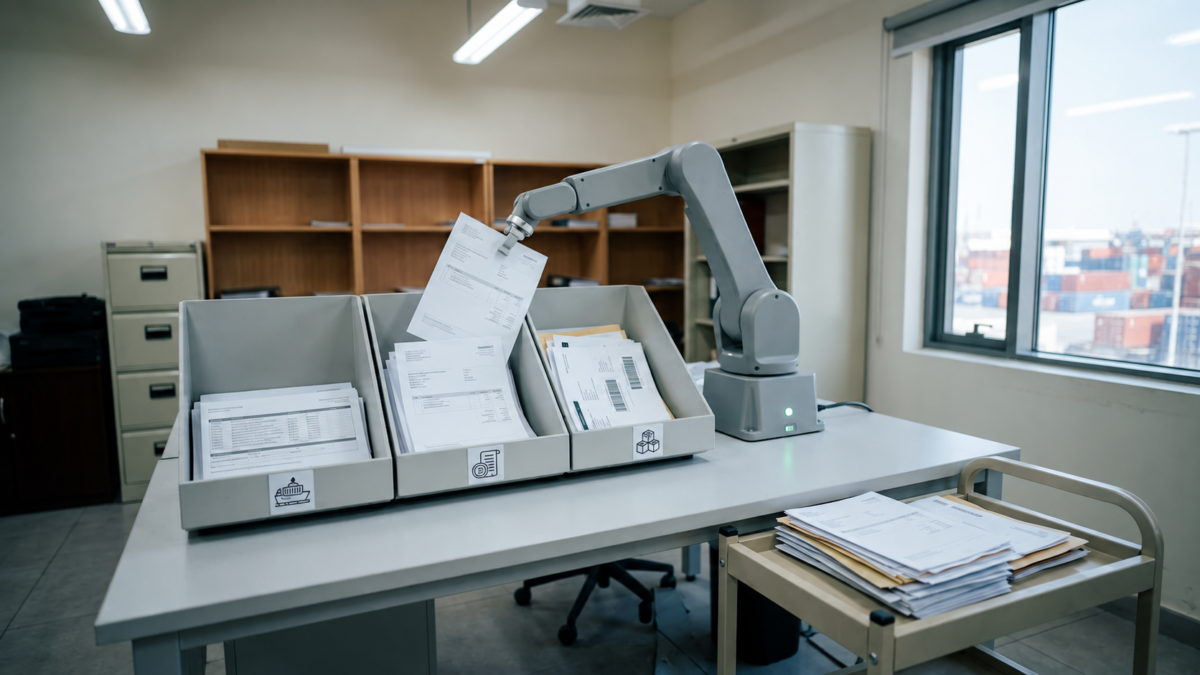
Many of the businesses are looking for AI automation across the UAE and Saudi Arabia markets, starting with a single, simple question:
How much is the cost of an AI agent?
The annoying answer from most of the vendors is usually the same: “It really depends. Call us for a quote.”
That response is partly correct. An AI agent that comprehends the invoices from an email and recommends accounting entries is not just the same as an AI agent that tracks 50,000 ZATCA invoices monthly, inspects more than 45 compliance rules, applies safe corrections, and maintains an audit trail. A customer service agent in WhatsApp is not the same as a healthcare claims agent that connected to insurance websites, hospital systems, and regulatory workflow processes.
However, “it depends” is not enough for corporate leaders making decisions on the budgets.
If you’re a CFO, COO, CIO, CEO, founder, or digital transformation leader in Dubai, Abu Dhabi, Riyadh, Jeddah, or Dammam, you want baseline numbers before you can decide whether the AI automation is worth exploring. You want to know what a pilot costs, what a complete rollout costs, what the monthly running prices look like, and when the investment costs back.
This article gives you those numbers.
In 2026, a realistic AI agent fee that a UAE or Saudi business buyer should anticipate is:
These are not typical generic software predictions. They are practical ranges driven by enterprise AI agent work in the Gulf, particularly for document-based and workflow-driven use cases such as accounts payable, ZATCA compliance, tenant communication, HR onboarding, supplier tracking, claims processing, logistics, and customer service operations.
The focus of this article is very simple: to provide a transparent pricing guide for UAE and Saudi Arabian operations before they talk to any vendor.
There are mainly three speculations as to why AI businesses avoid pricing transparency.
Firstly, each AI agent project is of a different complexity level. One agent may only comprehend invoices from a shared inbox. Another might want to connect to SAP, Oracle, Zoho, Odoo, WhatsApp, email, government websites, approval dashboards, and a data warehouse. The second agent costs more since the engineering effort is elevated.
And secondly, vendors worry that sharing a price band will put buyers off at an early stage. If a company sees “$80,000,” they may think AI automation is too expensive — before realizing that the same but might save $300,000, $500,000, or even tens of millions of dollars a year.
Third, a lot of AI vendors still sell AI as strategy, workshops, and demos. They are not willing to itemize the pricing and break it down into delivery components because the work has not been sufficiently standardized.
We believe that creates mistrust.
The UAE and Saudi companies are now mature enough to inquire better questions. They are not only querying, “Can AI do this?” They are interrogating:
How much will that cost?
How long will that take?
How will the systems integrate?
How much is the human review is required?
How much are the hidden monthly expenses?
How is the payback duration?
Can we begin small before committing to a complete rollout?
Those are reasonable questions.
At aTeam Soft Solutions, we feel that buyers should have baseline expectations set for them before they get on a sales call. A transparent range won’t ever replace a good discovery, but it does provide decision-makers a starting point.
That is particularly crucial in the Middle East, as AI automation initiatives frequently involve regulated activities. An AI agent may have to be aware of ZATCA invoice regulations in the Saudi Arabian market. In the UAE, for instance, it can be required to manage DIFC, healthcare, real estate, customs, or HR processes. Arabic and English processing, Audit trails, approval flows, and data security are important in both industries.
So rather than hiding behind “contact us,” this guide explains how agent pricing works, what drives the price up, what doesn’t, and how to determine if an agent will pay for itself.
Normal price level: $15,000–$40,000
Normal timeline: 4–8 weeks
Ideal for: demonstrating the concept, verifying the accuracy, and gaining internal confidence.
A fixed price pilot is the most common entry point into AI automation.
The aim is not just to automate the complete business process from day one. The goal is to demonstrate that the AI agent can manage one narrow workflow with enough accuracy to justify a full rollout.
In many of the pilots, the AI agent works well in Phase 1 and Phase 2 of a graduated trust model.
In Phase 1, the agent observes and extracts. It comprehends the documents, emails, messages in WhatsApp, spreadsheets, forms, PDFs, images, and system records, then extracts structured information.
In Phase 2, the agent suggests and confirms. It suggests the further steps needed, although a human still needs to approve the action.
For instance, an invoice-processing pilot can consume supplier invoices from email and WhatsApp, extract supplier name, invoice number, PO number, VAT amount, line items, due date, and payment terms, and then propose accounting entries for a finance user to approve.
Of course, the pilot can not yet post to the ERP directly. It may not yet generate payments. It may not handle every exception yet. That comes later.
What do you generally get in this model?
A fixed-price AI agent pilot typically consists of a single clearly defined business process, one AI agent, a limited number of data sources, 1–2 integrations, a straightforward review screen, accuracy testing, and basic reporting.
The pilot is generally enough to answer four questions:
Can the AI read our documents or workflows?
Does it attain adequate accuracy?
Can our team rely on the results?
Is the ROI high enough to justify a full-scale rollout?
Example
We have just constructed a POC for a trading company in Dubai. The AI agent pulled data from supplier invoices that were sent by email and WhatsApp. The pilot lasted six weeks, cost around $22,000, and involved two system integrations. In the first week of its deployment, the agent achieved 85% extraction accuracy, which was enough for the client to consider a full deployment.
That’s what the POC is really for. It mitigates risk before a business commits $80,000, $100,000, or more.
Normal price range: $40,000–$120,000
Normal timeline: 12–20 weeks
Ideal for: End-to-end automation of a single important process
A full AI agent rollout goes beyond extraction and suggestion. It covers the complete workflow from input to action, with human review as required.
That’s where the agent moves through all four phases:
Observe and extract
Recommed and confirm
Act according to the guardrails
Work with autonomy and an audit trail
A complete deployment may cover ERP integration, CRM integration, email and WhatsApp integration, portal tracking, Arabic-English document handling, a review dashboard, exception queues, rule engines, audit logs, admin controls, role-based access, alerts, and 3 months of after-launch support.
What drives the price higher?
The price shifts toward the higher end when the process is regulated, system-based, or exception-heavy.
For example, ZATCA compliance, NPHIES healthcare workflow processes, MOHRE-related HR workflow processes, DHA healthcare processes, DIFC financial workflow processes, customs documentation, and insurance claims all add complexity. Arabic language processing also enhances cost when documents are scanned, inconsistent, handwritten, or combined with English.
Example
aTeam Soft Solutions posted a ZATCA compliance monitoring agent for a Saudi retail conglomerate that monitored over 50,000 monthly invoices among the SAP, POS, WooCommerce, and manual invoice workflows. The system ran invoices through more than 45 rules, lowered rejection rates from 3–5% to 0.15%, and caught 97% of issues before submission. A project of this size normally falls close to the upper end of the single-process deployment range since it integrates multiple source systems, compliance logic, high monthly volume, and safe auto-correction.
The estimate for this type of work would be approximately $95,000 over a period of a few months, depending on integrations, reporting, support, and deployment environment.
Normal price range: $120,000–$350,000+
Normal timeline: 6–12 months
Ideal for: Companies automating several workflow processes among the departments
A multi-agent enterprise program that covers 3–5 AI agents working across distinct business functions.
For example, a UAE conglomerate might require:
An accounts payable agent
A contract review agent
An HR onboarding agent
A tenant communication agent
A procurement reconciliation agent
Rather than building each agent separately, a multi-agent program builds the shared infrastructure. This may cover common user management, a central dashboard, shared document processing, unified audit logs, security controls, notification systems, and integration layers.
The model is more costly at the beginning, but becomes less expensive per agent as time goes on.
The first agent might be more expensive, as that’s when infrastructure is built. The 2nd and 3rd agents are usually cheaper since the architecture, deployment pattern, and approval model are already established.
Example
A UAE group hired aTeam Soft Solutions to develop agents for contract review, accounts payable, and HR onboarding. The three Agents had common infrastructure, review workflows, audit logging, and integration patterns. A realistic schedule for a program of this type would be approximately $185,000 for 9 months, based on process complexity and the number of systems involved.
Multi-agent programs are usually well-suited for companies that already know AI automation will be a strategic priority, rather than as a one-time experiment.
Normal price range: $15,000–$35,000/month
Normal team: 2–4 AI engineers and a project manager or product manager
Ideal for: Businesses with a continuous automation roadmap
A few companies do not need a fixed project. They require a committed team that continuously identifies, develops, improves, and maintains the AI agents.
This functions well when a business has many processes to automate in more than 12–24 months.
A committed AI team might include:
AI engineer
Backend engineer
Frontend/dashboard developer
QA engineer
Project manager
Solution architect, part-time
DevOps or cloud engineer, part-time
The team can begin with a single agent, then move to another process, then enhance the first agent, then add reporting, then combine with another system.
This model is helpful for businesses that require long-term capability but do not need to hire a full in-house AI team immediately.
It also offers more flexibility. If needs change, they can reprioritize without having to renegotiate every minor change of scope.
Cost for AI agents is not primarily driven by the number of users. Rather, it is about the complexity of workflows.
A basic AI agent used by 1,000 employees might cost less than a complex AI agent used by 10 compliance officers.
Here are the most important base costs.
1. Number of systems required to be integrated
Every system integration usually adds up to $5,000–$15,000.
An AI agent with access to only Gmail and a spreadsheet, however, is relatively straightforward. An agent linked to SAP, Oracle, Salesforce, WhatsApp, an internal database, a supplier portal, and a government platform is a different matter altogether.
APIs are convenient for integration. Systems that do not have an API can be automated at the screen or browser level, integrated at the database level, or through manual export/import processes.
2. Processing of Arabic documents
The processing of the Arabic language can contribute an overhead of 15-25% to both the OCR and the NLP parts.
That’s because Arabic documents often need special handling for OCR, layout detection, right-to-left text, mixed Arabic-English content, names, addresses, stamps, and scanned documents.
Saudi Arabia and Gulf business terminology may add yet another layer when the agent is customer-centric or dealing with informal WhatsApp messages.
3. Regulatory compliances
ZATCA, NPHIES, MOHRE, DHA, DIFC, ADGM, CBAHI, SFDA, MOMRA, and other regulatory contexts add to the price since the AI agent must follow specific rules.
A normal invoice extraction agent only understands invoice fields.
A ZATCA compliance agent needs to check the tax fields, invoice format, seller and buyer details, line-level tax computations, QR-code rules, XML specifications, correction rules, rejection patterns, and audit trails.
That’s a different level of complexity.
4. Legacy systems without an API
Legacy system integration could be 2–3x more costly than API-based integration.
If the system exposes a clean API, the agent can directly communicate and send data to it. If an API is not available, the development team might have to use screen automation, browser automation, robot workflows, scheduled exports, direct database access, or semi-automated review processes.
This enhances the testing effort and long-term maintenance.
5. Components of Computer Vision
Computer vision adds cost since it requires the image information, model training or tuning, GPU infrastructure, camera setup, edge-case testing, and accuracy validation.
One such example is a manufacturing defect detection agent, which is far more complex than a text-based email agent. It has to deal with visual defects, handle lighting variation, speed of production, angle of camera, false positives, and human review.
aTeam Soft Solutions posted a Saudi packaging manufacturer case that examines where a computer vision AI agent achieved 99.4% defect detection accuracy among the production lines. That type of system requires more engineering than a standard document workflow.
6. Training Custom ML models
Making use of GPT, Claude, Gemini, or open-source models via APIs is usually quicker and cheaper than training custom models.
Custom model training higher expenses when the company has very specific documents, images, terminology, risk patterns, or classification needs.
This adds data preparation, labeling, evaluation, rollouts, monitoring, and retraining costs as well.
7. Deployment across multiple entities or multiple tenants
If the AI agent might assist multiple companies, branches, hotels, hospitals, warehouses, business units, or countries, pricing increases.
The agent may require separate rules, permissions, dashboards, workflow processes, languages, currencies, calendars, and reporting structures for every entity.
1. Number of users
An AI agent used by 10 people doesn’t necessarily cost less to develop than one used by 1,000 people.
The architecture, workflow logic, integrations, and review screens are the major expenses. Additional users may increase cloud usage and support requirements, but not the core build cost.
2. Amount of data processed
The same core code is used when processing 1,000 or 50,000 invoices.
Processing more samples also increases cloud compute and API charges, but the cost to engineer is primarily in the workflow architecture.
For example, the AP agent itself does not become 50x more costly just because the invoice volume goes from 1,000 to 50,000. It might require more performance testing and extra infrastructure, but it’s the same evolved logic.
3. Languages in addition to Arabic-English
Once the system has good support for Arabic and English properly, bringing in additional languages such as Hindi, Urdu, or Malayalam is generally not a big cost factor unless the documents are complicated or necessitate a deep understanding of a particular field.
The initial multilingual layer is the expensive part. Additional languages are typically incremental.
The build cost is not the only expense.
A responsible AI automation budget should cover the infrastructure, API usage, monitoring, staff training, and data preparation.
Normal cloud infrastructure for an AI agent costs almost $500–$3,000/month.
A lightweight agent may only require a small backend server, database, storage, logging, queue system, and API usage.
A major corporate agent may need private cloud hosting, GPU resources, higher security controls, monitoring, data pipelines, staging environments, and backup infrastructure.
The costing of LLM API changes regularly, so buyers should always confirm the current vendor pricing before finalizing budgets.
As of the existing OpenAI API pricing page, GPT-4.1 text pricing is listed at $2 per 1 million input tokens and $8 per 1 million output tokens. Anthropic’s Claude Opus 4.7 announcement lists costing at $5 per 1 million input tokens and $25 per 1 million output tokens.
For most of the document-processing agents, this means the LLM cost per processed document may be minimal, often cents or fractions of a cent, depending on document length, model choice, caching, and output size.
Although at scale, it adds up.
A system processing 8,000 invoices monthly might spend around $80–$240/month in LLM API fees depending on the model, document length, number of validation passes, OCR method, and retry logic.
Budget 15–20% of the build cost yearly for maintenance.
If a complete AI agent costs $80,000 to build, yearly maintenance may cost $12,000–$16,000.
This covers bug fixes, integration updates, prompt improvements, model evaluation, rule changes, dashboard updates, cloud maintenance, and assistance.
This is no opt-in, opt-out choice. The AI agents run within the business processes. When business rules change, the agent has to change.
Most of the AI automation projects fail not because there is a weak model, but it is because people are not familiar with the new workflow
Budget almost $5,000–$15,000 for training, SOPs, onboarding sessions, inside communication, review-process design, and user adoption assistance.
Finance users really want to know when to trust the AP agent. HR users need to know how to review onboarding exceptions. Compliance users want to understand when the ZATCA agent is recommending a correction versus blocking a transaction.
Unstructured data can contribute to $10,000-$30,000 of costs before the AI agent can work adequately.
When the supplier names are inconsistent, SKUs are duplicated, old invoices are scanned badly, contract PDFs are inaccurate, or customer records are missing essential fields, the AI agent will struggle.
Data cleaning is not just glamorous, although it is often determined by the agent reaches production accuracy.
An AI agent should not be assessed only as a technology cost. It should be reviewed as an operational investment.
The easiest way to calculate ROI is:
Annual ROI = Annual savings or revenue protected − Annual AI agent cost
A more helpful payback formula is:
Payback period = Total project cost ÷ Monthly financial benefit
If an AI agent prices $80,000 and creates $40,000/month in measurable savings or revenue protection, the payback duration will be 2 months.
aTeam Soft Solutions posted an accounts payable AI agent for a Dubai trading business that processed over 8,000 supplier invoices monthly with 99.2% accuracy and cut down the AP processing time by 75%.
A complete AP agent might cost around $80,000.
If it recovers $380,000 in early payment discounts and saves $270,000 in labor and rework costs, the total yearly benefit is $650,000.
That means the payback period can be less than 3 months.
The Saudi ZATCA compliance agent cited earlier, with more than 50,000 invoices monthly, caught 97% of issues before submission.
A system like this may cost almost $95,000.
If it helps avoid SAR 1.8 million in annual fines, rejections, remediation work, and compliance risk, payback can occur in about 2 months.
The important point is not only penalty avoidance. It also lowers the finance team’s stress, manual review, resubmission delays, and uncertainty on audits.
aTeam Soft Solutions posted a Dubai property management AI agent that managed more than 15,000 monthly tenant interactions and increased lease renewal rates from 68% to 89%.
A tenant communication agent may cost almost $70,000.
If it protects AED 4.2 million in yearly rental revenue by increasing renewals, lowering missed follow-ups, and resolving tenant issues faster, the payback can happen in almost a month.
Employ this straightforward framework:
Step 1: Calculate the manual labor cost
Number of people involved × monthly salary allocation × percentage of time spent on the process
Step 2: Calculate the error cost
Monthly cost of errors, rework, delays, penalties, missed discounts, lost renewals, or missed sales
Step 3: Calculate the speed value
Revenue or savings are gained when the process moves more quickly
Step 4: Calculate the AI cost
Build cost + annual maintenance + cloud/API + training
Step 5: Calculate the payback
Total project cost ÷ monthly benefit
If the payback period is less than 12 months, the project deserves serious consideration. If the payback period is less than 6 months, it is normally a good business case. If the payback period is less than 3 months, the business shall prioritize it.
aTeam Soft Solutions utilizes a POC-first pricing model for many of the AI agent projects.
The reason is straightforward: We don’t believe a client should commit over $100,000 before seeing if an AI agent can run on their actual documents, systems, and workflow.
Our normal pricing strategy is based on four principles.
Firstly, we begin with a clearly scoped pilot. The pilot aims at one process, one agent, and a measurable success criterion.
Secondly, billing is tied to milestones. Rather than interrogating for the full project amount upfront, we break down the work into discovery, pilot, integration, dashboard, testing, rollouts, and assistance milestones.
Thirdly, we provide a transparent cost breakdown. Clients will look at what they are paying for: AI engineering, backend development, frontend dashboard, integrations, QA, DevOps, project management, cloud setup, and support.
Fourthly, we avoid hidden execution fees. While an integration, cloud cost, API cost, or third-party tool cost is outside the development charge, we disclose it early on.
For the qualified POC engagements, aTeam Soft Solutions also offers a 120% refund guarantee on the POC phase if the agreed success conditions are not met. The aim is to lower the risk for clients who need to test AI automation without committing to a complete deployment immediately.
AI agent development expenses vary heavily by delivery region.
UAE companies often compare the three options:
India-driven development partner
UAE-locally AI agency
US or UK AI consulting company
Each one has its advantages.
A local agency in the UAE could offer the convenience of meetings on-site and more familiarity with the local culture. A US or UK company might also bring business consulting experience. A partner based in India, like aTeam Soft Solutions, can offer senior engineering depth at a much more economical rate, more so when the team is already familiar with Gulf workflows.
| Factor | India-Based Partner like aTeam | UAE Local Agency | US/UK Firm |
|---|---|---|---|
| Senior AI engineer hourly rate | $25–$45/hr | $80–$150/hr | $150–$300/hr |
| Typical POC cost | $15K–$40K | $40K–$100K | $80K–$200K |
| Full deployment cost | $40K–$120K | $100K–$300K | $200K–$500K |
| Arabic language expertise | Yes, if Gulf-experienced | Native or strong | Often limited |
| Local workshops and on-site comfort | 1.5–3.5 hours ahead | Same | 7–11 hours behind |
| Regulatory knowledge | Strong if Gulf-focused | Varies | Often limited |
| Best fit | Cost-effective custom builds | Senior AI engineer’s hourly rate | Large consulting-led programs |
The lowest price isn’t always the best price. A budget team without agentic AI experience can waste months. A top-tier consulting firm can over-engineer on the project. The appropriate option depends on the complexity of workflows, exposure to regulations, speed required, and internal technical maturity.
For most of the UAE and Saudi businesses, the ideal practical model is a Gulf-experienced India-driven engineering partner with good communication, phased delivery, and clear case-study evidence.
A basic AI agent for a Dubai business normally costs $15,000–$40,000 as a pilot. This normally includes one workflow, 1–2 integrations, document or message extraction, a simple review dashboard, and human approval. A full production rollout usually charges $40,000–$120,000.
The most economical and safe option to begin is a fixed-price pilot for a single workflow. Don’t begin with a big multi-agent program unless the business case is already evident. Select a single high manual effort process with visible errors and measurable ROI, such as invoice processing, lead qualification, tenant communication, or HR onboarding.
A robust ZATCA compliance AI agent generally ranges between $50,000–$120,000, based on the number of invoice sources, ERP systems, validation rules, correction workflows, and audit requirements. A simple validation pilot can be less, but a full system monitoring tens of thousands of invoices monthly sits near the upper end.
Yes, mostly. India-based AI development teams generally have lower hourly rates as compared to UAE-local agencies, yet they deliver excellent engineering quality if the partner is experienced. The key point is Gulf experience. An India-based team with ZATCA, MOHRE, DHA, Arabic-English, and UAE/Saudi workflow experience is usually more helpful than a cheaper team with no regional knowledge.
A standard AI agent may charge $500–$3,000/month in cloud infrastructure, depending on volume and hosting needs. LLM API usage may incur an additional $80–$500/month for many document-processing workflows, although high-volume or complex agents can price more. Maintenance is usually budgeted separately at 15–20% of the build cost per annum.
A robust AI agent, in most of the cases, should usually pay for itself within 3–12 months. Robust use cases can pay back in 1–3 months. The fastest payback generally comes from workflow processes where errors, delays, fines, missed discounts, lost renewals, or staffing costs are already high.
Yes. And in most cases, that is the best method. A pilot lets you run the AI agent on actual documents, real messages, real systems, and real exceptions before committing to a bigger investment. A good pilot can have a well-defined set of success criteria, such as extraction accuracy, time saving, reduction of errors, and speed in getting approval.