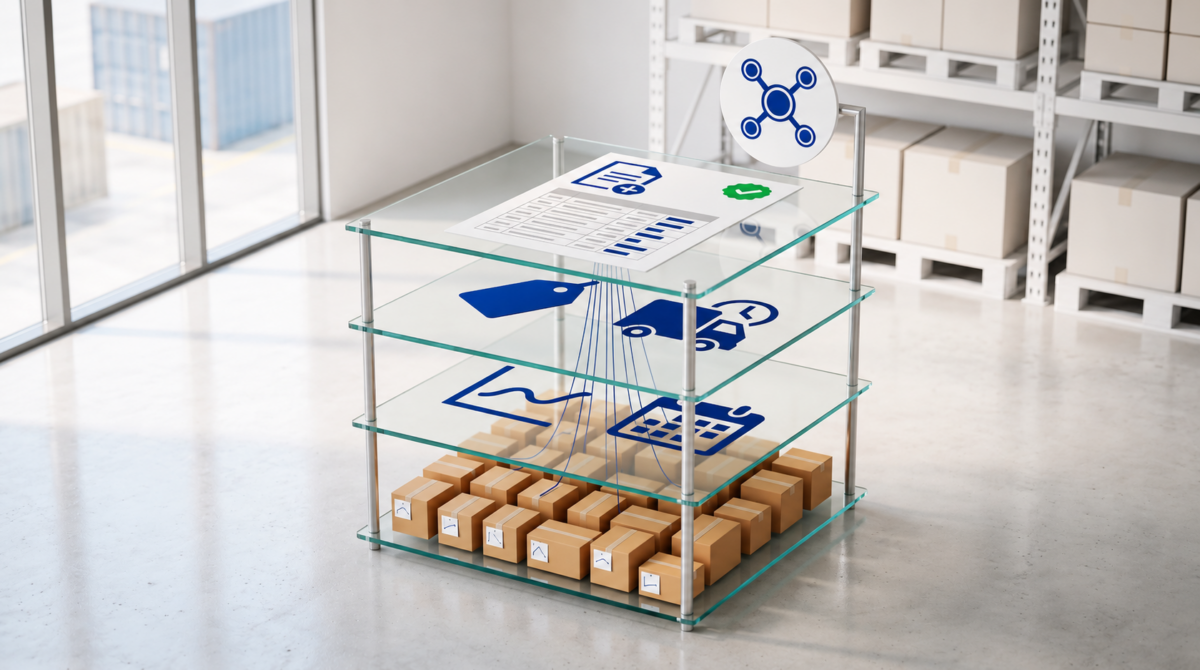
A practical look at 3-, 6-, and 12-month demand forecasts
By aTeam Soft Solutions
A purchase manager notices that a product sold 1,200 units over the previous year. The average works out to 100 units a month. Based on that figure, placing orders for roughly 100 units each month might seem like a sensible approach. But when the busy season arrives, customer demand rises, and available stock runs out.
The annual sales figure was correct. What it failed to show was when customers were most likely to buy.
AI demand forecasting helps businesses estimate how much of each product customers may need over the coming months. It uses historical sales, seasonal patterns, and relevant business information to build a forward-looking view of demand. A useful forecast breaks those estimates down by month, shows where uncertainty exists, and helps purchasing teams plan stock around expected requirements.
For distributors and importers, knowing when demand is likely to increase can be just as important as knowing how much stock customers may need.
A stock keeping unit (SKU) represents a specific product or variant. Forecasting sales for an entire brand or product category may give buyers a broad picture, but it does not necessarily show how individual items will perform.
For example, one model may be gaining popularity while another is gradually being replaced. Combining their sales figures can hide these differences. A business might end up ordering too much of a slower-moving model while running short of the one customers actually want.
That is why purchasing decisions need to be based on individual SKU demand. Excess stock in one variant cannot always compensate for a shortage in another.
Start by reviewing consistent monthly sales records for each SKU. Before preparing a forecast, check for returned goods, unit conversion differences, missing sales periods, and discontinued product codes. A month with no recorded sales should not automatically be treated as a month with zero demand.
Stock availability also needs to be considered. When a product is out of stock, recorded sales may be lower than the actual customer demand. The missing sales should be investigated using available evidence and clearly documented assumptions, rather than adjusted using unsupported estimates.
The three forecast periods serve different planning needs. Each gives purchasing teams a different view of upcoming demand, but all three should work together as part of the same planning process.
Three-month forecast: Managing immediate purchasing requirements
A three-month forecast helps buyers understand what they may need in the near future. It is particularly useful when suppliers require several weeks to prepare and deliver an order.
Purchasing teams can use this view to review replenishment requirements, identify products that may run short, and decide whether existing orders will cover expected demand. However, the forecast period must be long enough to account for the actual purchasing and delivery lead time.
Six-month forecast: Preparing for upcoming demand changes
Looking six months ahead gives businesses more time to prepare for seasonal demand, supplier production schedules, and changes in their product range.
It can also highlight items that do not require immediate attention but may become difficult to source if purchasing decisions are delayed. Buyers can use this information to discuss future requirements with suppliers and plan orders before demand increases.
Twelve-month forecast: Supporting longer-term purchasing plans
A twelve-month forecast gives businesses a wider view of expected demand. It can support supplier negotiations, annual purchasing discussions, and different spending scenarios.
However, a forecast covering an entire year should not be treated as an instruction to purchase all the estimated stock immediately. The further ahead a business looks, the greater the uncertainty tends to become. Forecasts should be reviewed and updated as new sales information and business conditions become available.
Supplier lead times also influence which forecast period matters most. A business sourcing products with long manufacturing or shipping schedules may need to make decisions using the twelve-month view, even when the immediate requirement is still several months away. The planning period should reflect the purchasing decision, not simply the default setting of a reporting dashboard.
There is another distinction worth keeping clear: forecast units, purchase value, and available cash are different measures. Multiplying expected demand by the purchase price gives an estimated product value, not necessarily the amount a business needs to spend. Existing inventory and outstanding purchase orders affect the quantity still to be purchased, while supplier payment terms determine when cash is required.
Purchasing and finance teams should agree on what each forecast report measures before using its figures for supplier commitments or budget planning.
Consider a distributor planning purchases for a particular fan model. Its forecast for the next three months is 70 units, 130 units, and 210 units, respectively. The total expected demand is 410 units.
If the distributor relied on the previous annual average of 100 units per month, it would estimate demand at 300 units over the same period. That is 110 units below the seasonal requirement shown in this example.
Now consider the stock already available.
The distributor has 160 usable units in its warehouse and expects another 120 units to arrive at the beginning of the second month. This gives the business 280 units of available supply against forecast demand of 410 units, leaving a shortfall of 130 units.
Looking at the monthly stock position makes the situation easier to understand:
This example shows why the total demand figure alone is not enough. The timing of incoming stock and the expected movement of inventory determine when the buyer needs to take action.
Even so, the 130-unit shortfall should not automatically become the final purchase quantity. The buyer still needs to consider supplier lead times, safety stock requirements, minimum order quantities, and other purchasing restrictions.
If a new order cannot arrive before the third month, placing it at that point will not prevent the shortage.
The forecast estimates what customers may buy. The purchasing plan determines how the business will meet that demand.
AI can help businesses bring together sales information, forecasting calculations, and explanations in one planning workflow. However, the figures should come from a traceable forecasting method with a record of how its accuracy has been assessed.
A language model generating a convincing sales estimate is not, by itself, proof that the forecast is reliable.
Businesses should also test simpler forecasting methods before moving to more advanced models. A seasonal baseline, for example, can use sales from the corresponding period in the previous year to estimate upcoming demand.
More sophisticated models may be useful, but they should demonstrate measurable improvements over suitable alternatives. The choice should depend on forecasting performance and the needs of the business, rather than the complexity of the technology.
Sales history is only one part of the picture. Changes in customer behavior and commercial activity can also influence future demand.
A confirmed promotion, the loss of a major customer, or the launch of a replacement product may change the expected sales volume. These adjustments should be recorded with details of who provided the information and when it needs to be reviewed.
Without a clear review process, an assumption made for a temporary business condition can remain in the forecast long after that condition has changed.
New product launches require a different approach. Since a newly introduced SKU has no meaningful sales history of its own, buyers may need to refer to comparable products when preparing an initial estimate. These comparisons can provide a useful starting point, but they cannot guarantee how the new product will perform.
A forecast should be tested against the decisions it is expected to support. For example, if a supplier needs three months to manufacture and deliver an order, good forecasting performance for the next month alone does not establish that the system is suitable for purchasing.
One practical approach is to use historical review dates and compare the forecasts that could have been made at those points with the demand that actually followed.
Repeat this process across multiple periods, using only the information that was available at each review date. This rolling-origin evaluation helps prevent future information from influencing historical forecast results.
The review should cover individual SKUs as well as relevant product groups. Include seasonal products, slow-moving items, and products with irregular sales patterns. Looking only at brand or category totals can hide errors when one product is overforecast, and another is underforecast.
Buyers should also examine the uncertainty around each estimate. A forecast range can help explain the possible variation in demand, but only when the business understands how the range was calculated and how often actual demand has fallen within it historically.
The purpose is not to make every forecast look precise. It is to give purchasing teams enough information to understand potential shortages, assess the risks, and decide when human review is necessary.
aTeam Soft Solutions’ Purchase Planner Agentic AI provides demand forecasts for individual SKUs across three-, six-, and twelve-month periods. The forecasts are available in both units and value, alongside purchase recommendations to help buyers review upcoming requirements. The final purchasing decision remains with the buyer.
When evaluating the solution, start with a representative product category rather than reviewing every item at once. Compare the forecast figures with historical sales, current stock, and outstanding purchase orders. Look at how the recommendations change across the three planning periods. Pay particular attention to products with seasonal demand, inconsistent supply, or recent changes in sales.
It is also worth identifying where the system needs additional information and which assumptions require a buyer’s input. A useful purchasing tool should make these gaps visible rather than leave the team to discover them after an order has been placed.
The real value of SKU-level forecasting is the ability to recognise a potential stock requirement early enough to do something about it. Buyers can review the reasons behind a recommendation, discuss supplier requirements, and take action before a shortage becomes an urgent purchasing problem.