ATeam Soft Solutions Book a system review
Drop a hero image — vast modern data centre / server hall, architectural, no people
Legacy System Modernisation

AI-accelerated modernisation of the system your business runs on.

Your old system is the only thing that still knows how the business actually works. That's why rewrites fail at the cutover, not in the code — so we prove the new system matches the old one record by record, month-end by month-end, before anyone switches anything off.

Book a 45-minute system review See how we de-risk cutover
Trusted by teams at
Trusted by Vodafone, The New American, CP AXTRA and greytHR
01
The real risk

Modernisation rarely fails because the new code is bad.

It fails for three reasons, and every one of them is a knowledge problem before it is a technology problem. Our method is built around these three, not around a technology stack.

Before we touch anything

Not every system needs rebuilding. We tell you which of seven paths yours needs.

We assess every system in your estate against evidence, then assign it one of seven dispositions. Sometimes the honest answer is to leave it alone. Your business logic is the asset; the technology around it is the constraint — almost every failed modernisation we are asked to rescue confused the two, and threw away the first to escape the second.

01 Retain +

The system works, the cost is understood, and nothing downstream is blocked by it. Leaving it alone is a decision, not an omission.

If we get this wrongYou spend a programme budget solving a problem you did not have

02 Integrate +

The core is sound but sealed off. An API layer unblocks everything waiting behind it without touching what already works.

If we get this wrongYou rebuild a functioning core to reach data you could have exposed in weeks

03 Rehost +

The application is fine; the infrastructure underneath it is the risk. Move it, change nothing else, take the exposure off the table.

If we get this wrongA long transformation runs while the real risk — unsupported hardware — stays live

04 Replatform +

Targeted change to database, runtime or middleware buys most of the benefit for a fraction of a rewrite.

If we get this wrongYou pay rewrite prices for replatform outcomes

05 Refactor +

The logic is right, the structure has decayed. Restructure incrementally with behaviour held constant and proven by tests.

If we get this wrongTwenty years of encoded rules are discarded to escape bad file organisation

06 Rebuild +

The rules are worth keeping, the implementation is not, and the constraint is now costing the business real opportunity.

If we get this wrongThe three failure modes above — this is where they live

07 Replace +

The function is genuinely commodity with no competitive differentiation. Buy it, and we will say so.

If we get this wrongYou custom-build payroll

02

We prove the new system matches the old — across four stages — before anything is switched off.

These stages are genuinely sequential — you cannot reconcile a system whose rules you have not recovered. Each has a named deliverable and a decision point where you can stop, change direction, or ask us to leave with everything handed over.

Here are the six safeguards behind every go-live.

Switching systems is where most projects break. We do it in small, reversible steps — each one tested, rehearsed with your team, and safe to undo.

03
AI-powered application development

Modernise the systems your business runs on — in 60% less time and at 70% lower cost — with AI-powered application development.

Same rules, same reconciliation, same audit trail as a traditional rebuild — AI just removes the slow, manual parts so you reach a proven system far sooner.

AI for Every Stage of Transformation
01
Discovery

AI-powered deep code analysis and automated BRD generation

60%
Faster discovery
Risk-free
Design
02
Architecture Decomposition

AI-powered deep code analysis and automated BRD generation

03
Strategy & Planning

AI-powered roadmap creation and algorithmic investment phasing

Predictable
Delivery
80x
Tech agility
04
Execution

AI-powered code generation and automated legacy logic refactoring

05
Testing

AI-powered test cases and automated regression suites

40–50%
Faster time-to-market
Eliminates
Release lag
06
Release

Secure, automated deployment with continuous monitoring & rollout intelligence

Scroll to see all six phases❯❯
04
Our framework

CARETM — our proprietary framework for building AI-powered software.

Most teams paste prompts into Claude or Cursor, ship what runs, and hope for the best. That works for demos, not production. So we wrote down how it should work — and we now use CARE on every AI project we deliver, across healthcare, finance, retail and manufacturing.

The way most teams use AI is fundamentally broken. So we built our own framework.

AI forgets your project every session. Long sessions drift. Switching tools loses everything you decided. CARE fixes all three — by living in your repository as 14 versioned markdown files. Engineers read them, the AI reads them, auditors read them. One way of working that survives any tool, any team, any audit.

C
Context-driven
14 .md files in your repo
A
AI-Guarded
Guardrails as code
R
Reference-based
Every rule, written down
E
Evidence-backed
Decisions · prompts · audit
14
Mandatory files
8
Hard rules · CI-gated
3
Phases per session
0
Tool lock-in
CARE
CI gates green
CLAUDE.md
architecture.md
compliance.md
prompt_log.md
decisions.md
handoff.md
Audit-ready
05
Custom Business OS · A related proposition

Starbucks announced they're moving off IBM and Microsoft to build their own custom systems in-house.

Throwing scattered data into a second brain while the processes underneath stay broken does nothing. The companies who will absolutely destroy their competition over the next five years are rebuilding how they work from the ground up.

Drop image — modern corporate headquarters / glass tower / boardroom, architectural, no people
The signal · Bloomberg, July 2026

In July 2026, Bloomberg reported that Starbucks is using AI-assisted development to build in-house replacements for a Microsoft inventory system and an IBM maintenance tool, with rollout expected in late 2027. The company spends roughly $400 million a year on software and is targeting around $30 million of enterprise technology savings, including $10 million on software alone. Its CTO put it plainly: there are clear opportunities to reduce software spend.

The largest companies in the world are done paying for software that half fits how they work.

You get all of a company's data into one system. You build out a single operating system for the entire business. You cut out bad, redundant processes. Then you layer AI on top of it, under the correct processes.

Book your system review
06
Work

Recent app modernisation projects we delivered.

A sample of recent legacy modernisation and custom-build engagements — across media, healthcare, manufacturing, real estate, logistics and retail, in the GCC and beyond.

CRM rebuilt for a decades-old American news media company
Media United States

CRM rebuilt for a decades-old American news media company

Subscriptions, advertising and syndication all lived inside one heavily customised CRM from the early 2000s. We recovered the rules from source, rebuilt it as modular services, and migrated two decades of subscriber history with full reconciliation.

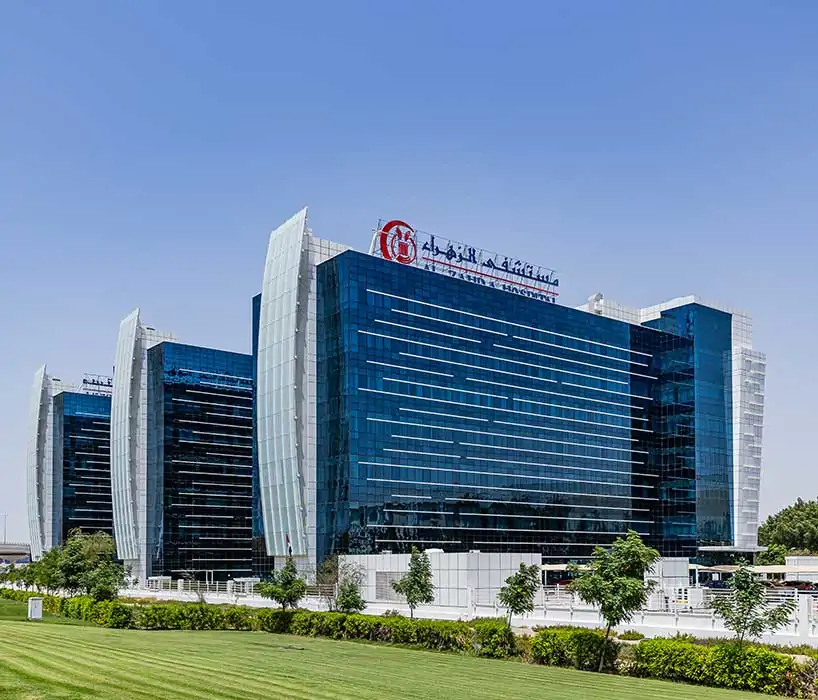
Hospital management system rebuilt for a GCC hospital group
Healthcare GCC

Hospital management system rebuilt for a GCC hospital group

A multi-site group running an unsupported, heavily customised HMS that only a couple of people still understood. Rebuilt module by module, with clinical workflows untouched and every billing rule confirmed before cutover.

ERP modernisation for Saudi Arabia's largest signage manufacturer
Manufacturing Saudi Arabia

ERP modernisation for Saudi Arabia's largest signage manufacturer

Quoting, production, procurement and finance ran on an ageing ERP that could no longer keep pace with order volume. Modernised slice by slice behind a routing layer, with live parallel running throughout.

Property management platform rebuilt for a Dubai real-estate developer
Real estate Dubai

Property management platform rebuilt for a Dubai real-estate developer

Leasing, handover, maintenance and service charges were spread across five disconnected systems. Consolidated into one platform, with every lease and unit record migrated under reconciliation and billing live throughout.

Logistics and fleet platform modernised for a Dubai freight operator
Logistics Dubai

Logistics and fleet platform modernised for a Dubai freight operator

A 15-year-old dispatch and tracking system could no longer scale with growth. Rebuilt behind a routing layer — tracking, dispatch and billing modernised in sequence, each proven in parallel before it took traffic.

POS and inventory platform rebuilt for a US retail chain
Retail United States

POS and inventory platform rebuilt for a US retail chain

An end-of-life POS and inventory system across 240 stores. Rebuilt store-cluster by store-cluster, each one proven against the legacy system through a full peak-season cycle before it was switched over.

07
Services

Our Legacy Application Modernization Services—shift from maintenance mode to forward-thinking transformation

70% of IT budgets go on merely maintaining legacy apps

Legacy systems are more than inconvenient — they are expensive and limiting. We move that spend out of maintenance and into transformation.

Transform legacy systems for competitive edge
SVC 01+

AI-Powered Legacy Modernisation

Code archaeology, rule extraction and test generation at machine speed, reviewed by engineers and confirmed by your process owners before anything is built on it.

Typical startRule extraction on one high-risk module
SVC 02+

Enterprise Application Modernisation

Rebuilding monolithic line-of-business systems — ERP extensions, claims, billing, HIS, core operations — slice by slice, without a feature freeze.

Typical startArchitecture review and slice sequencing
SVC 03+

Cloud & Infrastructure Modernisation

Moving off ageing on-premise and hosted estates to AWS, Azure or GCP — with the landing zone, network and identity model designed before the first workload moves.

Typical startLanding zone and migration wave plan
SVC 04+

Data Modernisation

Schema redesign, migration with full reconciliation, historical archive strategy, and the reporting layer that has to keep tying back to twenty years of history.

Typical startData profiling and quality assessment
SVC 05+

API & Integration Modernisation

Putting a governed API layer over systems you are not ready to replace, so new products can ship while the core is still being modernised underneath.

Typical startIntegration map and API domain model
SVC 06+

Custom Software Modernisation

The bespoke system built by someone who left, running on a framework that is out of support. Rebuilt as a maintainable product with the rules preserved.

Typical startCodebase health and rebuild-vs-refactor call
SVC 07+

Modernisation Consulting & Advisory

Independent assessment, business case and sequencing — including the honest answer when the recommendation is to keep a system and invest elsewhere.

Typical startFixed-fee diagnostic sprint
SVC 08+

Managed Modernisation Support

Running the modernised platform after go-live — monitoring, incident response, continued slice migration and knowledge transfer to your own engineers.

Typical startTransition-in and runbook build
08
Zero-risk modernisation

Zero-Risk Modernization with AteamSoft

The hardest part of enterprise modernisation is proving the new system behaves exactly like the old one before go-live. Most failures happen because hidden business logic, edge cases, dependencies and day-to-day workflows get overlooked. ATeam Soft Solutions closes that gap with AI-driven validation running continuously throughout the programme.

What we continuously validate

  • Business logic consistency
  • Workflow behavior
  • Data integrity
  • Application dependencies
  • Security controls
  • Performance benchmarks
  • User experience continuity

Validating outcomes at every step means you always know the programme is still aligned to how the business actually runs — not just to the specification.

Faster modernisation, lower risk, uninterrupted operations.

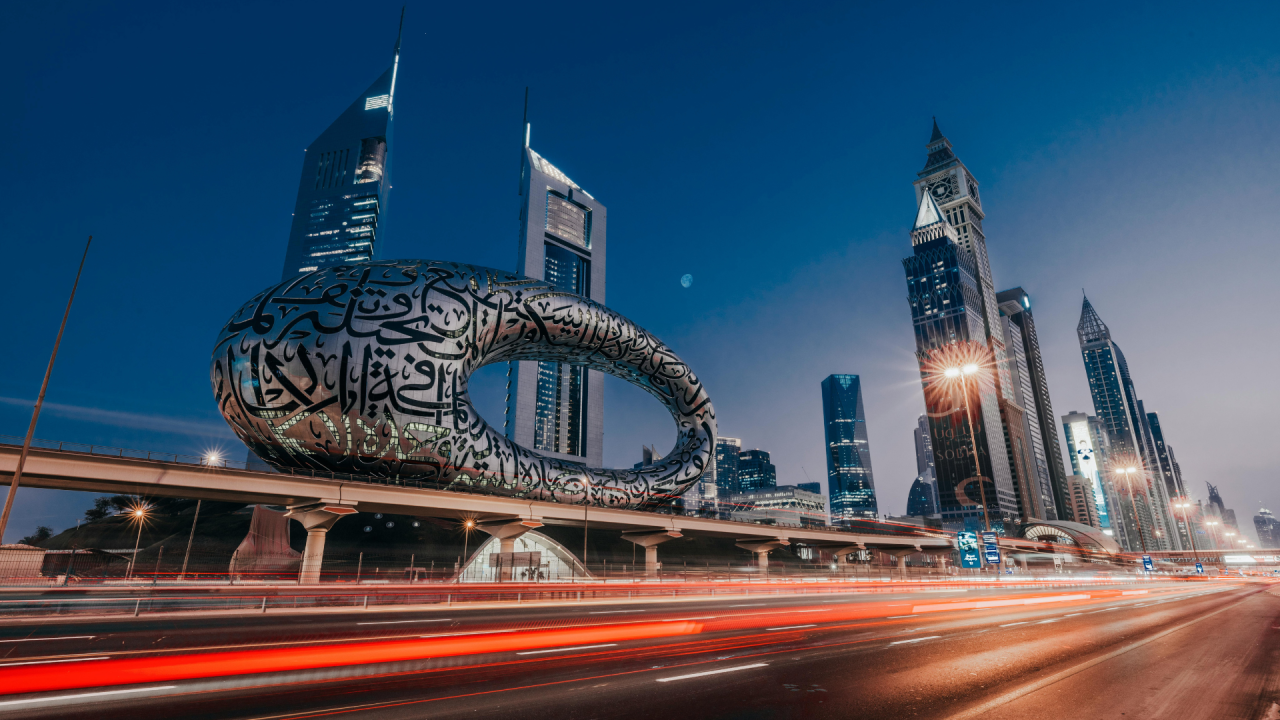
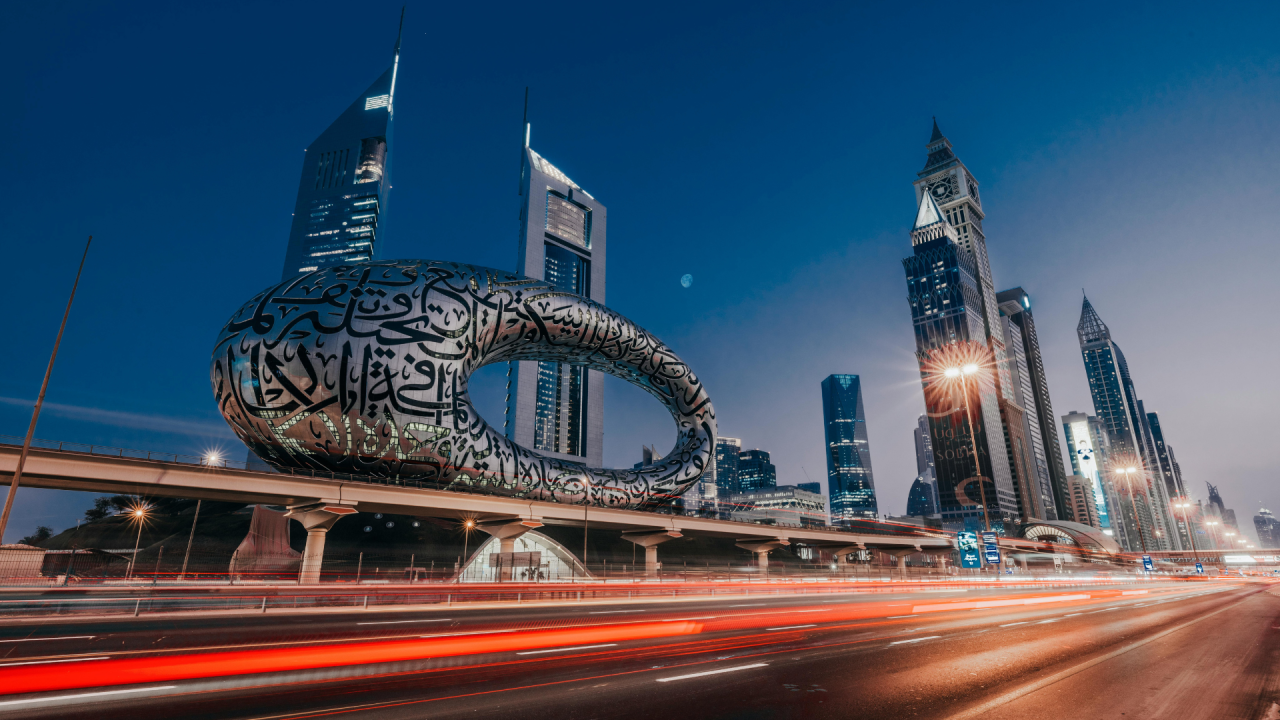
Dubai skyline
09
Questions

The questions we are actually asked

Our system is undocumented and the person who built it has left. Is that a problem?+
It is the normal starting position. AI reads the source code, database constraints and batch jobs to recover the rules, then we bring each one to whoever owns that part of the business to confirm. You end up with documentation you never had, which has value even if you never modernise.
How can you promise 60% less time and 70% lower cost?+
The saving comes from removing whole categories of work, not from cutting corners. AI does the archaeology in weeks instead of months, drafts the rules with a source line for each, and generates the parity and regression tests. What we never compress is the parallel run, because that is where the risk lives. If a partner offers you a faster cutover and a cheaper build in the same sentence, ask which one they are actually cutting.
Which of the seven paths will our system need?+
That is what the assessment decides, on evidence rather than opinion. Retain, integrate, rehost, replatform, refactor, rebuild or replace — a rebuild is only one of the seven, and it is the most expensive one to get wrong. Sometimes the honest answer is to leave a system alone and invest elsewhere, and we will tell you that.
What is CARE, and why does it matter to us?+
CARE is our framework for building AI-powered software. It lives in your repository as 14 versioned markdown files, so the rules, decisions, architecture and prompt history are written down rather than held in one engineer's head or lost when a session ends. Engineers read them, the AI reads them, and auditors read them — which is what makes AI-assisted delivery safe in a regulated environment.
How do you avoid a long feature freeze?+
We do not attempt a big-bang replacement. Work is broken into bounded slices behind a routing layer, so the legacy system keeps serving everything not yet rebuilt. Changes the business needs mid-programme are applied to whichever system currently owns that behaviour, and the parity tests catch any drift between them.
What exactly is a parallel run, and who pays for two systems?+
Both systems process the same production inputs for an agreed period and their outputs are compared on your closing cycle. You do carry duplicate infrastructure cost during that window — usually weeks, not months, and scoped up front so it is in the business case. It is far cheaper than discovering a reconciliation failure after the old system is gone.
How much of the work is done by AI, and who is accountable?+
AI handles the high-volume, checkable work: reading codebases, drafting rules, generating tests, writing documentation, scaffolding code. Architecture, rule confirmation, parity sign-off, security review and anything touching production data stay with named engineers and your people. We will hold to that line in the statement of work.
Is building custom really cheaper than licensing, or does the cost just move?+
Some of it does move, and any partner who says otherwise is not being straight with you. A custom system needs engineers, security updates and integration work. The case still holds for two reasons: you were already paying to customise the licensed product heavily enough that it was half-custom anyway, and you now own the source, so the cost is yours to control rather than repriced at renewal. For commodity functions with no competitive differentiation, we will tell you to keep buying.
Can you work with our existing team rather than replacing them?+
That is the preferred arrangement. Your engineers hold the operational knowledge we need and will own the system afterwards. We run joint teams with shared repositories and code review both ways, and the support phase is explicitly aimed at handing over.
What happens to our data and audit history?+
Migration is reconciled record-by-record and control-total-by-control-total, not sampled. Historical data that regulation requires you to retain but the new system does not need operationally goes into a queryable archive, so audits and disputes can still be answered years later without keeping the legacy platform alive.
We are in the UAE, Saudi or Oman. Where would the team sit and where would the data live?+
Data residency and hosting region are decided before architecture is fixed, because they constrain it. We deliver from Trivandrum with client-facing presence in the region and a Riyadh entity, and we work to whichever residency, access and audit requirements your regulator or contract sets.
What does the first conversation actually involve?+
Forty-five minutes with an architect, not a salesperson. Bring the system that worries you most. We will ask what breaks, what nobody will touch, what happens at month-end, and what the business cannot do because of it. You will leave with our honest read on whether it is worth modernising and what the first sensible step is, whether or not you engage us.
Free system review

Zero-Risk Modernization with AteamSoft

Bring the system that worries you most. We will tell you what we would actually do — and if the answer is to leave it alone, we will say so.

Dubai · Riyadh · Muscat · Bahrain · Trivandrum

Let's Talk

    ATeam Logo
    Privacy Overview

    This website uses cookies so that we can provide you with the best user experience possible. Cookie information is stored in your browser and performs functions such as recognising you when you return to our website and helping our team to understand which sections of the website you find most interesting and useful.

    Privacy Preference