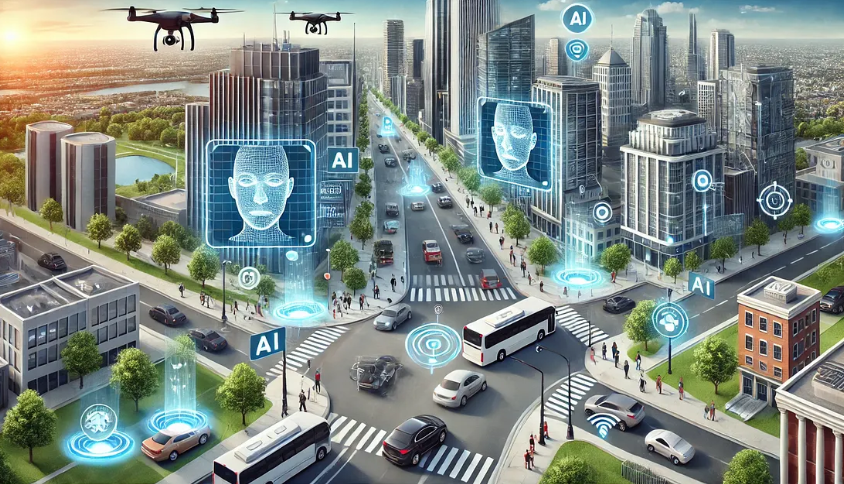
Smart cities aren’t just created by simply adding AI technology to urban areas. Instead, they thrive by transforming the chaotic realities of city life into efficient, measurable operations.
While this might seem like common sense, many smart city initiatives stumble due to one primary challenge: cities are notoriously difficult to digitize. Data is often dispersed among different departments, the environment is noisy, political factors and procurement processes introduce complications, public trust remains delicate, and those who need to act on AI findings—like traffic engineers, dispatchers, 311 agents, and operations teams—are often overwhelmed with their current tasks.
As such, a valuable guide must accomplish two objectives simultaneously.
First, it should illustrate the capabilities of AI when it’s integrated into a comprehensive system. Second, it needs to address potential pitfalls in real-world scenarios, where sensor accuracy may vary, network coverage can be sporadic, contractor teams may change, and every model will eventually encounter unique challenges.
This article presents ten AI solutions that provide genuine operational benefits for today’s cities, particularly in three significant areas: mobility, public safety, and citizen services. Each solution details its function, the data it requires, how it’s implemented, how to gauge results honestly, and the potential issues that could derail projects later on. Additionally, it offers a practical approach for teams working with agencies (including Indian engineering teams), emphasizing that the quality of execution is more critical than the vendor’s reputation.
Throughout the discussion, I’ll reference established standards and governance frameworks since “smart city AI” encompasses not just technology, but also accountability. The NIST AI Risk Management Framework serves as a solid foundation for considering AI risks in public services. The OECD AI Principles and UNESCO’s Recommendations on the Ethics of AI also provide valuable guidance for public sector initiatives by highlighting human rights, transparency, and oversight. Finally, for those operating in the EU or developing solutions for EU cities, it’s essential to note that the EU AI Act significantly impacts what’s permissible—particularly concerning biometric identification and “high-risk” public-sector applications.
In urban areas, the most valuable form of ‘AI’ isn’t usually a chatbot; it often comes down to one of three key elements.
The first is the prediction. This involves forecasting traffic demand, bus arrival times, peak loads in emergency call centers, or even the likelihood that a streetlight circuit might fail. Prediction is all about creating time—it enables you to take action sooner, plan more effectively, and minimize urgent issues.
The second aspect is optimization. Once you can predict, you can optimize. This means improving signal timings, making better dispatch choices, enhancing patrol coverage, planning maintenance routes, managing inventory, staffing, and making service-level trade-offs. Optimization is where you typically see financial benefits and improvements in citizen experience because you’re not just identifying problems—you’re actively cutting down on waste.
The third important piece is decision support. Cities operate on workflows: something happens, someone is notified, someone verifies the information, action is taken, and the outcome gets recorded. AI that doesn’t fit smoothly into this workflow can become an expensive dashboard that no one trusts. However, AI that reinforces this loop turns into an essential operational strength.
That’s the perspective we’re going to embrace.
If there’s one section you should focus on, it’s this one. These are the key elements that determine whether the “Top 10” will transform into real, measurable improvements or simply remain as costly experiments.
First up, you’ll need a reliable data backbone. Surprisingly, City AI often isn’t held back by a shortage of AI talent; it faces challenges from fragmented systems. Imagine traffic controllers from one vendor, camera networks by another contractor, and a public safety-owned computer-aided dispatch (CAD) alongside a separate citizen CRM for 311—plus those pesky spreadsheets everywhere! Interoperability really counts. That’s why open standards like GTFS for transit data and Open311 for tracking civic issues are in place; they’re essential for making sure systems can communicate with each other. For smart city data exchanges, standards like NGSI-LD (ETSI) and initiatives like OASC’s Minimal Interoperability Mechanisms (MIMs) are popular strategies to prevent being locked into one solution.
Next, measurable baselines and transparent evaluations are crucial. If your KPI simply states “AI deployed,” you’ll end up with an AI show rather than meaningful outcomes. However, if your KPI specifies “12% reduction in delay on corridor X during specified time frames compared to a baseline,” then you’re looking at some solid engineering results. Some traffic control systems have even shared performance claims and public reports, such as London’s reports on SCOOT benefits and the U.S. DOT’s ITS reporting on the Surtrac pilot in Pittsburgh. The takeaway? Your results don’t have to mirror theirs, but they should maintain a similar level of rigor.
Thirdly, ensuring security and resilience at the IoT edge is essential. A city operates as a cyber-physical system, and when you connect cameras, sensors, traffic controllers, lighting, and city services, you’re expanding your vulnerability. NIST’s IoT cybersecurity guidelines, such as the IoT Device Cybersecurity Capability Core Baseline, provide a practical foundation for defining what “secure enough” looks like for the devices you purchase or integrate.
Fourth, governance must reflect the realities of the public sector. Cities are naturally subject to greater scrutiny than private companies, and that’s perfectly justified. The NIST AI Risk Management Framework encourages the ongoing mapping, measuring, and management of risks, rather than treating them as a one-time compliance box to tick. Moreover, in the EU, the AI Act introduces specific restrictions and obligations, particularly around “real-time” remote biometric identification in public areas, except in narrowly defined law enforcement circumstances, along with oversight requirements.
Lastly, operational ownership is vital. The “product owner” for a smart city AI system cannot just be the CTO. Instead, it’s a shared responsibility among engineering, operations, and frontline staff. If the individuals who will be using the system don’t trust it, it simply won’t get used.
Now, let’s dive into some solutions!
Traffic signal control is a high-ROI area for urban AI precisely because it runs on a constrained system and has well-defined metrics. Adaptive signals that respond to real-time conditions vs. fixed timing plans can be expected to reduce delay, stops, idling, and emissions without having to build new roads.
In reality, adaptive signal control isn’t a single algorithm; it’s more of an operational stack. At the base, we have detection systems like inductive loops, radar, cameras, connected vehicle feeds, pedestrian buttons, and sometimes even computer vision. Next up is a controller interface layer that can safely adjust phase splits, cycle lengths, and offsets without compromising safety. On top of that is the optimization logic.
There are primarily two architectural patterns. The first one is centralized, where a traffic management center gathers network data to compute signal timing plans. The second is decentralized, allowing each intersection to make its own decisions while coordinating with nearby intersections. The Pittsburgh Surtrac pilot is often mentioned as an example of a decentralized approach, showing travel time reductions of 17–33%, improvements in speed, and fewer stops and wait times during its pilot phase. Similarly, London’s SCOOT system is recognized as a mature adaptive system, with reports indicating average reductions in delays and stops where it’s used.
If you’re considering an adaptive traffic AI project, the biggest question to ask isn’t “which algorithm” but rather, “what is the control boundary?” It’s essential to know which controls you can adjust, how quickly, and under what safety conditions. You’ll need to establish minimum green times, pedestrian clearance rules, emergency vehicle priorities, and fail-safe measures in case sensors stop working. The more directly the control loop is, the more critical safety becomes for your software.
Next, the second crucial question is about the evaluation design. Cities often implement adaptive control, claiming success based on anecdotal evidence. However, that’s not sufficient. You will need thorough before-and-after studies at the corridor level, ensuring comparable time periods, special-event normalization, and seasonal adjustments. Ideally, you’d run A/B tests: similar corridors, upgrading one now while delaying the other. At the very least, you should track every control decision and correlate those with measured outcomes, rather than just relying on model predictions.
The third key question concerns “sensor truth.” Many deployments fall short silently because sensors degrade over time. Camera glare changes with the seasons, loop detectors might fail, and construction can alter lane layouts. Adaptive control systems need to incorporate automatic sensor health monitoring. You want to avoid your city’s traffic optimization slipping into “AI hallucination,” where the system is basing its optimization on incorrect inputs.
If you’re bringing in an external team to handle this, remember that the engineering challenges stretch beyond just machine learning. Systems integration and safety validation are also crucial. Your agency needs to have a grasp on traffic controller protocols, real-time limitations, and how to run tests against simulations before anything goes live. The best teams construct a simulation harness using recorded traffic data, run thousands of scenarios, and then deploy in shadow mode where the AI suggests timing changes, but humans approve them before any automatic control kicks in.
When executed effectively, adaptive control evolves into a platform capability instead of a one-off project. Once this foundation is established, you can add layers such as emergency vehicle priority, transit signal priority, pedestrian-first policies, and event-based congestion management on top.
Many cities already have cameras in place, but there’s a missed chance—these cameras are often seen as passive evidence instead of active tools for real-time operations. AI can change that by making video content searchable and actionable, so it can identify things like accidents, stalled vehicles, wrong-way drivers, congested intersections, near-real-time queue lengths, or pedestrians in hazardous areas.
However, there is an obvious risk: video analytics could turn into surveillance systems if strict limits aren’t set.
The first important decision revolves around defining the use-case boundaries. If your focus is traffic management, you should emphasize non-identifying analytics such as counting vehicles, estimating speeds, measuring queue lengths, and detecting incidents. For mobility operations, facial recognition isn’t necessary. This distinction is important as the public’s acceptance hinges on how proportional they believe the measures are.
The second decision pertains to where the analysis occurs. Many cities prefer “cloud AI,” but video data can consume a lot of bandwidth, and centralizing raw video feeds raises privacy concerns. For traffic-related use, edge inference is often a better choice: it allows detection close to or at the camera, generating low-risk metadata events like “stopped vehicle detected at intersection X at time T.” Only if an incident is spotted would you retrieve the original video feed for human confirmation.
The third decision deals with integrating workflows. Simply detecting incidents won’t resolve them. A well-functioning system directs detected events to the appropriate operator console, includes confidence scores and context, enables quick verification, kicks off standard operating procedures, and logs the outcomes. This feedback loop is crucial for refining models with real city data and determining if detection has indeed shortened response times.
This system naturally connects to adaptive traffic signals. Once a crash is detected, you could adjust signal timings to prevent further congestion or reroute buses. The real value of AI shines when sensing and control work together.
From a governance perspective, this is where the NIST AI RMF framework proves useful: it helps identify risks—like false positives that waste responders’ time, missed safety incidents, or biased detection quality across different neighborhoods due to varying camera quality—and then incorporates measurement and mitigation strategies into the system. In the EU, the discussion sharpens further when analytics intersect with biometric identification, as the AI Act imposes substantial restrictions and obligations.
If you are a founder developing this for cities, expect some resistance during procurement unless you present a privacy-by-design framework. This should include thorough audit logging, role-based access controls, retention policies, and a clear distinction between “traffic operations analytics” and “law enforcement identification.”
If you are partnering with an outside agency to build this, they must excel in three areas: selecting and fine-tuning effective vision models, establishing real-time event streaming architectures, and implementing governance features that public-sector buyers require. Too many vendor presentations just show detection boxes on videos, but the real product involves the operational loop and accountability mechanisms.
Transit systems can be quite intricate because riders don’t experience “average performance.” Instead, they encounter missed connections, bus bunching, unexpected gaps, and variable wait times. That’s where AI comes in handy for transit agencies, helping them shift from fixed planning to more dynamic management.
Typically, the data backbone begins with GTFS Schedule and GTFS Realtime. GTFS is the standard format that many transit agencies follow to share their schedules and real-time updates, making it compatible with various software systems. By combining reliable GTFS feeds with vehicle location data (AVL), fare collection signals, and event calendars, it becomes possible to generate demand forecasts at the route, stop, and time-slot levels.
The most valuable use of AI in this context isn’t just to “predict ridership for the next year,” but rather to “predict load and headway risk for the next 30-90 minutes.” This information is actionable for dispatch. For instance, if the model anticipates a surge and predicts buses could get bunched together, the system can suggest holding strategies, short turns, or deploying extra vehicles. If a rail line constantly sees dwell-time spikes at specific stations, the system can highlight potential bottlenecks and recommend staffing changes.
However, making these decisions isn’t straightforward due to labor regulations, vehicle availability, and ensuring fairness for passengers. A purely mathematical optimization might look appealing on paper, but could feel unfair to riders. Therefore, your system should account for policy constraints, provide explanations, and allow for human overrides.
Another challenge is that transit data can be quite messy. Vehicle IDs can change, clock drift can occur, and GPS inconsistencies can lead to phantom arrivals. If you decide to outsource this, it’s crucial to have engineers who prioritize data quality as a feature rather than mere cleaning tasks. The system should be capable of detecting feed failures, alerting operators, and smoothly transitioning to rule-based operations rather than silently generating incorrect predictions.
This solution also positively impacts citizen services. When your forecasts are trustworthy, you can send accurate crowding and arrival predictions to rider apps, enhancing the citizen experience without the need for new infrastructure.
Ultimately, a well-developed version of this system evolves into a multimodal mobility layer that connects buses, rail, bike shares, scooters, and demand-responsive services. This brings up questions about interoperability and privacy, which is why data standards and governance are so important.
You might think that parking and curb space issues are simple, but they actually pose a significant challenge when you look at them as a city-wide optimization problem. In many commercial areas, there’s quite a bit of traffic related to people searching for parking spots. Additionally, the curb space has to accommodate not just cars, but delivery vans, ride-hailing pickups, buses, micromobility options, accessibility needs, and construction activities.
AI can be a game-changer in three key ways. First, it aids in occupancy prediction. By analyzing payment data, sensor information, camera data on occupancy, and event schedules, it can forecast how much space will be available in the next 10 to 30 minutes. Second, it assists with dynamic pricing and policy simulations. This means you can adjust prices or time limits to improve turnover and lessen cruising for parking while still honoring equity policies. Third, it focuses on enforcement prioritization, allowing you to direct enforcement efforts where violations are most likely and where curb conflicts are causing broader issues, rather than relying on random patrols.
However, the topic of data sharing with mobility providers can be controversial. Cities are advocating for standards that help them manage public transportation effectively, such as the Mobility Data Specification (MDS). Originally developed in Los Angeles, MDS serves as an API specification to aggregate mobility provider data for better management. The Open Mobility Foundation views MDS as a useful tool for cities in managing transportation in public spaces. Still, this area has sparked debates over privacy and faced pushback from the industry, along with media coverage of disputes between cities, companies, and privacy advocates.
If you’re working in this field, it’s crucial to prioritize privacy as a key aspect of your product. Aim to aggregate data whenever possible, minimize the level of detail you collect, implement strong access controls, establish clear data retention policies, and ensure transparency with the public. Failing to do these things could jeopardize your project’s political viability, even if the technology is sound.
From an implementation perspective, it’s wise to start with a small area and clearly define outcomes in everyday language (like reducing double parking, alleviating delivery conflicts, and improving bus reliability) before rolling out any policy changes. Many curb management programs run into trouble because the city alters rules before having a chance to assess the effectiveness of those rules.
If you choose to outsource this solution, ensure that the agency is ready to create event-driven systems that can merge multiple data streams into one reliable source of information about curb use. This isn’t just about developing a mobile app; it’s about building a comprehensive urban operations framework.
Traditional road safety programs often find themselves limited by a delay in crash data. Since serious accidents at a specific intersection are quite rare, waiting for enough incidents to warrant redesign can be a slow and ethically uneasy process.
However, AI offers a fresh perspective through near-miss analytics. By using existing cameras or new low-resolution sensors, the system can identify conflict events like sudden braking, risky pedestrian crossings, patterns of running red lights, or frequent ‘close calls’ during certain times of the day. When paired with speed and volume data, it can highlight intersections where the risk is increasing, even before crashes occur.
This represents a significant conceptual shift in smart city AI: using leading indicators instead of waiting for harm to strike.
That said, it’s crucial to avoid over-automation in this field. While AI can rank risks, it shouldn’t replace the judgment of traffic engineering experts. A system that identifies an intersection as “high risk” without explanation will not withstand scrutiny. The outputs must be grounded in observable patterns, such as changes in speed distribution, trends in conflict counts, peak-time risk windows, and confidence intervals.
Governance plays an important role here, as road safety analytics could easily lean towards enforcement-heavy policies if not managed carefully. If a model is used to determine where enforcement should happen, it might raise fairness issues if the underlying data collection is inconsistent. This highlights the importance of values-based AI principles from organizations like the OECD and UNESCO, which remain relevant even for ‘non-policing’ safety analytics, as they encourage you to consider impacts, not just accuracy.
A practical approach is to treat AI as a ‘risk radar’ for a collaborative safety team. The team can review the top-flagged locations monthly, combining AI insights with citizen reports and engineering surveys to prioritize interventions. Many of these interventions might not involve AI directly; they could be about adjusting signal timings, enhancing crosswalk visibility, creating protected turns, or implementing traffic calming measures. That’s perfectly fine—the role of AI is to help you determine where to act first.
If you decide to outsource, be sure the agency can manage the entire process: selecting sensors, calibrating them, ensuring privacy-safe analytics, and providing a dashboard that clearly communicates risk in a defendable way. Avoid vendors that only provide a heatmap without an accompanying methodology.
Public safety is a sensitive topic when it comes to smart city AI. While the benefits for safety are clear, there are also significant concerns regarding civil liberties.
Video analytics can play a valuable role by offering non-identifying solutions that serve operational needs. For instance, it can help identify large gatherings that might require traffic management, notice unattended items in busy transport areas, detect unauthorized entries into restricted zones, recognize vehicles going the wrong way, and assist emergency dispatchers in understanding situations more quickly. This efficiency can enhance safety for both responders and the public.
The key issue revolves around the line between gaining situational awareness and the potential for identification. Many places have strong debates surrounding facial recognition and biometric identification in public areas. In the EU, the use of “real-time” remote biometric identification faces strict regulations, with limited exceptions, as outlined in the AI Act. Even outside the EU, public resistance can jeopardize initiatives if they are viewed as tools for mass surveillance.
Therefore, any effective smart city safety platform must be built with clear limitations. It should prioritize non-identifying analytics by default. If identification becomes relevant, it needs to be managed through rigorous access controls, legal protocols, and thorough audit trails. Additionally, independent auditing and reporting should be facilitated.
This is where the NIST AI RMF can be beneficial. It encourages viewing trustworthiness as something that can be measured and managed. Instead of making promises about ethical practices, it emphasizes transparency, showing how the system operates, who uses it, its purposes, its error rates, and the oversight in place.
From a technical perspective, bias in safety video analytics can present itself as varying accuracy depending on different conditions, such as lighting in certain areas, outdated cameras in lower-income neighborhoods, differences in obstructions, and weather changes. The bias might not be demographic; it could stem from variations in infrastructure quality. Addressing this requires more than just retraining; it necessitates establishing consistent hardware standards, calibrating each camera, and keeping track of performance changes over time.
If you plan to outsource this work, your agency must recognize that the end product isn’t just an impressive demo. It needs to be a governance-ready system that can withstand public examination.
Acoustic detection systems that aim to pick up gunshots (and even pinpoint their location) are a prime example of a smart city AI application. While the concept might seem straightforward, the reality is quite intricate. The main goal is to ensure a quicker response to gunfire, particularly in instances where citizens might not dial 911, alongside enhancing the collection of evidence.
However, this area tends to spark controversy as the stakes are high when it comes to errors. False positives could trigger aggressive police reactions in situations where gunfire hasn’t actually occurred. Additionally, misplaced trust can divert resources away from community-focused strategies. Concerns regarding transparency and the way alerts are integrated into policing narratives are also prevalent.
Strong criticisms can be found from civil liberties organizations, including analyses that highlight reports questioning the accuracy and usefulness of alerts in certain situations. Moreover, there have been reports of major cities opting to discontinue the use of this technology, citing issues like inaccuracies, biases, and the potential for misuse. Conversely, vendors assert that their systems are equipped with multiple layers of review and filtering, pointing to studies that they argue demonstrate positive impact. There are also academic evaluations conducted in specific contexts, such as a report from 2025 that looks into the effects in Detroit; although it’s not definitive for every city, it does contribute to the overall evidence landscape.
A thorough city evaluation shouldn’t just depend on vendor case studies alone, nor solely on activist critiques. It’s essential to seek independent audits and establish success using measurable, citizen-focused criteria. Did response times improve in confirmed incidents? Were clearance rates enhanced? Did community trust wane? Did the number of false dispatches increase? What were the ultimate outcomes?
For founders or product leaders, this case illustrates a broader lesson: in the realm of public safety AI, simply measuring ‘model accuracy’ isn’t sufficient. You need to assess the entire system’s impact.
This domain also sees the introduction of additional sensors, such as drones sent out to incident sites, which opens up further discussions on privacy. Media coverage has shed light on these programs and the civil liberties issues that arise from coupling sensor alerts with aerial surveillance. Ultimately, whether a city decides to implement this technology is a political choice, but as a creator, it’s crucial to prioritize transparency, authorization, and the ability to audit. Without these elements, the product won’t be able to grow beyond pilot programs.
Response to emergencies is one of the most straightforward areas in which AI can save lives, as time is of the essence. But it is also one of the areas in which automation should be tightly circumscribed, because dispatcher decisions are ethically charged.
There are two tiers of AI involvement here.
The first tier focuses on operational predictions. This includes forecasting call volumes by area and time, anticipating where ambulances will be needed, assessing hospital capacity, and estimating travel times based on current traffic. These tasks are relatively low-risk since they aid in planning rather than making high-stakes individual decisions.
The second tier is about decision support for dispatch. It involves recommending which unit to send, determining the best route, and organizing resources during large events. This level is more delicate since it directly affects real-time outcomes and equity.
An effective AI system for emergency response needs to pull in a variety of real-time information: CAD events, unit availability, AVL locations, hospital diversion statuses, and traffic situations. It must also be adaptable to uncertainty—if traffic incidents arise, rerouting should happen immediately. If a unit becomes unavailable, the system must adjust accordingly.
While this is a classic optimization challenge, we mustn’t approach it like just any logistics dispatch issue. Human oversight is crucial. The system should explain its dispatch recommendations, detail the trade-offs involved, and outline choices.
A great starting point is to analyze data post-incident. By building a solid data foundation, you can run “replay mode” on past incidents to explore how different dispatch strategies might have altered response times. Only after demonstrating value in simulation should you progress to live recommendations.
This concept also aligns well with city digital twins, which we’ll discuss next. Digital twins facilitate scenario planning, letting us explore outcomes, like what would happen if a bridge closes, if flooding occurs, or if an evacuation becomes necessary.
If you decide to outsource this solution, make sure that the agency understands public safety requirements and can integrate smoothly with existing CAD systems. Many agencies can create a modern interface, but fewer can ensure safe integration with critical operational systems.
The term “digital twin” gets thrown around a lot these days! In the context of cities, a true digital twin isn’t merely a 3D model. It acts as a dynamic representation of urban reality, merging accurate geospatial data, asset details, and even real-time sensor inputs. This way, you can simulate different scenarios and easily communicate potential trade-offs.
Digital twins are important because cities have many different stakeholders. A spreadsheet with traffic models isn’t exactly convincing to the public, but a visual simulation? That’s a different story! With a digital twin, planners can experiment with changes to infrastructure, disaster response plans, and environmental projects before spending any real money.
Take Singapore’s Virtual Singapore, for example; it’s often highlighted as a detailed, data-rich virtual environment that pulls together various data forms to aid in planning and response. Similarly, Helsinki boasts 3D city models that the city clearly defines as a digital twin, merging IT services, open data, and constantly refreshed information. Plus, there’s research looking into digital twins in Helsinki and broader smart city applications.
The true value of a city’s digital twin shines through when it connects to practical operational questions. For instance, you can see how changes in signal timing might alter pedestrian wait times and vehicle lines in a redevelopment area. You can also visualize evacuation routes in the event of flooding or assess the impacts of noise and air quality. Maintenance planning becomes easier, too, as you can layer information about asset age, risk of failure, and citizen complaints.
However, digital twins can miss the mark if they’re developed as costly visualization projects disconnected from actual operations. If a twin isn’t regularly updated, it turns into what you might call a “digital museum.” On the other hand, a twin that receives updates but isn’t used by decision-makers becomes mere “dashboard shelfware.” The twin needs to be integrated into decision-making processes like capital planning, construction management, event coordination, and emergency drills.
Interoperability is crucial here, as a twin needs to collect data from various systems. Standards like NGSI-LD and OASC MIMs help ensure that cities don’t end up creating tangled, one-off data integrations.
If you decide to outsource your digital twin project, it’s essential to judge the vendor primarily on their data engineering capabilities rather than just their 3D graphics. Inquire how they plan to keep data current, how they manage asset identities, how they’ll integrate with GIS, and how they will ensure open data access when it’s suitable.
Typically, a successful digital twin initiative begins on a smaller scale—like a neighborhood, corridor, or campus. It demonstrates its value through one or two decision-making cycles and then grows from there.
Citizen services offer many smart city programs a fantastic opportunity to show quick, visible value—if approached thoughtfully.
Most city service inquiries are quite routine: “How can I renew this permit?” “Where should I report a pothole?” “When is the waste collection scheduled?” “What documents do I need?” “How can I appeal a fine?” While these issues might not seem exciting, they’re crucial for building citizen trust.
AI can play a role in two key areas.
The first area is initial issue intake and triage. Cities can standardize how they track issues with tools like Open311, which provides an open protocol for location-based civic issue tracking and API access for 311-style services. By combining Open311-style structured requests with AI classification, cities can route tickets more efficiently, identify duplicates, and spot emerging hotspots. Even without generative AI, these improvements can significantly decrease backlogs.
The second area involves providing conversational assistance. Chatbots can help lessen the load at call centers if they’re designed to give accurate answers, escalate when there’s uncertainty, and avoid fabricating policy. For instance, Singapore’s GovTech “Ask Jamie” is a well-known example of a government chatbot that effectively answers citizen inquiries with relevant information. Regardless of individual implementations, the broader idea is that governments have successfully deployed chatbots at a large scale and recognized that the quality of knowledge bases and the design of escalation processes are as important as fluency in language.
In 2026, many vendors will suggest LLM-based “city copilots.” This approach can be effective, but it must be managed as a controlled knowledge system, not just a free-form generator. The system should pull information from official city documents, cite its sources in responses, and clearly indicate when it lacks information. Additionally, it should accommodate multiple languages and accessibility needs.
This is where governance frameworks prove to be practical. The NIST AI RMF’s focus on measuring and managing risks directly relates to concerns about hallucinations, misinformation, and disparities in service quality across languages. UNESCO and OECD principles stress the importance of transparency and human oversight, which are critical when citizens depend on answers that impact their rights and responsibilities.
If this system is outsourced to an agency, the most critical deliverable won’t be the chatbot interface but rather the content pipeline: how policies are gathered, updated, reviewed, and versioned. After all, cities frequently change rules. A chatbot incapable of tracking these changes can become a liability.
A well-developed citizen service AI platform seamlessly combines issue intake, triage, knowledge assistance, and back-office workflow automation. It can identify recurring complaint patterns, forecast service demands, and help assign teams proactively. This transformation turns “311” from merely a complaint line into a valuable operational intelligence resource.
Cities thrive on a variety of assets like lights, poles, pumps, manholes, road surfaces, signage, signals, and public buildings. When maintenance is reactive, it can lead to decreased service quality and increased costs. AI offers cities the ability to transition to condition-based maintenance and proactive replacements.
A great example of this is smart street lighting. With connected lighting, cities can monitor failures, adjust brightness based on activity, and enhance energy efficiency. Many case studies and infrastructure organizations have highlighted smart street lighting as a key smart city technology for adaptable lighting and monitoring, often framed as a way to improve efficiency and service. Research on intelligent street lighting also delves into IoT-based strategies and energy-saving ideas within smart cities.
In this scenario, the AI system usually predicts failures and streamlines crew routing. Knowing which circuits are likely to fail allows for scheduled batch replacements, minimizes repeated visits, and boosts uptime. This can significantly impact citizens since well-lit environments enhance safety, walkability, and reduce complaints.
However, once you connect infrastructure, security becomes essential. The NIST guidelines on IoT device cybersecurity capabilities provide a foundational standard for the necessary support of devices to implement common cybersecurity controls. Cities need to focus on secure device identity management, firmware updates, network segmentation, monitoring, and having incident response plans in place. Neglecting this aspect and treating it as an “IT later” issue can create hidden risks.
If you’re working with an external partner, make sure they have the expertise to build secure device-to-cloud pipelines, not just user-friendly dashboards.
Waste collection is one of the most costly services cities provide, but there’s a lot of room for improvement! The main idea with AI is pretty simple: predict when containers will be full and streamline collection routes. However, the reality can be quite complex due to various factors. Different types of waste, collection schedules, labor limitations, and accessibility in neighborhoods all add to the challenge.
Many innovative waste management programs utilize sensors to keep an eye on container fill levels, creating more efficient collection plans. There are also alternative systems like pneumatic collection, which uses underground pipes to transport waste, helping to lessen truck traffic and noise. According to the Catalan waste agency, pneumatic systems offer an underground network linked to drop boxes, providing benefits like fewer trucks on the road and quieter collection—though there are trade-offs. News reports from places like Bergen highlight significant reductions in truck miles traveled and emissions, but also mention the high cost and complexity involved in upgrading older cities. In Barcelona, partnerships with automated waste collection providers have led to improvements like real-time data for operators and automated collection inlets, as detailed in Envac’s updates for the Barcelona City Council.
Most cities don’t start by implementing pneumatic systems, though. Instead, they often begin with basic instrumentation and routing. This means installing fill-level sensors on selected routes and then analyzing costs per ton collected, missed pickups, overflow situations, fuel consumption, and complaints both before and after making changes. It’s also important to consider operational stress since route alterations can unsettle the crews if not handled correctly. The most effective systems integrate feedback from operators, allowing drivers to report issues like sensor inaccuracies and accessibility problems.
If you decide to outsource this work, keep in mind that the engineering involved typically isn’t about showcasing “AI novelty”. It’s about robust IoT data gathering, ensuring dependable connectivity, optimizing routes within specific limitations, and aligning with municipal work order systems. And of course, security is crucial since these systems interface with the physical environment!
You can think of the ten solutions mentioned above as individual projects. This is how many cities operate, but it often results in a messy mix of vendor portals and repeated data contracts.
A smarter approach would be to see them as capabilities built on a shared city data and operations platform.
This platform doesn’t need to be massive, but it should include a few key components.
First, you need a canonical identity layer. Every asset and event should have stable IDs—think intersections, signals, cameras, buses, streetlights, bins, and service requests. Without this, it’s hard to connect data reliably.
Next, an event streaming and context layer is essential. Cities create countless events, like “incident detected,” “bin full,” “bus delayed,” and “service request created.” Standards like NGSI-LD are tailored for publishing, querying, and subscribing to context information in a well-structured manner. Initiatives like OASC MIMs are working to ensure interoperability in smart city solutions while keeping things as simple as needed. While adopting a specific standard isn’t mandatory for success, understanding its purpose is crucial, as they address issues related to vendor lock-in and fragile integration.
You’ll also need to define measurable service outcomes. ISO standards such as ISO 37120 offer methodologies to measure city services and quality of life in a way that can be compared. You don’t have to implement every ISO indicator, and you certainly don’t need to. However, it’s beneficial to frame your AI projects as improvements in service performance rather than just “tech upgrades.”
From day one, you should establish governance. In the context of AI, this involves clearly defining acceptable error ranges, escalation processes, audit logs, and review cycles. The NIST AI RMF is a handy reference for structuring this thought process. For ethics and maintaining public trust, referring to OECD and UNESCO principles is valuable as they stress the importance of transparency, accountability, and human oversight. For projects in the EU, adherence to the AI Act’s risk categorization and restrictions on certain practices is a must.
Additionally, security is crucial for connected infrastructure. The NIST IoT cybersecurity baseline outlines device requirements, but you also need to ensure operational security, which includes patch management, segmentation, monitoring, and incident response.
Lastly, approach your pilot programs like an operator instead of a demo team. A well-thought-out pilot isn’t merely about showcasing AI in three months. It should focus on measurable goals, like “reducing delays on corridor X by Y% during specified time frames,” or “decreasing the 311 ticket backlog by Z% while ensuring accurate answers,” or “minimizing missed waste pickups by N%, all while keeping crew overtime in check.”
If you’re a founder or product leader on the lookout for a partner to develop smart city AI—be it an Indian company, a European systems integrator, or a specialized vendor—the real concern isn’t whether they can build software. It’s that they might create the wrong system: a prototype that seems impressive but fails to endure in operations, procurement, and the eyes of the public.
So, it’s essential to ask questions that prompt operational thinking.
Inquire about how they design control loops. If they’re working on adaptive traffic, what safety measures do they have in place? If they’re focused on dispatch optimization, what are the rules for human overrides? If they’re developing a citizen assistant, how will they avoid misinformation and keep policy content up-to-date?
Ask about their methods for measuring outcomes. Do they set baselines, comparison periods, and confidence levels? Can they demonstrate their value without cherry-picking data?
Look into how they manage interoperability and vendor lock-in. Do they support standards like GTFS and Open311 when it makes sense? Are they familiar with NGSI-LD and OASC-style interoperability patterns? Even if they don’t implement these, can they outline their integration strategy in a way that doesn’t tie you to a single vendor’s proprietary system?
Inquire about their approach to security at the edge. Are they able to align device requirements with NIST IoT guidance? Do they have secure update protocols and monitoring strategies?
Explore their AI governance practices. Can they identify risks using NIST AI RMF concepts? Are they prepared to explain what they will log, audit, and report?
Finally, ask how they promote public trust. Can they create privacy-by-default architectures for video and mobility data? Are they capable of articulating the constraints posed by regulatory frameworks like the EU AI Act when relevant?
These questions aren’t just nice to have; they are crucial in determining whether a city procurement team decides to move forward and whether the system will continue to operate after the initial enthusiasm wears off.
The most effective smart city AI isn’t necessarily the one that grabs the headlines. Instead, it’s the kind that quietly enhances efficiency by minimizing delays, boosting reliability, speeding up response times, preventing issues, and making interactions for citizens smoother and less frustrating.
Smart cities aren’t just a single product; it’s a collection of operational capabilities developed over time, within real-world constraints, and done transparently.
When you treat these ten solutions as systems focused on outcomes—along with careful measurement, interoperability, security, and governance—you’ll be able to create city AI that works well and can be relied upon. However, if you see them merely as a competition for flashy demos, you might manage to launch something, but you won’t be able to keep it functioning effectively.